What Makes Certified Arborist Consultation Different
When people call for tree work, they are often thinking about an immediate task. A limb is hanging over a driveway. A spruce has started leaning. A maple has outgrown its space. A stump is in the way of a new fence. The request sounds straightforward, and sometimes it is. But the quality of the decision made before the saw starts often determines whether the outcome is excellent, merely acceptable, or regrettable.
That is where Certified Arborist Consultation stands apart.
A certified arborist is not simply someone who can climb, prune, or remove a tree. Those practical skills matter, especially because tree work can be dangerous and should be handled by trained, properly equipped professionals. What makes the consultation itself different is that it begins with diagnosis, not action. The arborist is trained in the art and science of tree care, has passed a comprehensive exam, must continue education to keep the credential, and is expected to follow a code of ethics. That changes the conversation in ways clients notice immediately, even if they cannot always name why.
The difference shows up in the questions asked, the options presented, the risks explained, and the restraint exercised when a tree can be managed rather than cut down.
The job is not always the job you think it is
A homeowner might call asking for Tree Removal Services because a mature tree “looks dangerous.” Another might ask for Tree Pruning & Crown Shaping because branches are shading a lawn or brushing a roofline. On site, the real issue may turn out to be something else entirely. The tree may not need removal. The crown may need reduction in selected areas rather than broad thinning. The branch that worries the owner may be structurally sound, while another defect, less obvious from the ground, deserves more attention.
This is one of the clearest distinctions in certified consultation. The visit is not framed around selling a predetermined service. It is framed around evaluating the tree, the site, and the target area, then matching the recommendation to the actual condition.
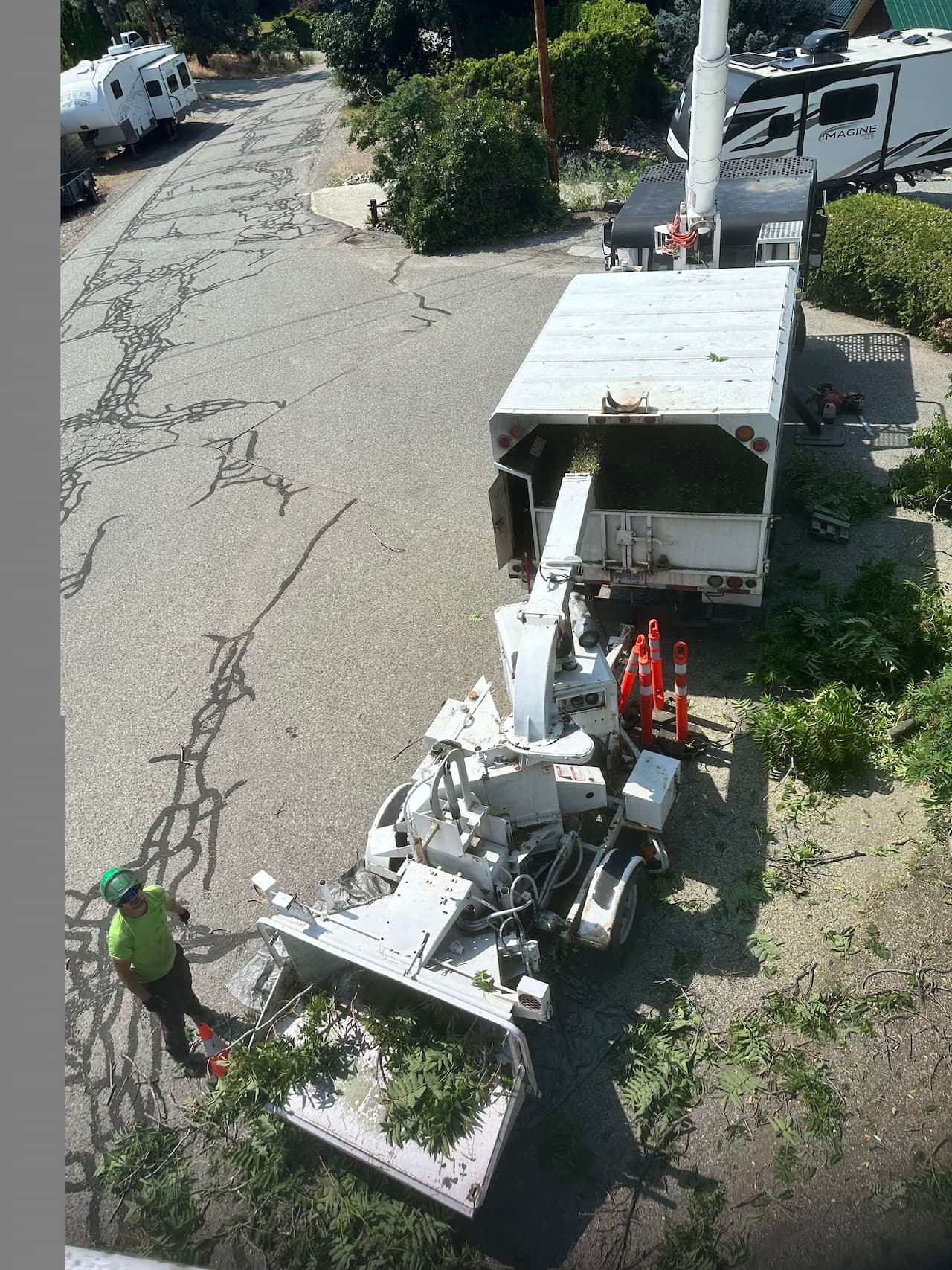
That sounds obvious, but in practice it is significant. Tree care is full of situations where the visible symptom is not the underlying problem. A split stem can look dramatic but remain manageable with Tree Cable and Bracing combined with selective pruning. A tree that appears healthy from a distance can still warrant Dangerous Tree Assessment and Removal if defects and site factors create unacceptable risk. A tree with a dense, overextended canopy may respond well to carefully chosen pruning cuts, while the same tree, if topped or cut improperly, can become more hazardous over time.
A certified arborist approaches those choices through trained observation and a systematic way of thinking. That does not mean every site visit becomes overly academic. It means recommendations are tied to structure, biology, and risk, not guesswork.
Consultation starts with risk, not fear
One of the most misunderstood parts of tree care is risk. People often want a yes or no answer. Is the tree safe, or unsafe? Should it stay, or should it go?
Real arboriculture is rarely that simple. There is no completely safe tree. Some level of risk is always present when a large living structure stands near people, buildings, vehicles, or utility areas. Certified arborists are trained to assess tree risk systematically, which means identifying defects or site conditions, analyzing how those factors relate to likely failure and likely targets, and then evaluating what response is reasonable.
That is a major difference from the alarm-driven sales pitch that some property owners have encountered. A certified consultation should not inflate fear. It should put risk in context.
If a large codominant stem overhangs a play area, that matters. If a decayed section is over a seldom-used corner of a field, that matters too, but differently. If a storm-damaged limb is suspended over a front entrance, the urgency changes. If the same damage is isolated and away from regular occupancy, the response timeline may be less immediate.
The best arborists explain FireSmart defensible space clearing this plainly. They do not promise absolute safety because no honest professional can. What they can do is recommend measures that reduce risk to a more acceptable level. Sometimes that means pruning. Sometimes it means installing a structural support system. Sometimes it means setting a monitoring schedule. Sometimes it means removal is the prudent option.
That ability to separate “concerning” from “critical” is one of the most valuable things a client pays for.
Credentials influence judgment, not just terminology
It is easy to think a credential mainly changes vocabulary. A certified arborist might use more precise terms for branch unions, reduction cuts, codominant stems, or crown structure. Precision is useful, but it is not the heart of the difference.
The credential matters because it reflects baseline technical knowledge and continuing education. Trees are living organisms, and tree work sits at the intersection of biology, mechanics, site use, and safety. Consultation improves when the person evaluating the tree understands both the growth habit of the canopy and the practical consequences of different treatments.
For example, a recommendation for Tree Pruning & Crown Shaping should not be based on appearance alone. Good pruning has purpose. It may be directed at clearance, structural improvement, deadwood removal, selective reduction, or better load distribution. A poor recommendation can create long-term problems, especially if it leads to improper cuts, stubs, or topping. Proper branch removal and reduction cuts matter because technique affects how the tree responds and how the structure performs later.
The same is true of Tree Cable and Bracing. Structural support systems are not cosmetic hardware. They are part of a mitigation strategy that must match the tree’s form and the defect being addressed. Installed in the right context, support can help reduce risk while preserving a valuable tree. Installed casually, or suggested where removal is more appropriate, it can create false confidence.
A certified arborist brings judgment shaped by training, standards-oriented practice, and the discipline of ongoing education. That does not mean perfection. It means a higher level of informed decision-making.
Why the site visit often changes the scope of work
Many people are surprised by how much attention a thorough arborist gives to things beyond the trunk and canopy. The site visit often includes the space beneath the tree, the nearby structures, pedestrian patterns, adjacent trees, and signs of previous pruning or damage. A consultation that looks beyond the obvious usually produces a better plan.
Consider a common scenario: a homeowner asks about removing one declining tree near the back property line. During the visit, the arborist notices that the real hazard is not only the tree’s condition but the way neighboring trees have developed around it. If the declining tree comes out, the remaining trees may be more exposed to wind than before. That does not automatically mean the removal should not happen, but it may change the advice that follows. The proposal might shift from a single removal to a phased approach that includes selective pruning elsewhere on the site.
Or take Stump Removal & Grinding. Clients often see stump work as a simple finishing step after removal. In many cases, it is. Yet a thoughtful consultation treats it as part of the broader site plan. If the stump sits near a replanting area, hardscape, or underground constraints not obvious at first glance, the sequence of work matters. Even when the task itself seems modest, the decision-making around it can benefit from the same careful review.
This is one reason certified consultation often feels more detailed than expected. The goal is not to complicate a straightforward job. The goal is to avoid solving one problem while creating another.
Emergency work reveals the difference quickly
If you want to see the practical value of professional judgment, look at Emergency Tree Services. After a storm, clients are under stress, access may be limited, and the pressure to act fast is real. Broken tops, split leaders, partially uprooted trees, and suspended branches can all demand immediate attention. The temptation in those moments is to treat every damaged tree as a candidate for full removal.
Sometimes that is necessary. Sometimes it is not.
Certified consultation during emergency response helps sort the urgent from the manageable. The arborist’s role is not only to identify what is damaged, but also to evaluate whether the damage can be addressed through pruning, structural support, or partial mitigation. Emergency service restoration is not just about speed. It is about restoring safety and function while avoiding unnecessary intervention.
A storm-damaged tree over a driveway may need rapid branch removal to reopen access, while the final decision about longer-term retention can wait for a more complete assessment. Another tree may have suffered damage that appears severe from the street but remains structurally salvageable. A third may have hidden defects that make continued retention unwise, even if the canopy loss looks modest.
That kind of triage is where experience and certification work together. The consultation guides the crew’s actions. Without that layer of judgment, emergency work can become purely reactive.
Removal is sometimes the right answer, but it should be the last easy answer
There is a persistent myth in tree care that a cautious professional always tries to save every tree. In practice, a good arborist is neither sentimental nor reckless. Trees can be retained when retention is reasonable. Trees can also become unacceptable liabilities.
The difference with Certified Arborist Consultation is that removal is typically justified rather than assumed.
Dangerous Tree Assessment and Removal should follow a clear line of reasoning. What defect is present? What is the likelihood of failure? What valuable target could be struck? Can the risk be reduced through pruning or support? Does the site’s use pattern make a low-probability event more serious? Is the defect confined or progressive? Even within the limits of a visual assessment, these questions help shape a defensible recommendation.
That matters for clients because removal is irreversible. Once a mature tree is gone, the shade, scale, screening, and environmental value are gone with it. There may still be very good reasons to remove it, but that decision deserves more than a quick glance and a dramatic warning.
In my experience, property owners appreciate candor. They do not want vague reassurance, and they do not want a tree condemned without explanation. What builds trust is a practical conversation about options, limitations, and likely outcomes.
What a stronger consultation usually includes
A certified arborist consultation tends to feel different because the process is more disciplined. Even without turning the visit into a lecture, a good arborist usually covers a few core areas.
- The tree’s condition and structure, based on visible signs and the arborist’s trained assessment.
- The site context, including nearby targets, use patterns, and how the tree fits into the larger landscape.
- The realistic range of management options, which may include pruning, support systems, monitoring, removal, or no immediate action.
- The trade-offs attached to each option, especially where risk can be reduced but not eliminated.
- The practical next step, whether that is scheduled maintenance, Emergency Tree Services, or planning for Tree Removal Services and follow-up stump work.
That level of clarity helps clients make decisions without feeling pushed.
Pruning advice is where expertise becomes visible
Anyone can say a tree needs trimming. A certified arborist should be able to say what kind of pruning is appropriate, what it is meant to accomplish, and what should be avoided.
This is especially important because pruning mistakes can stay with a tree for years. Improper practices such as topping or leaving stub cuts are well known problems in the industry. They may deliver a quick visual change, but they often create structural and biological issues later. By contrast, proper branch removal and reduction cuts are aimed at meeting an objective while respecting the tree’s form and response.
Tree Pruning & Crown Shaping is sometimes treated as a cosmetic service. It certainly affects appearance, but the better reason to prune is almost always functional. Clearance from a structure, reduction of end weight on an overextended limb, improved branch spacing, or selective crown raising can all be legitimate goals. A certified arborist is more likely to tie the scope of pruning to those goals rather than to a vague promise of making the tree “cleaner” or “balanced.”
That distinction also matters for long-term cost. Well-targeted pruning can reduce the need for repeated corrective work. Poor pruning often creates a cycle of regrowth, stress, and recurring intervention.
Structural support is not a shortcut
Tree Cable and Bracing often gets misunderstood by clients and, sometimes, oversold in the field. Support systems can be valuable tools, but they are not magical fixes. They are most useful when applied to a specific structural concern as part of a broader management plan.
A certified consultation should explain what the support is intended to do and what it cannot do. It may help reduce the chance of failure in a weak union or help manage load in a tree with included bark or a similar structural issue. It does not turn a compromised tree into a risk-free tree. It also does not replace appropriate pruning or ongoing observation.
This honest framing is another marker of good consultation. The arborist should not present support hardware as a permanent guarantee. The recommendation should fit the actual condition and the owner’s tolerance for ongoing management.
Fire-prone areas require a different lens
FireSmart Tree Services introduce another dimension where generic tree advice falls short. In fire-prone regions, the conversation around trees is not just about aesthetics, shade, or routine maintenance. It includes how vegetation arrangement and maintenance relate to wildfire resilience.
A certified arborist consultation in that context should still begin with the fundamentals of tree condition and site use, but the advice may lean more heavily on spacing, pruning strategy, and which trees create concern because of their placement or maintenance history. The key difference is that the arborist is not simply recommending more cutting as a blanket answer. The aim is thoughtful risk reduction, aligned with the site.
That distinction matters because poorly targeted work can leave a property looking stripped without meaningfully improving resilience. A measured consultation is more likely to identify where intervention actually matters.
The ethical difference clients often feel before they can name it
The most noticeable thing about a good certified arborist consultation is often tone. The conversation tends to be less theatrical and more measured. There is usually less pressure to commit on the spot, less certainty where certainty is not warranted, and more willingness to say, “This needs attention,” or, just as important, “This can be managed.”
That style is not accidental. A code of ethics and a continuing education requirement do not guarantee good bedside manner, but they do support a more professional approach. When people invite a tree expert onto their property, they are often placing a high-value, high-risk decision in that person’s hands. The quality of that interaction matters.
Clients are not just buying labor. They are buying judgment.
Questions worth asking when you want a true consultation
If you are trying to tell the difference between a quote and a consultation, a few questions can reveal a lot.
What is the actual concern with this tree? If the answer stays vague, that is a warning sign. What are the management options besides removal? If none are discussed, the evaluation may be too narrow. What does the recommended pruning aim to accomplish? If the response is mostly aesthetic jargon, look deeper. If structural support is proposed, ask what risk it is meant to reduce and whether pruning is part of the plan. If emergency work is involved, ask what must happen now and what can wait until the site is more stable.
A strong arborist does not need to oversell expertise. The explanation itself usually makes the difference clear.
Why this matters for every service that follows
Certified Arborist Consultation is not separate from production work. It shapes it. Better consultation leads to better Tree Removal Services, because removals are chosen more carefully. It leads to better Stump Removal & Grinding, because the sequence and purpose are clearer. It leads to better Tree Pruning & Crown Shaping, because cuts are tied to structure and objectives. It leads to better Emergency Tree Services, because urgency is balanced with judgment. It leads to more credible Dangerous Tree Assessment and Removal, because risk is evaluated systematically. It leads to smarter Tree Cable and Bracing, because support systems are used where they fit. It even improves FireSmart Tree Services, because site-specific reasoning replaces generic advice.
That is the real difference. A certified arborist does not just show up to do tree work. The arborist helps define what the right tree work is.
For property owners, that can mean preserving a mature tree that still has years of service left. It can mean removing one that poses more risk than value. It can mean spending less because unnecessary work is avoided, or spending more in the short term because a better solution requires skill and follow-through. It can mean understanding that “safe enough” is a managed condition, not a promise. Most of all, it means the decision starts from informed assessment rather than assumption.
When the stakes involve large trees, occupied spaces, storm damage, and irreversible choices, that difference is not subtle. It is the difference between buying a task and receiving professional guidance.
Name: Ace Tree Services Ltd.
Address: 4656 Wallace Hill Road, Kelowna, BC
Phone: 250-212-9593
Website: https://acetree.ca/
Hours:
Monday: 7:00 AM–5:00 PM
Tuesday: 7:00 AM–5:00 PM
Wednesday: 7:00 AM–5:00 PM
Thursday: 7:00 AM–5:00 PM
Friday: 7:00 AM–5:00 PM
Saturday: 7:00 AM–5:00 PM
Sunday: Closed
Emergency tree services: 24/7 emergency service is listed.
Open-location code / Plus code: RHF8+8G Kelowna, British Columbia, Canada
Map/listing URL: https://www.google.com/maps/place/Ace+Tree+Services+Ltd./@49.8232606,-119.4337283,563m/data=!3m1!1e3!4m6!3m5!1s0x537d8b1d074815c5:0x450b88afa7a41435!8m2!3d49.8232606!4d-119.4337283!16s%2Fg%2F11ydkpnh22
Embed iframe:
Socials: https://www.facebook.com/people/Ace-Tree-Services/61585901931447/
https://m.yelp.com/biz/ace-tree-services-kelowna
Ace Tree Services Ltd. provides professional tree service for residential, commercial, and municipal customers in Kelowna and across the Okanagan Valley.
The company’s listed services include tree removal, stump removal and grinding, tree pruning and crown shaping, emergency tree services, certified arborist consultation, dangerous tree assessment, tree cable and bracing, and wildfire mitigation.
Ace Tree Services works with homeowners, businesses, property managers, and public-sector clients that need safe, practical tree care in the Kelowna area.
The official site highlights ISA-certified arborists, insurance, and experience handling both routine and complex tree service situations.
Customers can contact Ace Tree Services for tree care planning, hazard concerns, emergency tree cleanup, pruning needs, stump grinding, or advice about trees near homes, fences, driveways, and landscaping.
Ace Tree Services lists regular work hours from 7:00 AM to 5:00 PM Monday through Friday, with 24/7 emergency tree service available for urgent situations.
For tree service in Kelowna, call 250-212-9593 or visit https://acetree.ca/
The public map listing places Ace Tree Services Ltd. in Kelowna and can help customers find directions to the Wallace Hill Road area.
Popular Questions About Ace Tree Services Ltd.
What services does Ace Tree Services Ltd. provide?
Ace Tree Services Ltd. provides tree removal, stump removal and grinding, tree pruning and crown shaping, emergency tree services, certified arborist consultation, dangerous tree assessment and removal, tree cable and bracing, and wildfire mitigation.
Where is Ace Tree Services Ltd. located?
The official website lists Ace Tree Services Ltd. at 4656 Wallace Hill Road, Kelowna, BC.
What areas does Ace Tree Services Ltd. serve?
The official website describes Ace Tree Services as located in Kelowna and servicing the Okanagan.
What phone number should customers call?
Customers can call Ace Tree Services Ltd. at 250-212-9593.
What are Ace Tree Services Ltd.’s regular hours?
The official website lists work hours as 7:00 AM to 5:00 PM, Monday through Friday. Saturday and Sunday regular hours are not listed and should be confirmed directly.
Does Ace Tree Services Ltd. offer emergency tree service?
Yes. The official website lists 24/7 emergency services for urgent tree situations, including emergency tree removal, dangerous tree assessment, stabilization, and limb or branch cleanup.
Does Ace Tree Services Ltd. have certified arborists?
Yes. The official website states that Ace Tree Services has ISA-certified arborists.
Can Ace Tree Services Ltd. help with wildfire mitigation?
Yes. Wildfire mitigation is listed as one of the company’s tree services.
How do I contact Ace Tree Services Ltd.?
Call 250-212-9593 or visit https://acetree.ca/.
Landmarks Near Kelowna, BC
Wallace Hill Road: A local Kelowna road near the address listed for Ace Tree Services Ltd.
Okanagan Lake: A major Kelowna landmark near residential, commercial, and waterfront properties that may need tree pruning, removal, or hazard assessment.
Downtown Kelowna: A central area with homes, offices, rental properties, restaurants, and commercial sites that may need professional tree care.
Mission / Lower Mission: A well-known Kelowna area with mature landscaping, residential properties, and lake-adjacent homes.
South East Kelowna: A rural and residential area with larger properties, orchards, and tree-care needs that can include pruning, removals, and wildfire mitigation.
Crawford: A residential area near the southeast side of Kelowna where homeowners may need tree trimming, hazard assessment, and stump grinding.
Kettle Valley: A hillside residential neighborhood where tree condition, slope, wind exposure, and defensible-space planning can matter for property owners.
Myra-Bellevue Provincial Park: A major outdoor landmark near southeast Kelowna and a useful point of orientation for nearby properties.
Gallagher’s Canyon: A residential and golf community near southeast Kelowna where tree maintenance and wildfire-conscious vegetation management can be practical concerns.
Orchard Park Shopping Centre: A major central Kelowna retail landmark and reference point for customers traveling across the city.
Highway 97: A major Kelowna corridor connecting neighborhoods, commercial properties, and service routes throughout the region.
Kelowna City Park: A recognizable central landmark near downtown neighborhoods and lakefront properties.
Glenmore: A Kelowna neighborhood with residential and commercial properties that may need pruning, storm cleanup, and general tree care.
Rutland: A large residential and commercial area where customers may need tree removal, pruning, stump grinding, or arborist consultation.
Black Mountain: A hillside community where slope, wind, wildfire exposure, and access can influence tree service planning.
For tree service near these Kelowna landmarks, contact Ace Tree Services Ltd. at 250-212-9593 or visit https://acetree.ca/