Tree Removal Services, Pruning, and Maintenance: How They Connect
Tree care is often discussed as if each service stands alone. A homeowner calls for Tree Removal Services when a trunk leans, for Tree Pruning & Crown Shaping when branches scrape the roof, or for Stump Removal & Grinding after a tree is gone. In practice, these are parts of the same decision chain. What happens during pruning affects whether a tree can stay. What gets missed during routine maintenance often shows up later as emergency work. A stump left in place can shape how the site is used long after the sawdust settles.
That connection matters because tree work is not cosmetic alone. It is tied to risk, site use, long-term structure, and the limits of what a tree can safely tolerate. Industry guidance is clear on one point that property owners sometimes underestimate: pruning or removing trees, especially large trees, is dangerous work and should be done by people who are trained and properly equipped. The safest, most cost-effective outcome usually comes from looking at the entire life cycle of the tree rather than reacting to one visible problem.
The tree care cycle is not linear
People often imagine a simple sequence. First a tree is planted, then it grows, then it gets pruned now and then, and eventually it is removed. Real landscapes are rarely that tidy. A mature maple over a driveway might need structural pruning after storm damage, periodic clearance from the house, a risk review when decay is suspected, and perhaps a support system if a weak union develops. Years later, if the defects advance or the target area becomes busier, Dangerous Tree Assessment and Removal may become the more responsible choice.
That is why good arboriculture is less about isolated tasks and more about management. Every service changes the next decision. Remove too much live foliage during a pruning visit and the tree may respond poorly. Delay needed pruning and branch weight can become harder to manage. Ignore a compromised stem because it is still leafing out, and the eventual work may happen under emergency conditions instead of on a planned schedule.
A sound maintenance program does not assume every defect requires removal. It also does not assume every tree can be preserved at any cost. The best judgment sits in the middle, where biology, site use, and risk all get weighed together.
Why pruning is often the first fork in the road
Pruning is one of the most misunderstood services in tree care because almost everyone can see a branch, but not everyone can see structure. Good Tree Pruning & Crown Shaping is not random thinning and it is not aggressive cutting for a quick visual result. Industry guidance emphasizes proper branch removal and reduction cuts, along with approaches such as crown reduction, directional pruning, and crown raising where appropriate. It also warns against improper techniques such as topping or leaving stub cuts.
That distinction is not academic. It directly affects whether a tree remains stable, functional, and worth retaining.
Consider a large shade tree with two low limbs interfering with trucks. One contractor may remove those limbs cleanly and adjust the canopy to maintain balance. Another may strip out interior growth, leave oversized stubs, or top the upper canopy to “bring it down.” The first approach can preserve health and reduce conflict. The second may create larger wounds, poor regrowth, and a structure that needs even more intervention later.
Pruning also plays a major role in risk reduction, but it has limits. A tree with deadwood over a patio may benefit from selective removal of those dead branches. A tree with a significant basal defect or severe root damage may not become acceptably safe just because the crown was cleaned. This is where maintenance and removal stop being separate topics. Pruning can mitigate some hazards, but it cannot fix every structural problem.
Maintenance is what keeps options open
Routine maintenance tends to get dismissed because it does not have the urgency of a storm call or the finality of a removal. Yet it is often the service that preserves the broadest set of future choices. When trees are inspected regularly and pruned with restraint, an arborist can catch issues while several management options still exist.
A tree that receives periodic attention is easier to assess accurately. The canopy can be seen. Past pruning cuts are evident. Deadwood, weak attachments, or directional growth toward a target can be tracked over time. By contrast, neglected trees often present a stack of unresolved issues at once. Overextended limbs, dense end weight, branch failures, and hidden defects create a situation where even simple maintenance becomes more complex.
Maintenance also connects to site planning. The same property owner who schedules seasonal pruning may later need Certified Arborist Consultation for a renovation, driveway expansion, or utility clearance question. Tree care decisions rarely stay confined to the branch that prompted the phone call. They affect structures, access, shade, sight lines, and how safely a property can be used.
Risk assessment is where the services truly meet
The strongest bridge between pruning, maintenance, and removal is tree risk assessment. Industry guidance describes this as a systematic process used to identify, analyze, and evaluate risk, then recommend measures to achieve an acceptable level of risk. That language is important because it keeps the conversation grounded. The goal is not to promise perfect safety. The guidance also recognizes that there is no completely safe tree and that some level of risk must always be accepted.
This changes how responsible recommendations are made.
A tree does not have to be dead to be risky, and it does not have to be risky just because it looks unusual. Risk depends on the condition of the tree, the parts likely to fail, and what those parts could strike. A decayed limb over an unused woodland edge is not judged the same way as a decayed limb over a front entry or a parking area. Likewise, a codominant stem with included bark may be manageable in one setting and unacceptable in another.
Dangerous Tree Assessment and Removal begins with that distinction. Removal is sometimes the right measure, especially when defects are advanced or the consequences of failure are high. But arborists may also recommend treatments that reduce risk without unnecessary intervention. That might include selective pruning, changing target use, or adding a structural support system where appropriate. The service names sound separate on an invoice. In field practice, they are usually connected by one question: what level of risk is acceptable here, and what is the least invasive way to reach it?
When Tree Cable and Bracing make sense, and when they do not
Structural support systems often sit in a gray area for property owners. Some hear “cable” and assume a tree has been saved. Others hear it and assume the tree is failing. The reality is more nuanced.
Tree Cable and Bracing are mitigation tools, not a cure-all. They are relevant when a tree has a structural weakness that may be managed, rather than ignored or immediately removed. Industry training materials connect structural support systems with arborist assessment and risk mitigation, which is exactly where they belong. A support system may help manage movement in a weak union or reduce the chance of a predictable type of failure. It is typically part of a broader plan that also includes pruning and follow-up inspection.
The important point is that support systems do not replace judgment. A cable cannot reverse decay. A brace does not erase root failure. On some trees, support can extend useful life and reduce risk to a level the owner accepts. On others, it only delays an inevitable removal while adding maintenance obligations. That is why a site-specific evaluation matters. The decision is not whether support hardware exists. The decision is whether it is appropriate for that tree, in that location, at that stage of decline or structural weakness.
Emergency work usually starts long before the storm
Emergency Tree Services are often treated as a category of their own, but most emergency jobs have a backstory. A storm may be the trigger, yet the actual failure may reflect years of deferred maintenance, preexisting defects, poor structure, or a target area that became more active over time.
That does not mean every failure could have been prevented. Trees are living structures exposed to weather, soil changes, and ordinary aging. Some failures happen in trees that had no obvious warning signs from the ground. Still, emergency response often reveals how tightly connected routine care and crisis work really are.
A practical pattern shows up on many properties. A tree grows toward a building for years. Lower limbs are cut back informally, upper canopy weight is left alone, and no one evaluates the attachment points. After a storm, a heavy lateral splits out. The immediate need becomes controlled dismantling and site safety. Once the branch is off the roof, the discussion shifts quickly to the remaining structure. Can the tree be retained with corrective pruning or support? Has the failure changed the risk enough that removal is the better option? What about the stump if the space must be restored for access or reconstruction?
An emergency visit rarely ends with the emergency itself. It opens a chain of decisions that ties directly back to pruning quality, inspection history, and the owner’s long-term goals for the site.
The role of Certified Arborist Consultation
When the choices are not obvious, Certified Arborist Consultation becomes the hinge point between preservation and removal. ISA Certified Arborists are trained in the art and science of tree care, must pass a comprehensive exam, continue their education to maintain certification, and follow a Code of Ethics. That matters because tree decisions often involve competing values. Safety matters. Shade matters. Budget matters. So do aesthetics, habitat, access, and the practical limitations of the site.
A qualified consultation helps frame the problem correctly. Sometimes the question is not “Should this tree come down?” but “What defect is actually present, how does it affect risk, and what management options are still reasonable?” Other times the consultation confirms what the owner already suspects, that the tree has reached the point where retention no longer makes sense.
A good arborist also explains trade-offs plainly. Reduction pruning may lessen load on a long limb, but it changes canopy form and may require future repeat work. Cabling may support a structural weakness, but it introduces an ongoing inspection responsibility. Removal may eliminate one risk while increasing sun exposure, changing drainage patterns, or reducing screening. These are not reasons to avoid action. They are reasons to make decisions with full context.
Removal is part of care, not a failure of care
There is a persistent idea that removing a tree means someone gave up too soon, while preserving every tree is inherently more responsible. That is not how experienced tree managers view the work. Tree Removal Services are part of proper care when the tree’s condition, structure, or location no longer supports reasonable retention.
Sometimes the issue is obvious. A severely compromised tree near a high-use target area may have little margin left. Sometimes the issue is cumulative. Repeated branch failures, limited response to previous pruning, and worsening defects can shift the balance over time. In those cases, removal is not an overreaction. It is the final stage of a management process that may have included years of pruning and assessment before the threshold was crossed.
Controlled removal also depends on the same professional skill set that supports good pruning. Rigging and controlled lowering techniques are essential where space is tight or targets are close. That shared technical foundation is another reason these services should not be seen as unrelated. The team that safely dismantles a large tree is working from the same culture of planning, load control, and safe access that underpins competent pruning work.
What happens after the tree is gone
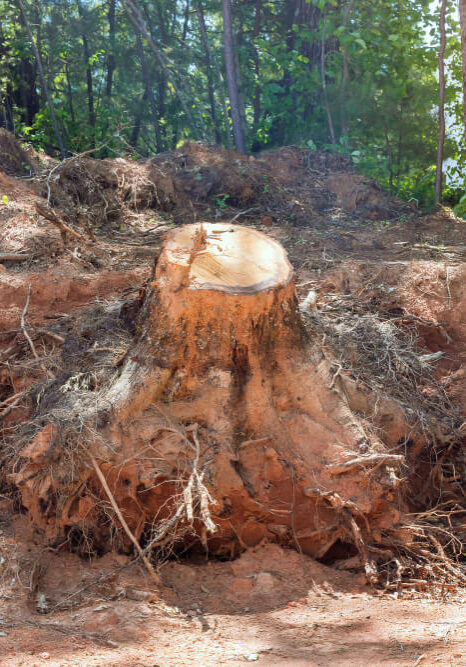
The work does not end when the trunk hits the ground. Stump Removal & Grinding is one of the clearest examples of how post-removal decisions affect the usefulness of the site. Leaving a stump may be acceptable in some areas, especially where the goal is simply to eliminate a hazard and restore basic safety. In more active spaces, the stump can interfere with replanting, mowing, access, or future construction.
Grinding and removal decisions also connect back to the reason the tree came out. If the area will be replanted, the remaining root zone and grade may matter. If the site needs to be opened for equipment or rebuilding after damage, the stump can become a practical obstacle. Property owners often think of stump work as optional cleanup. In reality, Extra resources it is part of completing the transition from old tree to usable space.
That transition deserves planning. A removed tree changes light, temperature, privacy, and how wind moves across the site. If the tree was part of a group, the remaining trees may now be more exposed. This is another moment where maintenance returns to the foreground. Once one tree is removed, the structure and condition of adjacent trees often deserve a fresh look.
FireSmart Tree Services and the maintenance mindset
FireSmart Tree Services belong in this conversation because they also depend on connected thinking rather than one-off action. Although specific treatments vary by site and local conditions, the basic principle is familiar: vegetation management is most effective when it is deliberate, repeated, and integrated with overall property use. It is not just about taking out one tree or trimming one branch. It is about reducing problematic conditions while preserving the values that matter on the property.
That makes FireSmart work closer to pruning and preventive maintenance than many people realize. It asks the same practical questions. Which trees create conflict with structures or access? Which can be retained with thoughtful pruning? Which present a level of concern that points toward removal? What maintenance interval keeps the site manageable instead of allowing risk to build up unnoticed?
A reactive property owner Tree Pruning & Crown Shaping tends to see a list of separate charges. A proactive owner starts to see a coordinated program.
The most useful questions to ask before approving work
Property owners do not need to become arborists, but they do benefit from asking clear, disciplined questions. Those questions tend to reveal whether the recommendation comes from a real assessment or from habit.
- What defect or objective is driving this recommendation?
- Can pruning or structural support reduce risk to an acceptable level?
- If removal is advised, what changed that makes retention no longer reasonable?
- What maintenance will this tree or site need after the work is done?
- Does this decision affect nearby trees, targets, or future use of the space?
Those five questions bring pruning, removal, maintenance, and consultation into the same frame. They also make it easier to spot vague advice. “It looks bad” is not enough. “This limb has a structural issue over a high-use area, and here are the realistic management options” is the kind of reasoning that leads to better outcomes.
Seeing the property as a system
The cleanest way to understand the connection among services is to stop looking at trees one by one for a moment and look at the property as a system. Trees occupy space above and below ground. They interact with buildings, driveways, foot traffic, utility corridors, and neighboring canopies. A choice made in one corner of the property can alter management needs somewhere else.
Remove a dominant tree and another specimen may suddenly take more wind. Prune for clearance on one side and weight distribution may need attention elsewhere in the crown. Keep a weak tree because it still provides shade, and you may commit to periodic reassessment or Tree Cable and Bracing to manage that decision responsibly. Every action has a follow-on effect.
This systems view is where professional tree care earns its keep. It turns a series of isolated service calls into a strategy. That strategy may include Tree Removal Services for one tree, Tree Pruning & Crown Shaping for two others, Stump Removal & Grinding where space must be reclaimed, Emergency Tree Services when weather forces the issue, and Certified Arborist Consultation whenever the right path is not obvious. None of those services competes with the others. Each fills a role in managing living structures that grow, age, and sometimes fail in places people use every day.
When those connections are understood early, property owners tend to make calmer decisions, schedule work before it becomes urgent, and preserve more options over time. That is usually the difference between tree care that merely reacts and tree care that truly manages.
Name: Ace Tree Services Ltd.
Address: 4656 Wallace Hill Road, Kelowna, BC
Phone: 250-212-9593
Website: https://acetree.ca/
Hours:
Monday: 7:00 AM–5:00 PM
Tuesday: 7:00 AM–5:00 PM
Wednesday: 7:00 AM–5:00 PM
Thursday: 7:00 AM–5:00 PM
Friday: 7:00 AM–5:00 PM
Saturday: 7:00 AM–5:00 PM
Sunday: Closed
Emergency tree services: 24/7 emergency service is listed.
Open-location code / Plus code: RHF8+8G Kelowna, British Columbia, Canada
Map/listing URL: https://www.google.com/maps/place/Ace+Tree+Services+Ltd./@49.8232606,-119.4337283,563m/data=!3m1!1e3!4m6!3m5!1s0x537d8b1d074815c5:0x450b88afa7a41435!8m2!3d49.8232606!4d-119.4337283!16s%2Fg%2F11ydkpnh22
Embed iframe:
Socials: https://www.facebook.com/people/Ace-Tree-Services/61585901931447/
https://m.yelp.com/biz/ace-tree-services-kelowna
Ace Tree Services Ltd. provides professional tree service for residential, commercial, and municipal customers in Kelowna and across the Okanagan Valley.
The company’s listed services include tree removal, stump removal and grinding, tree pruning and crown shaping, emergency tree services, certified arborist consultation, dangerous tree assessment, tree cable and bracing, and wildfire mitigation.
Ace Tree Services works with homeowners, businesses, property managers, and public-sector clients that need safe, practical tree care in the Kelowna area.
The official site highlights ISA-certified arborists, insurance, and experience handling both routine and complex tree service situations.
Customers can contact Ace Tree Services for tree care planning, hazard concerns, emergency tree cleanup, pruning needs, stump grinding, or advice about trees near homes, fences, driveways, and landscaping.
Ace Tree Services lists regular work hours from 7:00 AM to 5:00 PM Monday through Friday, with 24/7 emergency tree service available for urgent situations.
For tree service in Kelowna, call 250-212-9593 or visit https://acetree.ca/
The public map listing places Ace Tree Services Ltd. in Kelowna and can help customers find directions to the Wallace Hill Road area.
Popular Questions About Ace Tree Services Ltd.
What services does Ace Tree Services Ltd. provide?
Ace Tree Services Ltd. provides tree removal, stump removal and grinding, tree pruning and crown shaping, emergency tree services, certified arborist consultation, dangerous tree assessment and removal, tree cable and bracing, and wildfire mitigation.
Where is Ace Tree Services Ltd. located?
The official website lists Ace Tree Services Ltd. at 4656 Wallace Hill Road, Kelowna, BC.
What areas does Ace Tree Services Ltd. serve?
The official website describes Ace Tree Services as located in Kelowna and servicing the Okanagan.
What phone number should customers call?
Customers can call Ace Tree Services Ltd. at 250-212-9593.
What are Ace Tree Services Ltd.’s regular hours?
The official website lists work hours as 7:00 AM to 5:00 PM, Monday through Friday. Saturday and Sunday regular hours are not listed and should be confirmed directly.
Does Ace Tree Services Ltd. offer emergency tree service?
Yes. The official website lists 24/7 emergency services for urgent tree situations, including emergency tree removal, dangerous tree assessment, stabilization, and limb or branch cleanup.
Does Ace Tree Services Ltd. have certified arborists?
Yes. The official website states that Ace Tree Services has ISA-certified arborists.
Can Ace Tree Services Ltd. help with wildfire mitigation?
Yes. Wildfire mitigation is listed as one of the company’s tree services.
How do I contact Ace Tree Services Ltd.?
Call 250-212-9593 or visit https://acetree.ca/.
Landmarks Near Kelowna, BC
Wallace Hill Road: A local Kelowna road near the address listed for Ace Tree Services Ltd.
Okanagan Lake: A major Kelowna landmark near residential, commercial, and waterfront properties that may need tree pruning, removal, or hazard assessment.
Downtown Kelowna: A central area with homes, offices, rental properties, restaurants, and commercial sites that may need professional tree care.
Mission / Lower Mission: A well-known Kelowna area with mature landscaping, residential properties, and lake-adjacent homes.
South East Kelowna: A rural and residential area with larger properties, orchards, and tree-care needs that can include pruning, removals, and wildfire mitigation.
Crawford: A residential area near the southeast side of Kelowna where homeowners may need tree trimming, hazard assessment, and stump grinding.
Kettle Valley: A hillside residential neighborhood where tree condition, slope, wind exposure, and defensible-space planning can matter for property owners.
Myra-Bellevue Provincial Park: A major outdoor landmark near southeast Kelowna and a useful point of orientation for nearby properties.
Gallagher’s Canyon: A residential and golf community near southeast Kelowna where tree maintenance and wildfire-conscious vegetation management can be practical concerns.
Orchard Park Shopping Centre: A major central Kelowna retail landmark and reference point for customers traveling across the city.
Highway 97: A major Kelowna corridor connecting neighborhoods, commercial properties, and service routes throughout the region.
Kelowna City Park: A recognizable central landmark near downtown neighborhoods and lakefront properties.
Glenmore: A Kelowna neighborhood with residential and commercial properties that may need pruning, storm cleanup, and general tree care.
Rutland: A large residential and commercial area where customers may need tree removal, pruning, stump grinding, or arborist consultation.
Black Mountain: A hillside community where slope, wind, wildfire exposure, and access can influence tree service planning.
For tree service near these Kelowna landmarks, contact Ace Tree Services Ltd. at 250-212-9593 or visit https://acetree.ca/