Tree Removal Services and Safety: Why Training Matters
Tree work looks deceptively simple from the ground. A homeowner sees a leaning spruce, a split maple limb, or a stump that keeps catching the mower wheel and thinks in straightforward terms: cut it, grind it, haul it away. The reality is much less forgiving. Tree Removal Services sit at the point where biology, physics, weather, machinery, and human judgment all meet, often in a very small work zone with no room for error.
That is why training matters so much.
The arboriculture field has long recognized that pruning or removing trees, especially large trees, is dangerous work and should be handled by people who are trained and properly equipped to work safely in trees. That point is not just about liability or professionalism. It is about whether the crew can identify hidden structural weakness, decide when a tree can be preserved, lower heavy sections in a controlled way, and adapt when conditions change halfway through a job.
For property owners, the most expensive mistake is often assuming that every tree problem has the same solution. Sometimes the right answer is full removal. Sometimes it is Tree Pruning & Crown Shaping to reduce load and restore structure. Sometimes a tree needs support through Tree Cable and Bracing. Sometimes a storm-damaged tree requires Emergency Tree Services because delay raises the risk. Sometimes the issue is not the tree at all, but poor access, overhead conflicts, or a target beneath the canopy that changes how the work must be done.
Training is what allows an arborist to sort those differences out before the first cut is made.
The difference between owning equipment and knowing tree work
Chainsaws, chippers, rigging lines, and stump grinders are tools, not proof of competence. Many accidents happen not because the equipment failed, but because local tree removal company the operator misread the tree or the sequence of cuts. A tree can hold tension in one part of the stem and compression in another. A branch that appears lightly attached can still swing with enough force to damage a roof, fence, or nearby tree if it is not controlled. A trunk section that looks manageable on the ground can behave very differently once suspended and cut free.
Training teaches crews to think beyond the cut itself. They learn to read form, lean, balance, defects, and likely movement. They learn proper branch removal and reduction cuts rather than crude stub cuts. They learn that topping is not professional pruning. They learn that controlled lowering is not optional when targets are present. They learn how to work within standards and accepted best practices rather than improvising in a live risk environment.
That distinction matters even on jobs that seem routine. Stump Removal & Grinding, for example, is often treated like the easy part after a tree comes down. Yet grinding can still require care around roots, grade changes, and surrounding site conditions. The point is not that every task is equally hazardous. The point is that every stage of tree work benefits from trained judgment.
Why a trained eye sees problems earlier
One of the least appreciated skills in tree care is assessment. A trained arborist does not simply look at a tree and ask whether it is alive or dead. The better question is whether the tree presents a level of risk that is acceptable for its location and use. Industry guidance describes tree risk assessment as a systematic process used to identify, analyze, and evaluate risk, then recommend measures that can reduce it to an acceptable level.
That language matters because it pushes against a common misconception. There is no completely safe tree. Trees are living structures exposed to wind, decay, soil change, pruning wounds, and age. Some level of risk is always present. The real work lies in understanding the degree of that risk and choosing a measured response.
This is where Dangerous Tree Assessment and Removal becomes more than a sales phrase. A tree beside an empty field is not judged the same way as a tree overhanging a driveway, play area, or building. The visible defect is only part of the story. The target beneath it matters. The expected occupancy matters. The possible consequence of failure matters. Training helps an arborist evaluate the whole picture rather than reacting to one alarming feature.
A cracked union high in the crown may call for reduction pruning and monitoring. A tree with structural weakness may benefit from Tree Cable and Bracing if the goal is retention and conditions allow it. Another tree, similar at a glance but positioned over a house with fewer mitigation options, may need removal. Skill lies in making those distinctions honestly.
Certified Arborist Consultation is not a formality
Homeowners often hear the term arborist and assume it means anyone who works on trees. In practice, credentials matter. An ISA Certified Arborist has trained in the art and science of tree care, passed a comprehensive exam, maintained continuing education, and agreed to a code of ethics. That does not mean every certified professional makes identical recommendations, but it does mean there is a recognized baseline of knowledge and accountability.
A proper Certified Arborist Consultation can change the direction of a project before money is spent on the wrong work. That happens often with mature trees that have value in the landscape. A worried owner may assume a large limb means immediate removal, while an informed assessment may show that selective pruning, crown reduction, or structural support could reduce risk without sacrificing the whole tree. Just as often, the opposite happens. A tree that still carries green leaves may look serviceable to the untrained eye, while an arborist recognizes defects that make preservation a poor choice.
Good consultation also prevents unnecessary cutting. Not every overgrown canopy needs drastic reduction. Not every close branch should be removed. Tree Pruning & Crown Shaping, when performed by people who understand structure and proper cuts, can improve form and reduce specific risks. Poor pruning can weaken the tree, stimulate problematic regrowth, or create new failure points later.
That is one reason trained professionals tend to spend more time looking before they cut. The assessment is not a delay. It is part of the work.
What training changes on a jobsite
The most noticeable difference between a trained crew and an untrained one is not speed. It is control. Control shows up in planning, communication, equipment use, and the discipline to stop when the tree is not behaving as expected.
A well-trained crew usually brings the following habits to the site:
- They assess the tree and the targets around it before starting, rather than deciding the plan mid-cut.
- They use pruning and removal techniques that respect structure and anticipated load, including proper cuts and controlled lowering when needed.
- They distinguish between mitigation and removal, so they can recommend pruning, support systems, or monitoring when those are better choices.
- They understand that emergency work after storms requires a different pace and a sharper reading of unstable wood and hanging limbs.
- They work within recognized standards and best management guidance instead of relying on guesswork.
Those habits may sound basic, but they are the foundation of safe tree operations. The crew that rushes to “get it done” is often the crew creating avoidable hazards for property, nearby trees, and themselves.
Emergency Tree Services demand a different level of judgment
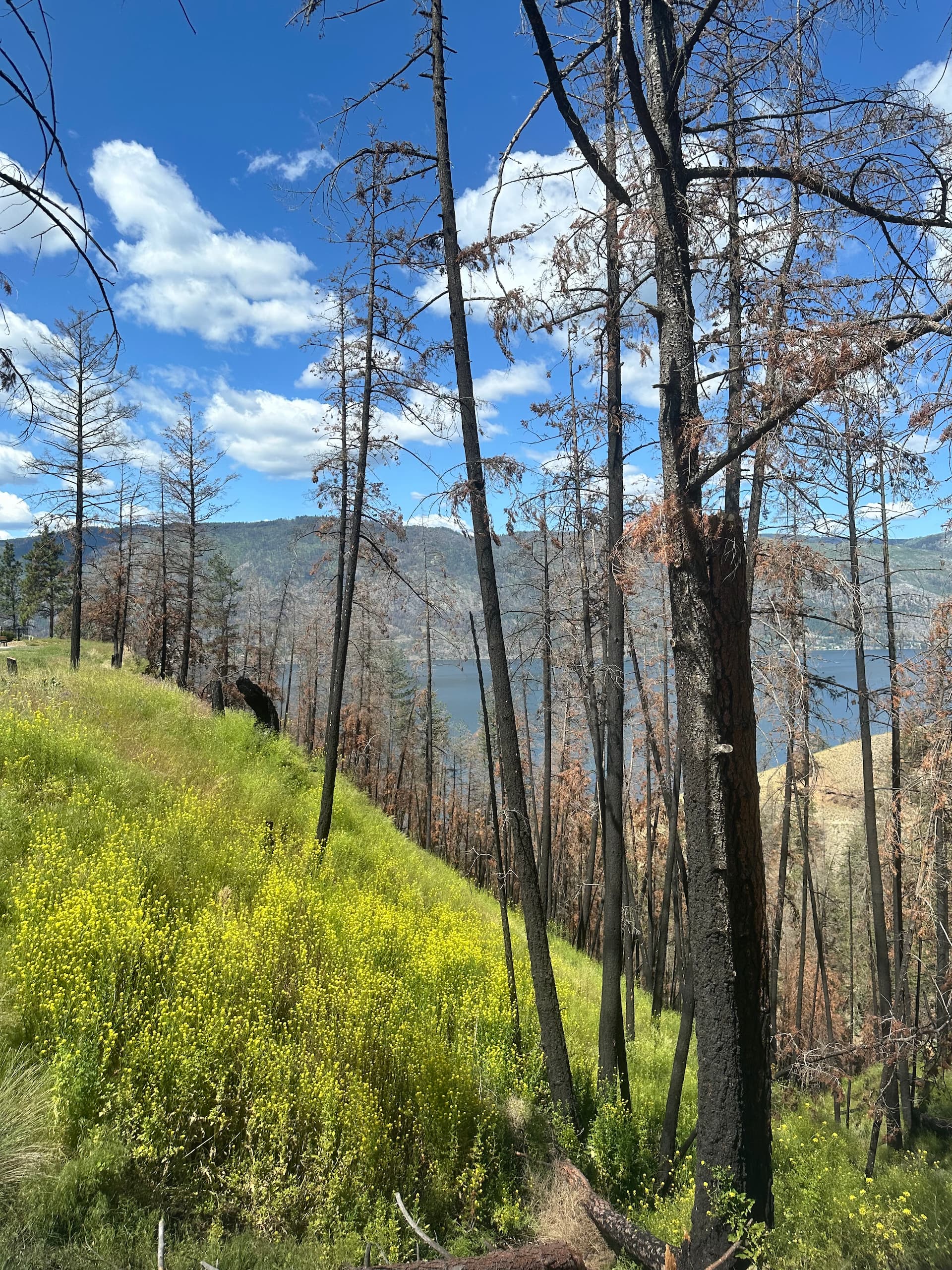
Storm response is where weak training shows up fastest. Emergency Tree Services are not just regular tree work done in bad weather. Storm-damaged trees can be partially failed, hung up in adjacent canopies, loaded under tension, or resting on structures in unstable ways. Limbs may appear settled but shift when supporting material is cut. Root plates may have lifted without full failure. Access routes may be blocked. The pressure to move quickly is real, especially when a driveway is blocked or a roof has been struck.
This is exactly the kind of environment where training is decisive.
Emergency work requires crews to read instability under time pressure. It also requires discipline, because the public often wants immediate action on a tree that “looks ready to fall,” while the safest first step may be securing the area, reassessing from multiple angles, or changing the removal sequence entirely. Standards and best management guidance for arborists include emergency service restoration for a reason. The work is specialized, and the consequences of poor decisions are immediate.
Property owners can help by resisting the urge to turn an emergency into a negotiation over speed alone. A careful response may feel slower in the moment, but rushed cuts around damaged trees are a poor bargain.
Tree Pruning & Crown Shaping are safety services too
People usually think of pruning as an aesthetic service. It certainly affects appearance, but the safety role is just as important. Crown reduction, directional pruning, crown raising, and proper branch removal are not interchangeable techniques. Each has a purpose. Used correctly, they can reduce end weight, improve clearance, address specific defects, or guide growth away from conflicts. Used incorrectly, they can leave the tree more vulnerable than before.
This is where training protects both the tree and the client’s investment. Improper techniques such as topping or leaving stubs are not minor stylistic errors. They change how the tree responds. A heading cut made without understanding the species, structure, and objective can produce weak regrowth or decay-prone tissue. A reduction cut made correctly is a different operation entirely.
When crews understand Tree Pruning & Crown Shaping as structural work, not cosmetic trimming, the results are usually more durable. The canopy keeps a more natural form. The tree retains better function. The owner avoids the cycle of harsh cuts followed by repeated corrective work.
When support is better than removal
Not every tree with structural concerns needs to come down. This is one of the clearest signs of a thoughtful arborist. Tree Cable and Bracing can be part of a risk-reduction strategy when a tree has value worth preserving and the defect is appropriate for support. Structural support systems are not a cure-all, and they do not erase risk. But in the right setting, they may help reduce the chance of failure while keeping a significant tree in place.
The important point is that support systems should come from assessment, not impulse. Installing hardware without understanding the tree’s structure, load paths, and realistic goals is no better than unnecessary removal. Trained professionals know when support is justified, when pruning should accompany it, and when the defect is too advanced for mitigation to make sense.
That sort of restraint can save owners from paying for the wrong intervention. It also prevents the opposite mistake, removing a tree simply because its problems looked dramatic from the ground.
FireSmart Tree Services and selective risk reduction
In fire-prone areas, tree work often takes on another layer of importance. FireSmart Tree Services focus on reducing wildfire-related risk through management decisions around vegetation and tree structure. Even here, training matters because the objective is not indiscriminate clearing. The aim is to make informed choices that fit the property and the trees present.
That may involve selective pruning, removal of particular trees in certain positions, or management that changes how vegetation relates to structures and surrounding space. The reason skilled assessment is still necessary is simple: a fire safety goal does not eliminate the need for sound arboricultural judgment. Over-thinning, poor cuts, or damage to retained trees can create new problems. A trained professional is better equipped to balance risk reduction with long-term tree health and practical site use.
Stump Removal & Grinding are part of the safety conversation
After a removal, many owners want the visible problem gone and assume the remaining stump can wait. Sometimes that is reasonable. Sometimes it is not. Stump Removal & Grinding can improve site usability, remove a persistent obstacle, and finish the work in a way that makes the area safer and easier to maintain.
It also reflects the broader point of this article: complete tree service is not just about felling a trunk. It includes what happens before removal, during dismantling, and after the canopy is gone. Trained companies tend to treat the site as a system. They think about access, cleanup, remaining roots, surrounding landscape, and whether the final condition of the area meets the owner’s real needs.
That mindset is easy to miss when shopping for the lowest estimate. Yet it often determines whether a project feels finished or merely interrupted.
Why standards and continuing education matter
Tree care is not static. Best practices are refined, risk concepts are clarified, and professional expectations evolve. That is one reason credentials that require continuing education matter. Ongoing learning keeps arborists current in the art and science of tree care and reinforces that tree work is a profession, not just a trade learned once and repeated unchanged.
Standards and best management guidance also create a common language for quality. They help crews evaluate pruning methods, risk assessment, utility-related work, rigging considerations, and emergency response. For clients, that consistency matters because it reduces the chance that a recommendation is based purely on personal habit.
The strongest professionals are rarely the ones making the loudest promises. They are the ones who can explain why a tree should be removed, why another should be retained, and why a third needs more assessment before anyone commits to a saw.
What to ask before hiring a tree company
Homeowners do not need to become arborists to make good hiring decisions. A few targeted questions usually reveal whether a company approaches safety and training seriously.
- Will a qualified arborist assess the tree before work is recommended?
- Is the proposed solution removal, pruning, support, or monitoring, and why?
- If the tree is considered dangerous, what specific factors are driving that assessment?
- Will the company also handle related work such as Stump Removal & Grinding if needed?
- How do they approach storm-damaged trees and other Emergency Tree Services situations?
The best answers are usually clear, measured, and specific. Be cautious of anyone who recommends drastic work without much inspection or who insists that every concern has only one solution.
The real value of training is judgment
At the center of all of this is judgment. Training does not just teach technique. It teaches when not to cut, when to reduce instead of remove, when to support instead of reduce, and when to say that a tree has reached the point where Dangerous Tree Assessment and Removal is the most defensible option.
That kind of judgment protects people, property, and trees worth keeping.
It also tends to produce calmer projects. The crew arrives with a plan. The arborist can explain the reasoning. The work unfolds in a sequence that makes sense. If conditions change, the response is methodical rather than improvised. For the client, that confidence is visible. For the workers, it is essential.
Tree Removal Services will always involve risk. No professional should pretend otherwise. But risk handled by trained people is fundamentally different from risk handled by guesswork. When you hire tree professionals, you are not only paying for labor or equipment. You are paying for assessment, restraint, technical skill, and the ability to manage a dangerous job with care.
That is why training matters, and why it should be one of the first things you look for when a tree on your property needs attention.
Name: Ace Tree Services Ltd.
Address: 4656 Wallace Hill Road, Kelowna, BC
Phone: 250-212-9593
Website: https://acetree.ca/
Hours:
Monday: 7:00 AM–5:00 PM
Tuesday: 7:00 AM–5:00 PM
Wednesday: 7:00 AM–5:00 PM
Thursday: 7:00 AM–5:00 PM
Friday: 7:00 AM–5:00 PM
Saturday: 7:00 AM–5:00 PM
Sunday: Closed
Emergency tree services: 24/7 emergency service is listed.
Open-location code / Plus code: RHF8+8G Kelowna, British Columbia, Canada
Map/listing URL: https://www.google.com/maps/place/Ace+Tree+Services+Ltd./@49.8232606,-119.4337283,563m/data=!3m1!1e3!4m6!3m5!1s0x537d8b1d074815c5:0x450b88afa7a41435!8m2!3d49.8232606!4d-119.4337283!16s%2Fg%2F11ydkpnh22
Embed iframe:
Socials: https://www.facebook.com/people/Ace-Tree-Services/61585901931447/
https://m.yelp.com/biz/ace-tree-services-kelowna
Ace Tree Services Ltd. provides professional tree service for residential, commercial, and municipal customers in Kelowna and across the Okanagan Valley.
The company’s listed services include tree removal, stump removal and grinding, tree pruning and crown shaping, emergency tree services, certified arborist consultation, dangerous tree assessment, tree cable and bracing, and wildfire mitigation.
Ace Tree Services works with homeowners, businesses, property managers, and public-sector clients that need safe, practical tree care in the Kelowna area.
The official site highlights ISA-certified arborists, insurance, and experience handling both routine and complex tree service situations.
Customers can contact Ace Tree Services for tree care planning, hazard concerns, emergency tree cleanup, pruning needs, stump grinding, or advice about trees near homes, fences, driveways, and landscaping.
Ace Tree Services lists regular work hours from 7:00 AM to 5:00 PM Monday through Friday, with 24/7 emergency tree service available for urgent situations.
For tree service in Kelowna, call 250-212-9593 or visit https://acetree.ca/
The public map listing places Ace Tree Services Ltd. in Kelowna and can help customers find directions to the Wallace Hill Road area.
Popular Questions About Ace Tree Services Ltd.
What services does Ace Tree Services Ltd. provide?
Ace Tree Services Ltd. provides tree removal, stump removal and grinding, tree pruning and crown shaping, emergency tree services, certified arborist consultation, dangerous tree assessment and removal, tree cable and bracing, and wildfire mitigation.
Where is Ace Tree Services Ltd. located?
The official website lists Ace Tree Services Ltd. at 4656 Wallace Hill Road, Kelowna, BC.
What areas does Ace Tree Services Ltd. serve?
The official website describes Ace Tree Services as located in Kelowna and servicing the Okanagan.
What phone number should customers call?
Customers can call Ace Tree Services Ltd. at 250-212-9593.
What are Ace Tree Services Ltd.’s regular hours?
The official website lists work hours as 7:00 AM to 5:00 PM, Monday through Friday. Saturday and Sunday regular hours are not listed and should be confirmed directly.
Does Ace Tree Services Ltd. offer emergency tree service?
Yes. The official website lists 24/7 emergency services for urgent tree situations, including emergency tree removal, dangerous tree assessment, stabilization, and limb or branch cleanup.
Does Ace Tree Services Ltd. have certified arborists?
Yes. The official website states that Ace Tree Services has ISA-certified arborists.
Can Ace Tree Services Ltd. help with wildfire mitigation?
Yes. Wildfire mitigation is listed as one of the company’s tree services.
How do I contact Ace Tree Services Ltd.?
Call 250-212-9593 or visit https://acetree.ca/.
Landmarks Near Kelowna, BC
Wallace Hill Road: A local Kelowna road near the address listed for Ace Tree Services Ltd.
Okanagan Lake: A major Kelowna landmark near residential, commercial, and waterfront properties that may need tree pruning, removal, or hazard assessment.
Downtown Kelowna: A central area with homes, offices, rental properties, restaurants, and commercial sites that may need professional tree care.
Mission / Lower Mission: A well-known Kelowna area with mature landscaping, residential properties, and lake-adjacent homes.
South East Kelowna: A rural and residential area with larger properties, orchards, and tree-care needs that can include pruning, removals, and wildfire mitigation.
Crawford: A residential area near the southeast side of Kelowna where homeowners may need tree trimming, hazard assessment, and stump grinding.
Kettle Valley: A hillside residential neighborhood where tree condition, slope, wind exposure, and defensible-space planning can matter for property owners.
Myra-Bellevue Provincial Park: A major outdoor landmark near southeast Kelowna and a useful point of orientation for nearby properties.
Gallagher’s Canyon: A residential and golf community near southeast Kelowna where tree maintenance and wildfire-conscious vegetation management can be practical concerns.
Orchard Park Shopping Centre: A major central Kelowna retail landmark and reference point for customers traveling across the city.
Highway 97: A major Kelowna corridor connecting neighborhoods, commercial properties, and service routes throughout the region.
Kelowna City Park: A recognizable central landmark near downtown neighborhoods and lakefront properties.
Glenmore: A Kelowna neighborhood with residential and commercial properties that may need pruning, storm cleanup, and general tree care.
Rutland: A large residential and commercial area where customers may need tree removal, pruning, stump grinding, or arborist consultation.
Black Mountain: A hillside community where slope, wind, wildfire exposure, and access can influence tree service planning.
For tree service near these Kelowna landmarks, contact Ace Tree Services Ltd. at 250-212-9593 or visit https://acetree.ca/