Tree Removal Services and Controlled Work Around Large Trees
Large-tree work has a way of exposing shortcuts. A small ornamental tree in an open yard can forgive a rushed decision now and then. A mature fir leaning over a driveway, a broad maple crowding a roofline, or a storm-damaged tree split above a play area will not. Once size, weight, targets, and limited space enter the picture, tree care stops being simple yard maintenance and becomes controlled technical work.
That is where professional Tree Removal Services earn their keep. The real value is not just in taking a tree down. It is in deciding whether removal is truly necessary, reducing risk while preserving what can be preserved, and carrying out the work in a measured sequence. Around large trees, every cut changes load, balance, and fall path. Every branch removed can open access or create a new hazard. Every decision affects property, neighboring trees, utilities, traffic flow, and the people on site.
People often call only when they think a tree is beyond saving. Sometimes that instinct is right. Sometimes it is early, and the better answer is Tree Pruning & Crown Shaping, a structural support system, or a plan for staged management. Experience matters because the job is not merely to act, it is to judge well under real conditions.
Why controlled work matters around large trees
The phrase "controlled work" sounds obvious, but in arboriculture it means something very specific. It means the tree is assessed, the surrounding site is read carefully, and the crew manages forces instead of reacting to them. Large sections are not simply cut and hoped into place. Limbs may need to be lowered in a managed way. Access may be limited by fences, gardens, roofs, sheds, parked vehicles, or neighboring property lines. A removal in a spacious back lot and a removal in a tight urban yard can involve the same species and trunk size but require completely different methods.
The public often sees the final image, a tree gone, a stump ground out, a tidy site. What is less visible is the planning behind that result. The sequence of cuts, the order of branch reduction, the need to keep a canopy stable during the process, and the judgment to stop or change approach when conditions shift all matter. This is one reason trained, properly equipped professionals are so important. Industry guidance is clear that pruning or removing trees, especially large ones, is dangerous work and should be done only by people trained and equipped to do it safely.
Another point that deserves emphasis is that there is no such thing as a completely risk-free tree. That may sound unsettling, but it is actually useful. It leads to better conversations. A healthy large tree near a house always carries some level of risk simply because size creates consequences if something fails. The goal of professional care is not to promise absolute safety. It is to identify, analyze, and evaluate risk in a systematic way, then recommend steps that reduce that risk to an acceptable level without unnecessary intervention.
Removal is not always the first answer
A surprising amount of good tree work begins with restraint. Property owners may assume that once a tree is described as "dangerous," the only responsible outcome is removal. In practice, Dangerous Tree Assessment and Removal are related services, not identical ones. Assessment comes first. Removal may follow, but not automatically.
A careful visual assessment looks at the tree and the site together. Arborists consider what the tree could hit if it failed, how likely the defect is to matter, and whether mitigation could lower the risk enough to keep the tree. That might involve selective pruning to reduce weight on an extended limb, removing deadwood, adjusting the crown, or installing Tree Cable and Bracing in situations where structural support is appropriate. The key is that risk evaluation is systematic, not based on guesswork or a dramatic first impression.
This matters because mature trees have value that is easy to underestimate until they are gone. Shade, screening, landscape character, and the simple difficulty of replacing age and scale all factor in. Good practice does not remove large trees casually. It also does not keep them standing out of sentiment when conditions no longer support that decision. The best providers can explain that line clearly.
What a Certified Arborist Consultation adds
A Certified Arborist Consultation is not just a nicer version of an estimate. It should be a more disciplined process. ISA Certified Arborists are trained in the art and science of tree care, pass a comprehensive exam, continue their education, and are expected to follow a code of ethics. Those points matter because large-tree decisions involve biology, mechanics, and risk management all at once.
In the field, that shows up in practical ways. A qualified arborist can often distinguish between a tree that looks rough but remains manageable and one whose defects carry more serious implications. They can discuss whether the issue is structural, physiological, or simply a matter of clearance. They can also explain why some common homeowner requests, such as severe topping, are poor practice. Proper pruning relies on correct cuts, sound objectives, and an understanding of crown structure. Improper techniques, including topping and leaving stubs, can create new problems rather than solving the original one.
This is also where expectations become more realistic. Homeowners sometimes want a permanent guarantee that a tree will never fail after pruning. That is not how responsible arborists talk. Since some degree of risk always remains, the more honest approach is to discuss reduction, monitoring, and thresholds for future action. That honesty is worth far more than false certainty.
Controlled removal in the real world
When removal is necessary, large trees are usually dismantled in sections rather than felled in one piece. The reason is straightforward. Most residential and commercial settings do not offer enough clear drop zone to let gravity do all the work safely. Roofs, patios, garages, landscape beds, neighboring fences, and road access force precision.
The work often starts in the crown. Sections are reduced, access is improved, and weight is managed gradually. Controlled lowering techniques may be needed where free-fall would risk damage. This is part of why large-tree removals tend to look deliberate rather than dramatic when done well. A skilled crew avoids sudden, uncontrolled movement. They work to keep loads predictable and the site organized.
Judgment is especially important with compromised trees. A tree with storm damage, a split stem, or a defect near the base can behave differently than a structurally sound tree of the same size. That changes how a crew approaches climbing, rigging, and sectioning. The point is not to make the work sound mysterious. It is to recognize that tree size alone does not define complexity. Condition and location often matter just as much.
Pruning, crown shaping, and the space around the tree
Not every large-tree problem is a removal problem. In many cases, Tree Pruning & Crown Shaping can reduce conflicts with structures, improve clearance, or redistribute weight in a way that makes the tree more manageable. Proper crown work is especially useful where a tree has grown into a building envelope, over a driveway, or into areas where branch failure would have higher consequences.
Good pruning has a purpose. Sometimes that purpose is clearance. Sometimes it is reduction of weight on a long lateral limb. Sometimes it is to improve canopy structure over time. What it should not be is random thinning or aggressive cutting that leaves the tree stressed and disfigured. Utility pruning guidance and arboricultural best practice alike stress the importance of proper removal and reduction cuts. Poor cuts and blunt methods create weak regrowth, decay entry points, and a crown that often becomes harder to manage later.
Crown shaping also needs proportion. Clients occasionally ask for the "big side" of a tree to be cut back to make the whole canopy look balanced from a patio or street view. Aesthetic goals are reasonable, but the biological and structural effects still matter. Trees are not sculptures in the abstract. They are living structures with species-specific habits and limits. Pruning decisions need to respect that reality.
Structural support when removal can be delayed or avoided
Tree Cable and Bracing is one of those services that gets misunderstood because people hear the term and imagine a permanent cure. It is better viewed as a management tool. In the right situation, structural support can help reduce the likelihood of failure in weakly attached stems or limbs with included bark or other structural concerns. It is not a universal fix, and it does not erase the need for inspection and follow-up.
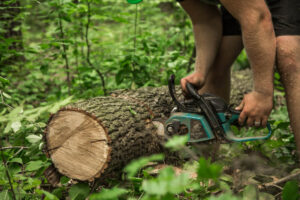
Where it fits best is in a broader plan. A mature tree with a valued canopy and a manageable defect may benefit from selective pruning combined with support hardware. That can preserve the tree while reducing risk. Where a defect is too advanced or targets are too significant, support may not be enough. This is exactly the kind of gray area where experienced arborists earn trust, because the answer is rarely as simple as "yes, cable it" or "no, remove it."
The larger point is that controlled work around big trees is not defined by one service line. Tree Removal Services, pruning, support systems, and risk assessment often overlap. The best outcome comes from matching the treatment to the actual condition rather than forcing every tree into the same solution.
When storms change the timeline
Storms compress decision-making. A branch tears out, a stem cracks, or a root plate shifts, and suddenly an issue that could have waited for a planned consultation becomes urgent. That is the role of Emergency Tree Services. Emergency response is not simply faster scheduling. It is work performed when conditions are unstable, access may be compromised, and the first goal is to make the site safer.
In those moments, triage matters. A tree on a house requires a different response than a tree that dropped a limb in an empty back corner of a lot. Some storm-damaged trees need immediate removal. Others can be stabilized temporarily, isolated from use, and assessed more thoroughly once the immediate hazard is controlled. Professional judgment is crucial because haste can make a damaged tree even less predictable.
The most common situations that warrant prompt professional assessment include:
- A tree or major limb that has already struck a structure or is suspended above a target.
- Fresh cracks, splits, or movement in the trunk or major scaffold limbs after wind or heavy snow.
- A tree that has partially uprooted or shifted noticeably from its original position.
- Broken hangers lodged in the canopy where they could fall without warning.
- Damage that blocks access routes or creates immediate public exposure.
What homeowners should take from this is simple. If the tree looks unstable, treat the area as off-limits and call professionals trained for emergency work. Curiosity puts people in bad places quickly around partially failed trees.
The part people forget: Stump Removal & Grinding
After a large removal, many clients feel as if the job is essentially done once the trunk and limbs are gone. Then the stump becomes the next decision. Stump Removal & Grinding is often treated as an afterthought, but it affects how the site can be used afterward. A leftover stump may interfere with replanting, grading, mowing, or future hardscape plans. In tighter spaces, it can remain a persistent obstacle even if the visible tree is gone.
Grinding is often the practical choice when the goal is to reclaim surface use without turning the yard into an excavation site. Full extraction may be considered in some situations, but site conditions, access, and surrounding features all matter. The right recommendation depends on what comes next. If the client wants turf, a planting bed, or a new tree in roughly the same area, the approach may differ. If the stump is tucked into a naturalized area where it causes no conflict, some owners choose to leave it.
As with other tree work, the best answer is tied to the site plan, not habit.
FireSmart tree work is selective, not indiscriminate
Fire risk changes how many property owners think about vegetation management, especially where homes meet forested or semi-forested conditions. FireSmart Tree Services are often misunderstood as blanket tree removal. That is not a sound way to frame the work. The useful question is how to manage vegetation and spacing in a way that lowers fire exposure while preserving tree health and property function where possible.
That often means looking at proximity, crown spacing, surface fuels, and ladder fuels rather than assuming every mature tree is a problem. Large-tree work in this context still benefits from the same measured approach discussed elsewhere: assess first, prune or remove based on actual conditions, and avoid unnecessary damage that can leave a site worse managed than before. A rushed clearing job can create its own problems if it leaves poor cuts, unstable residual trees, or a site that is difficult to maintain.
For homeowners, the practical takeaway is that FireSmart Tree Services should feel targeted and reasoned. If the recommendation sounds like indiscriminate cutting with no discussion of structure, health, or ongoing maintenance, it deserves a second look.
What clients should expect from a professional process
A professional tree company should be able to explain not only what they recommend, but why they recommend it. Around large trees, that explanation matters because the work can be expensive, disruptive, and emotionally difficult. People form attachments to shade trees. They also worry, rightly, about property damage and safety. Clear communication reduces both confusion and bad decisions.
A solid process usually includes a site review, discussion of objectives, visible concerns, and likely treatment options. If removal is recommended, the reasoning should be tied to condition and risk, not vague language. If pruning is recommended instead, the company should be able to FireSmart tree trimming explain the pruning objective in plain terms. If a support system is proposed, the limitations should be stated openly. Good arborists do not hide uncertainty. They manage it professionally.
It also helps when clients ask better questions. The most useful ones are not dramatic. They are practical and specific:
- Is this tree a removal candidate, or are there reasonable risk-reduction options short of removal?
- What is the main objective of the recommended pruning or crown shaping?
- Are there structural concerns that call for monitoring, support, or a timeline for reevaluation?
- How will the work be controlled given the nearby structures, access limits, or adjacent trees?
- What should be done with the stump once the tree is removed?
Those questions tend to pull the conversation away from sales language and back toward arboricultural judgment.
The value of measured decisions
The hardest part of large-tree management is often not the cutting. It is deciding what level of intervention the situation actually requires. Some trees need prompt removal. Some need careful pruning. Some need a structural support system and scheduled follow-up. Some need no immediate action at all, only monitoring and a realistic understanding of risk.
That is why the best Tree Removal Services are not defined by how quickly they take trees down. They are defined by how well they read the tree, the site, and the consequences of every cut. Controlled work around large trees is part technical skill, part planning, and part restraint. It asks for crews who know when to remove, when to reduce, when to support, and when to say that the least dramatic option is the right one.
For property owners, that distinction matters. A large tree near a home or commercial building is never just another landscape feature. It is a living structure with benefits, liabilities, and a long list of variables that change over time. When the work is handled by trained professionals, especially with input from a Certified Arborist Consultation, the result is usually not just a cleaner site. It is a better decision, made with full regard for safety, tree biology, and the realities of the space around it.
Name: Ace Tree Services Ltd.
Address: 4656 Wallace Hill Road, Kelowna, BC
Phone: 250-212-9593
Website: https://acetree.ca/
Hours:
Monday: 7:00 AM–5:00 PM
Tuesday: 7:00 AM–5:00 PM
Wednesday: 7:00 AM–5:00 PM
Thursday: 7:00 AM–5:00 PM
Friday: 7:00 AM–5:00 PM
Saturday: 7:00 AM–5:00 PM
Sunday: Closed
Emergency tree services: 24/7 emergency service is listed.
Open-location code / Plus code: RHF8+8G Kelowna, British Columbia, Canada
Map/listing URL: https://www.google.com/maps/place/Ace+Tree+Services+Ltd./@49.8232606,-119.4337283,563m/data=!3m1!1e3!4m6!3m5!1s0x537d8b1d074815c5:0x450b88afa7a41435!8m2!3d49.8232606!4d-119.4337283!16s%2Fg%2F11ydkpnh22
Embed iframe:
Socials: https://www.facebook.com/people/Ace-Tree-Services/61585901931447/
https://m.yelp.com/biz/ace-tree-services-kelowna
Ace Tree Services Ltd. provides professional tree service for residential, commercial, and municipal customers in Kelowna and across the Okanagan Valley.
The company’s listed services include tree removal, stump removal and grinding, tree pruning and crown shaping, emergency tree services, certified arborist consultation, dangerous tree assessment, tree cable and bracing, and wildfire mitigation.
Ace Tree Services works with homeowners, businesses, property managers, and public-sector clients that need safe, practical tree care in the Kelowna area.
The official site highlights ISA-certified arborists, insurance, and experience handling both routine and complex tree service situations.
Customers can contact Ace Tree Services for tree care planning, hazard concerns, emergency tree cleanup, pruning needs, stump grinding, or advice about trees near homes, fences, driveways, and landscaping.
Ace Tree Services lists regular work hours from 7:00 AM to 5:00 PM Monday through Friday, with 24/7 emergency tree service available for urgent situations.
For tree service in Kelowna, call 250-212-9593 or visit https://acetree.ca/
The public map listing places Ace Tree Services Ltd. in Kelowna and can help customers find directions to the Wallace Hill Road area.
Popular Questions About Ace Tree Services Ltd.
What services does Ace Tree Services Ltd. provide?
Ace Tree Services Ltd. provides tree removal, stump removal and grinding, tree pruning and crown shaping, emergency tree services, certified arborist consultation, dangerous tree assessment and removal, tree cable and bracing, and wildfire mitigation.
Where is Ace Tree Services Ltd. located?
The official website lists Ace Tree Services Ltd. at 4656 Wallace Hill Road, Kelowna, BC.
What areas does Ace Tree Services Ltd. serve?
The official website describes Ace Tree Services as located in Kelowna and servicing the Okanagan.
What phone number should customers call?
Customers can call Ace Tree Services Ltd. at 250-212-9593.
What are Ace Tree Services Ltd.’s regular hours?
The official website lists work hours as 7:00 AM to 5:00 PM, Monday through Friday. Saturday and Sunday regular hours are not listed and should be confirmed directly.
Does Ace Tree Services Ltd. offer emergency tree service?
Yes. The official website lists 24/7 emergency services for urgent tree situations, including emergency tree removal, dangerous tree assessment, stabilization, and limb or branch cleanup.
Does Ace Tree Services Ltd. have certified arborists?
Yes. The official website states that Ace Tree Services has ISA-certified arborists.
Can Ace Tree Services Ltd. help with wildfire mitigation?
Yes. Wildfire mitigation is listed as one of the company’s tree services.
How do I contact Ace Tree Services Ltd.?
Call 250-212-9593 or visit https://acetree.ca/.
Landmarks Near Kelowna, BC
Wallace Hill Road: A local Kelowna road near the address listed for Ace Tree Services Ltd.
Okanagan Lake: A major Kelowna landmark near residential, commercial, and waterfront properties that may need tree pruning, removal, or hazard assessment.
Downtown Kelowna: A central area with homes, offices, rental properties, restaurants, and commercial sites that may need professional tree care.
Mission / Lower Mission: A well-known Kelowna area with mature landscaping, residential properties, and lake-adjacent homes.
South East Kelowna: A rural and residential area with larger properties, orchards, and tree-care needs that can include pruning, removals, and wildfire mitigation.
Crawford: A residential area near the southeast side of Kelowna where homeowners may need tree trimming, hazard assessment, and stump grinding.
Kettle Valley: A hillside residential neighborhood where tree condition, slope, wind exposure, and defensible-space planning can matter for property owners.
Myra-Bellevue Provincial Park: A major outdoor landmark near southeast Kelowna and a useful point of orientation for nearby properties.
Gallagher’s Canyon: A residential and golf community near southeast Kelowna where tree maintenance and wildfire-conscious vegetation management can be practical concerns.
Orchard Park Shopping Centre: A major central Kelowna retail landmark and reference point for customers traveling across the city.
Highway 97: A major Kelowna corridor connecting neighborhoods, commercial properties, and service routes throughout the region.
Kelowna City Park: A recognizable central landmark near downtown neighborhoods and lakefront properties.
Glenmore: A Kelowna neighborhood with residential and commercial properties that may need pruning, storm cleanup, and general tree care.
Rutland: A large residential and commercial area where customers may need tree removal, pruning, stump grinding, or arborist consultation.
Black Mountain: A hillside community where slope, wind, wildfire exposure, and access can influence tree service planning.
For tree service near these Kelowna landmarks, contact Ace Tree Services Ltd. at 250-212-9593 or visit https://acetree.ca/