Tree Pruning & Crown Shaping to Reduce Risk Without Over-Pruning
Tree owners usually call about risk for one of two reasons. Something has changed, or something has them worried. A large limb now hangs over the driveway. The crown looks lopsided after a storm. A mature tree has grown dense enough that wind movement feels different. Sometimes the concern is sharper than that, especially after a break, a near miss, or a sudden lean. The instinct is understandable: cut it back hard and make it safe.
That instinct is also where a lot of damage starts.
Good tree care is not about removing as much canopy as possible. It is about reducing the chance of failure without creating new problems through unnecessary cuts, poor structure, or stress. Tree Pruning & Crown Shaping done well is measured work. It respects the biology of the tree, the targets below it, and the fact that no tree is completely safe. The goal is not zero risk. It is an acceptable level of risk, reached through sound judgment rather than aggressive cutting.
In practice, that often means less cutting than a client expects, but better cutting than they have seen before.
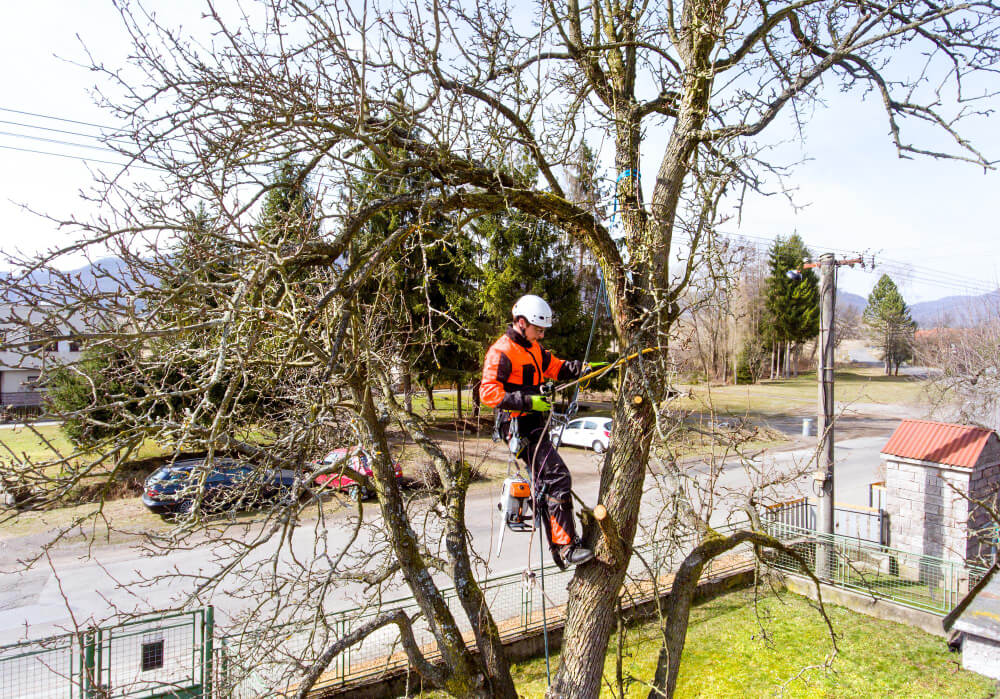
Why over-pruning creates its own hazards
A tree crown is not excess material waiting to be removed. It is the living system that supports growth, energy production, and the tree’s ability to respond to stress. Remove too much at once, or make the wrong cuts in the wrong places, and the tree may survive but become weaker, more reactive, and less stable over time.
That is the irony many property owners do not see at first. They ask for heavy thinning or “take it down by half” because they want less risk. What they may get instead is a tree that responds with poor new growth, exposed limbs, altered weight distribution, and wounds larger than necessary. When people talk about a tree being “butchered,” this is usually what they mean. The tree was not managed. It was stripped.
Improper techniques are a big part of that problem. Topping remains one of the most damaging examples. Stub cuts create another set of issues. Both ignore how trees compartmentalize wounds and how branch structure actually carries load. A tree may look smaller right after the job, but smaller is not the same thing as safer.
The better approach is more precise. Crown shaping for risk reduction often relies on selective reduction, directional pruning, and the removal of dead, damaged, or poorly attached material. Crown raising may also have a role where lower clearance is needed, though even that should be done with restraint. The point is to improve structure and manage exposure, not to erase the crown.
Risk reduction starts with assessment, not a chainsaw
Before any saw starts, someone qualified should be asking basic but important questions. What part of the tree is the concern? What is the target if something fails, a house, a parked vehicle, a walking path, a play area? Has the tree recently changed? Is the concern about deadwood, limb length, end weight, clearance, storm damage, or a trunk level issue that pruning may not solve?
This is where a Certified Arborist Consultation matters. ISA Certified Arborists are trained in the art and science of tree care, must pass a comprehensive exam, continue their education, and follow a code of ethics. That matters because risk decisions often look simple from the ground but are not simple at all. A canopy can seem too dense when the real issue is a single overextended scaffold limb. A tree can look alarming when the better answer is modest pruning and observation, not removal. The reverse is also true. A tree that appears manageable may have conditions that call for stronger action.
Risk assessment itself is a systematic process. The aim is to identify, analyze, and evaluate risk, then recommend measures that bring that risk down to a level the owner can accept. Pruning is one of those measures. Structural support can be another. In some cases, Dangerous Tree Assessment and Removal is the most responsible recommendation. The key point is sequence: assess first, prescribe second.
That sequence separates professional arboriculture from guesswork.
What crown shaping actually means in the field
The phrase “crown shaping” gets used loosely. Some people hear it and think of making a tree look neat or symmetrical. In risk-focused work, shaping is more functional than cosmetic. It is about guiding the crown toward better balance, better spacing, and better load management while preserving as much healthy, appropriate canopy as practical.
Crown reduction is one of the most useful tools here when it is done correctly. Proper reduction cuts shorten a limb stump extraction and grinding back to a suitable lateral branch, rather than leaving a stub or simply heading everything back indiscriminately. That distinction matters. It preserves a more natural form and reduces the chance of a harsh, unstable regrowth response.
Directional pruning also has a place, especially when growth is extending toward a target area. Instead of cutting the entire side of the tree flat, the arborist makes selective choices that encourage growth where there is room and reduce it where there is conflict. This is especially relevant when limbs are reaching over structures or access routes.
Crown raising can reduce conflicts with traffic, pedestrian movement, and routine property use, but it is not just a matter of stripping lower branches. Removing too much lower growth can shift the tree’s visual and mechanical balance in ways that are not helpful. The best crown raising is gradual and intentional.
When these methods are used with restraint, the result often surprises people. The tree still looks like a tree. It is not scalped. It does not have the thin, overexposed look that follows poor pruning. Yet the highest-risk defects in the crown have been addressed.
A mature tree is not a hedge
One of the most common misunderstandings in residential tree care is treating large shade trees like oversized shrubs. Hedges tolerate repetitive shearing because that is how they are managed. Mature trees are different. Their branch architecture, wound response, and long-term structural development do not reward indiscriminate cutting.
On established properties, this confusion often shows up after a storm season. A client has watched branches sway and decides the canopy is “too full.” What they want is less movement. What the tree may need is selective reduction of specific leaders, removal of deadwood, and perhaps a closer look at unions or previous pruning points. If you simply remove interior and outer canopy in bulk, you may leave long exposed limbs with poor taper and an altered wind profile. Again, the tree is smaller, but not necessarily safer.
This is one reason many reputable companies tie Tree Pruning & Crown Shaping closely to formal assessment. The pruning prescription should follow the risk question. It should not be a generic package.
When pruning is enough, and when it is not
There are many cases where careful pruning is the right answer. Dead, broken, or hanging branches can often be removed. Overextended limbs can sometimes be reduced. Crowns with asymmetrical weight can, in some cases, be improved through measured reduction and shaping. Trees with developing structural issues may benefit from early intervention before defects become severe.
But not every problem can be solved from the crown.
When defects involve the trunk, root zone, or major unions, pruning may only lower the load on a compromised system, not correct the weakness itself. That still has value, but only if everyone is clear about the limits. A property owner should never be sold a pruning job as though it “guarantees” safety. No honest arborist works that way.
There are also times when supplementary systems become part of the conversation. Tree Cable and Bracing can be used as a structural support measure in some situations, particularly when the goal is to reduce the chance of failure in a tree or stem that is otherwise worth retaining. Support systems are not a substitute for proper pruning. They work best as part of a broader management plan that begins with assessment and includes ongoing monitoring.
Sometimes the most responsible answer is removal. That can be a difficult conversation, especially with mature trees that define a landscape, but Tree Removal Services exist for a reason. If the risk is too high, the target value is significant, or the defect is beyond reasonable mitigation, removal may be the safer choice. Afterward, Stump Removal & Grinding may be part of restoring the space for replanting, access, or landscape use.
A practical rule of thumb is this: if the tree’s primary problem is branch structure, pruning may be central to the solution. If the primary problem is whole-tree stability or major structural failure potential, pruning may only be one small part of the answer.
Four signs that a “hard cut” request deserves a pause
Many risky pruning jobs begin with a simple request from the owner. “Take a lot off.” “Open it way up.” “Lower the whole crown.” Those requests deserve a careful pause when they are tied to fear rather than diagnosis.
- The concern is vague, such as “it just feels too big,” with no specific defect or target identified.
- The owner wants to remove large amounts of canopy after a storm, even though the visible damage is limited to one section.
- Previous poor pruning has already left stubs, lions-tailed limbs, or uneven regrowth, and another hard cut would compound the problem.
- The tree may have a structural issue that calls for Dangerous Tree Assessment and Removal, not cosmetic reduction.
An experienced arborist can hear those requests and translate them into a better question: what exactly are we trying to make less likely?
That shift in language changes the quality of the work.
Storm response and the temptation to overcorrect
After severe weather, property owners often move quickly, and for good reason. Hanging limbs, partially failed leaders, and damaged crowns can create immediate hazards. Emergency Tree Services are essential in those moments, particularly when a tree has struck a structure, blocked access, or left unstable material overhead.
Emergency response, however, is not the same as long-term restoration. In the first phase, the priority is safety and controlled removal of immediate hazards. Large trees and storm-damaged trees are dangerous work, and they should be handled only by trained, equipped professionals. Once the site is stabilized, a second round of decisions may follow. Does the tree have enough sound structure left to retain? Can selective pruning restore a workable crown? Is reduction appropriate, or has the tree crossed the line where removal is the better option?
The mistake is assuming that every storm-damaged tree should be heavily cut back “just in case.” Sometimes that is exactly the wrong move. A measured post-storm assessment often leads to less canopy removal than a frightened owner first expected.
The value of controlled lowering and trained crews
Risk reduction in tree care is not only about what gets cut. It is also about how the work is carried out. In many settings, especially around homes, fences, hardscape, and utility-adjacent spaces, branches cannot simply be dropped. They need to be rigged, controlled, and lowered with skill.
That detail matters because a sound pruning plan can still turn into property damage or unnecessary bark injury if the crew executing it lacks training. Arboriculture is not casual labor with a chainsaw. Proper branch removal and reduction cuts, safe climbing or aerial access practices, and controlled handling of pruned wood all affect the final outcome.
This is another reason a Certified Arborist Consultation is useful even when the work itself is performed by a larger crew. The prescription and the execution need to match. Good pruning on paper is not enough.
Fire exposure changes the conversation, but not the fundamentals
In areas where wildfire planning shapes property management, clients sometimes fold pruning into broader FireSmart Tree Services. The language may be different, but the same caution applies: risk reduction should not become indiscriminate cutting. Even when vegetation management is part of a larger fire-preparedness strategy, the work should still respect tree structure and avoid harmful practices such as topping and stub cuts.
This is where site-specific judgment becomes especially important. A property may need reduced conflict around access, structures, or neighboring vegetation, but that does not justify stripping every crown aggressively. The better approach is targeted work that addresses the specific exposure while preserving tree function where possible.
How owners can tell the difference between careful pruning and over-pruning
Most property owners are not expected to know pruning terminology. They should, however, expect clarity. If an arborist recommends pruning for risk reduction, the explanation should make sense in plain language. You should hear which limbs are a concern, what the target is below them, and why the proposed cuts lower risk without creating avoidable stress.
You should also hear restraint.
When a proposal sounds like a complete Tree Pruning & Crown Shaping reset of the crown, ask why. When the answer is vague, be cautious. If the tree is truly unsafe, a professional should be willing to say removal is on the table. If the tree is retainable, the work should sound selective rather than sweeping.
Here are a few useful questions to ask during a site visit:
- What specific defects or targets are driving the recommendation?
- Are you proposing reduction cuts, removal cuts, crown raising, or a combination?
- Is pruning enough, or should we also consider Tree Cable and Bracing or further assessment?
- If this tree is not a good candidate for retention, what would make Tree Removal Services the safer option?
Those questions do not make you difficult. They help bring the work into focus.
Pruning for appearance alone can conflict with pruning for risk
There is nothing wrong with wanting a tree to look balanced. The trouble starts when appearance is treated as the only objective. A perfectly symmetrical crown may not be possible, or even desirable, if the tree has grown in response to light, wind, or past damage. Forcing symmetry can lead to unnecessary cuts on the stronger side of the tree just to make both sides match.
Risk-focused crown shaping is usually more subtle than ornamental trimming. The finished tree may still have some asymmetry because the pruning respected the structure that was actually there. To a trained eye, that often looks better, not worse. The tree retains character, and the work disappears into the natural form.
Clients sometimes need to hear that “clean” and “safe” are not synonyms. A tree can be over-cleaned into decline. It can be thinned until the scaffold structure is exposed and stressed. It can be reduced so severely that it responds with a flush of poorly attached shoots. None of that is sophisticated risk management.
Keeping the long view
The best pruning decisions usually look beyond the current season. A tree is not a static object. It will respond to cuts, continue to grow, and interact with weather over time. That means the smartest risk-reduction pruning often aims for stability in stages rather than a dramatic one-time cut.
A lightly reduced limb today may be reassessed later. A developing structural issue may be monitored after selective pruning. A tree with support hardware may remain in the landscape with periodic review. A removed tree may lead to Stump Removal & Grinding and a better replanting decision in the same space. Good tree care leaves room for follow-up because it recognizes that living structures change.
This long-view mindset also helps owners avoid the false economy of harsh pruning. A heavy cut may feel decisive, but if it creates new structural and health issues, the property has not saved money or reduced exposure. It has only postponed a bigger decision.
What sound professional judgment looks like
Professional tree care is rarely about delivering the most dramatic visible change. More often, it is about making careful distinctions. Which branch matters most? Which cut preserves a natural line of growth? Which risk can be reduced, and which risk remains no matter what we do? Is this a pruning job, a support-system job, an Emergency Tree Services call, or a case for Dangerous Tree Assessment and Removal?
The strongest practitioners are comfortable with those distinctions. They do not promise impossible safety. They do not hide behind jargon. They assess, explain, and recommend the least harmful effective option.
That is the center of Tree Pruning & Crown Shaping done well. It lowers risk without stripping away the tree’s future. It uses pruning as a precise tool, not a reflex. And it recognizes that a tree worth keeping is a tree worth managing carefully.
Name: Ace Tree Services Ltd.
Address: 4656 Wallace Hill Road, Kelowna, BC
Phone: 250-212-9593
Website: https://acetree.ca/
Hours:
Monday: 7:00 AM–5:00 PM
Tuesday: 7:00 AM–5:00 PM
Wednesday: 7:00 AM–5:00 PM
Thursday: 7:00 AM–5:00 PM
Friday: 7:00 AM–5:00 PM
Saturday: 7:00 AM–5:00 PM
Sunday: Closed
Emergency tree services: 24/7 emergency service is listed.
Open-location code / Plus code: RHF8+8G Kelowna, British Columbia, Canada
Map/listing URL: https://www.google.com/maps/place/Ace+Tree+Services+Ltd./@49.8232606,-119.4337283,563m/data=!3m1!1e3!4m6!3m5!1s0x537d8b1d074815c5:0x450b88afa7a41435!8m2!3d49.8232606!4d-119.4337283!16s%2Fg%2F11ydkpnh22
Embed iframe:
Socials: https://www.facebook.com/people/Ace-Tree-Services/61585901931447/
https://m.yelp.com/biz/ace-tree-services-kelowna
Ace Tree Services Ltd. provides professional tree service for residential, commercial, and municipal customers in Kelowna and across the Okanagan Valley.
The company’s listed services include tree removal, stump removal and grinding, tree pruning and crown shaping, emergency tree services, certified arborist consultation, dangerous tree assessment, tree cable and bracing, and wildfire mitigation.
Ace Tree Services works with homeowners, businesses, property managers, and public-sector clients that need safe, practical tree care in the Kelowna area.
The official site highlights ISA-certified arborists, insurance, and experience handling both routine and complex tree service situations.
Customers can contact Ace Tree Services for tree care planning, hazard concerns, emergency tree cleanup, pruning needs, stump grinding, or advice about trees near homes, fences, driveways, and landscaping.
Ace Tree Services lists regular work hours from 7:00 AM to 5:00 PM Monday through Friday, with 24/7 emergency tree service available for urgent situations.
For tree service in Kelowna, call 250-212-9593 or visit https://acetree.ca/
The public map listing places Ace Tree Services Ltd. in Kelowna and can help customers find directions to the Wallace Hill Road area.
Popular Questions About Ace Tree Services Ltd.
What services does Ace Tree Services Ltd. provide?
Ace Tree Services Ltd. provides tree removal, stump removal and grinding, tree pruning and crown shaping, emergency tree services, certified arborist consultation, dangerous tree assessment and removal, tree cable and bracing, and wildfire mitigation.
Where is Ace Tree Services Ltd. located?
The official website lists Ace Tree Services Ltd. at 4656 Wallace Hill Road, Kelowna, BC.
What areas does Ace Tree Services Ltd. serve?
The official website describes Ace Tree Services as located in Kelowna and servicing the Okanagan.
What phone number should customers call?
Customers can call Ace Tree Services Ltd. at 250-212-9593.
What are Ace Tree Services Ltd.’s regular hours?
The official website lists work hours as 7:00 AM to 5:00 PM, Monday through Friday. Saturday and Sunday regular hours are not listed and should be confirmed directly.
Does Ace Tree Services Ltd. offer emergency tree service?
Yes. The official website lists 24/7 emergency services for urgent tree situations, including emergency tree removal, dangerous tree assessment, stabilization, and limb or branch cleanup.
Does Ace Tree Services Ltd. have certified arborists?
Yes. The official website states that Ace Tree Services has ISA-certified arborists.
Can Ace Tree Services Ltd. help with wildfire mitigation?
Yes. Wildfire mitigation is listed as one of the company’s tree services.
How do I contact Ace Tree Services Ltd.?
Call 250-212-9593 or visit https://acetree.ca/.
Landmarks Near Kelowna, BC
Wallace Hill Road: A local Kelowna road near the address listed for Ace Tree Services Ltd.
Okanagan Lake: A major Kelowna landmark near residential, commercial, and waterfront properties that may need tree pruning, removal, or hazard assessment.
Downtown Kelowna: A central area with homes, offices, rental properties, restaurants, and commercial sites that may need professional tree care.
Mission / Lower Mission: A well-known Kelowna area with mature landscaping, residential properties, and lake-adjacent homes.
South East Kelowna: A rural and residential area with larger properties, orchards, and tree-care needs that can include pruning, removals, and wildfire mitigation.
Crawford: A residential area near the southeast side of Kelowna where homeowners may need tree trimming, hazard assessment, and stump grinding.
Kettle Valley: A hillside residential neighborhood where tree condition, slope, wind exposure, and defensible-space planning can matter for property owners.
Myra-Bellevue Provincial Park: A major outdoor landmark near southeast Kelowna and a useful point of orientation for nearby properties.
Gallagher’s Canyon: A residential and golf community near southeast Kelowna where tree maintenance and wildfire-conscious vegetation management can be practical concerns.
Orchard Park Shopping Centre: A major central Kelowna retail landmark and reference point for customers traveling across the city.
Highway 97: A major Kelowna corridor connecting neighborhoods, commercial properties, and service routes throughout the region.
Kelowna City Park: A recognizable central landmark near downtown neighborhoods and lakefront properties.
Glenmore: A Kelowna neighborhood with residential and commercial properties that may need pruning, storm cleanup, and general tree care.
Rutland: A large residential and commercial area where customers may need tree removal, pruning, stump grinding, or arborist consultation.
Black Mountain: A hillside community where slope, wind, wildfire exposure, and access can influence tree service planning.
For tree service near these Kelowna landmarks, contact Ace Tree Services Ltd. at 250-212-9593 or visit https://acetree.ca/