Tree Pruning & Crown Shaping for Health, Structure, and Clearance
Tree pruning is one of the most misunderstood parts of tree care. People tend to notice it only when limbs scrape a roof, block a driveway, tangle with utility space, or fail in a storm. Yet the best pruning work is often the least dramatic. It is measured, intentional, and sometimes almost invisible a season later, except for the fact that the tree looks balanced, functions better, and creates fewer problems.
That balance matters because pruning is never just cosmetic. A cut changes the way a tree allocates growth, responds to stress, and carries weight through the canopy. Good crown shaping improves structure, helps maintain clearance, and can support long term health. Poor pruning can do the opposite. It can create weak regrowth, leave unnecessary wounds, or push a tree toward decline. That is why the method matters as much as the goal.
In practice, pruning decisions are rarely made for one reason alone. A homeowner may want more light over a patio, but the tree may also need better branch spacing. A commercial property manager may need clearance over a walkway, while also reducing the chance of branch conflict over parking areas. In some cases, a tree that looks like a candidate for heavy cutting may actually need a different conversation, one that includes a Certified Arborist Consultation, structural support, or in severe cases, Dangerous Tree Assessment and Removal.
What crown shaping is really meant to do
Crown shaping is often described as giving a tree a cleaner or more refined form, but that language can be misleading. Trees are not hedges, and pruning should not force them into arbitrary shapes. In professional arboriculture, shaping is about guiding the existing canopy so the tree can occupy its space with better structure and fewer conflicts.
That usually means selecting cuts that support the tree’s natural architecture rather than fighting it. Crown reduction, directional pruning, and crown raising each have their place. Used correctly, they can improve clearance over streets, paths, roofs, and sightlines while preserving the character of the tree. Used carelessly, the same terms become a cover for overcutting.
A healthy crown is not simply a thinner crown. It is one that carries weight sensibly, allows enough space where space is needed, and avoids creating stress points that become future hazards. Sometimes the right choice is to remove a competing limb. Sometimes it is to shorten a branch back to a suitable lateral. Sometimes it is to leave the tree largely alone because the proposed cuts would create more harm than benefit.
That judgment is what separates thoughtful Tree Pruning & Crown Shaping from routine trimming.
Health and structure are linked, not separate issues
People often ask whether they should prune for health or for structure, as if those were two different jobs. In most mature trees, they overlap. Structure affects how the tree handles wind, load, and seasonal growth. Health affects how well the tree responds to pruning and closes over cuts. You cannot make good decisions about one without considering the other.
A tree with poor branch arrangement may remain stable for years, then start to show strain as limbs lengthen and leverage increases. A tree with a dense crown over a house may not be unhealthy in a broad sense, but it may still need reduction or raising for clearance and risk management. The arborist’s task is not to chase perfection. It Tree Pruning & Crown Shaping is to identify what the tree can reasonably sustain and what intervention will improve the outcome without introducing unnecessary damage.
That idea is especially important in risk work. Tree risk assessment is a systematic process used to identify, analyze, and evaluate risk, then recommend measures that achieve an acceptable level of risk. The key phrase there is acceptable level. There is no completely safe tree. Some level of risk is part of living with trees. The work is about reducing unnecessary risk while retaining value whenever possible.
Pruning is often one of those measures. It can lessen end weight on a long branch, improve separation from a structure, or reduce conflict in a high use area. But pruning is not a cure for every defect, and it should not be sold that way. Some conditions call for Tree Cable and Bracing. Some call for monitoring. Some call for removal.
Clearance work should not become overcutting
Clearance is one of the most common reasons people schedule pruning. Limbs hang too low over a driveway. Branches obscure visibility at an entrance. Growth pushes into occupied space around buildings. In utility contexts, directional pruning and crown reduction are recognized approaches for managing conflict while preserving as much of the tree as practical.
The challenge is that clearance requests can quickly turn into excessive crown removal if they are handled without restraint. Homeowners sometimes ask for a tree to be lifted higher and thinned harder than the species, age, or current condition can tolerate. The result may solve one problem for a season and create three more later, including weak regrowth, poor form, and greater stress.
A more durable approach is selective pruning guided by target clearance and tree structure. If a branch is too low over a walkway, the answer may be crown raising in that area rather than stripping the entire underside of the tree. If a canopy edge is crowding a roof, a reduction cut back to an appropriate lateral is usually better than a stub cut that leaves a dead projection. If growth is extending toward utility space or structures, directional pruning can guide the canopy away from conflict rather than simply hacking it back.
These are not subtle distinctions. They determine whether the tree remains functional after the work is done.
Why proper cuts matter so much
A surprising amount of tree damage comes not from the decision to prune, but from where and how the cuts are made. Proper branch removal and reduction cuts are foundational in arboriculture for a reason. The tree responds to those cuts biologically and structurally. A correct cut respects the branch relationship and leaves the tree in the best position to respond. An improper cut leaves a problem behind.
Stub cuts are a common example of what not to do. They leave an unnecessary piece of branch that the tree cannot use effectively, and they do not resolve the structural issue that justified the cut in the first place. Topping is another well known bad practice. It may appear to reduce size quickly, but it destroys natural form and often leads to poor regrowth and greater maintenance issues later. ISA pruning guidance explicitly warns against techniques like topping and stub cuts, and for good reason.
When crown shaping is done well, the finished tree does not look butchered. It looks coherent. The cuts are purposeful. The canopy still reads as a crown rather than a collection of amputations. That outcome takes restraint and training.
The role of a Certified Arborist Consultation
There is a point in many pruning conversations where opinion stops being useful and trained assessment becomes necessary. That is where a Certified Arborist Consultation adds real value.
ISA Certified Arborists are trained in the art and science of tree care, pass a comprehensive exam, continue their education, and are required to follow a code of ethics. For a property owner, that matters because pruning decisions can have long consequences. A tree that is pruned hard in the wrong place may need years to recover, if it recovers well at all. A tree with an underlying defect may look fine from the ground and still need a more careful evaluation before anyone starts removing live canopy.
A consultation is particularly useful when the goals compete with each other. You may want maximum light but also want to preserve shade. You may need roadway clearance but want to keep screening from a neighboring property. You may suspect the tree is dangerous but hope to retain it if treatment can reduce risk. Those are exactly the situations where experienced judgment matters more than a quick estimate.
Certified arborists also help clarify when pruning is the right service and when it is not. Some sites need Emergency Tree Services after storm damage. Others need Dangerous Tree Assessment and Removal because the risk cannot be managed adequately through pruning alone. In some cases, the tree has already been removed and the next concern is Stump Removal & Grinding so the site can be restored or replanted.
When structural support enters the picture
Not every structural problem should be solved with a saw. Some trees benefit from support systems that help branch bracing cables manage load and movement while preserving the canopy. Tree Cable and Bracing are recognized treatment options in arboriculture and appear within the broader framework of structural support systems and mitigation approaches tied to tree risk and pruning decisions.
The important point is not that every tree with a wide crown needs support. It is that support can be part of a broader plan when pruning alone would either be too aggressive or would not adequately address the concern. A long overextended limb may need some weight reduced. A compromised union may also need supplemental support if the retention goal is realistic. Those are case by case decisions, and they should be grounded in assessment rather than assumption.
This is also where unqualified cutting can make a bad situation worse. Removing too much live canopy from a tree that needed a balanced mitigation plan may destabilize its growth pattern or reduce its value without meaningfully reducing risk.
Fire, storms, and the limits of preventive pruning
People often ask whether pruning can make a tree “safe” before fire season or storm season. The better answer is that pruning can be part of risk reduction, but it cannot eliminate risk altogether.
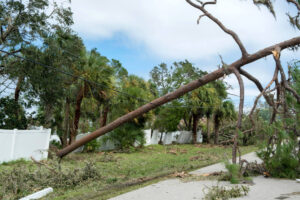
That principle aligns with accepted tree risk guidance. There is no completely safe tree. Pruning can improve clearance, remove certain conflicts, and reduce some forms of loading in the crown. In a fire conscious landscape, FireSmart Tree Services may involve considering how vegetation is managed around structures and access areas. In storm prone periods, a property owner may focus on trees over targets such as homes, driveways, or occupied commercial spaces.
But preventive pruning should still be disciplined. Fear leads many people to overprune. After a storm warning, they want every limb shortened. After a nearby wildfire, they want every canopy lifted to extremes. Those reactions are understandable, but they are not always sound tree care. Work should be based on identifiable concerns, realistic site use, and the tree’s capacity to handle the cuts.
When storms do cause immediate failures, Emergency Tree Services become a different kind of job. The priority shifts from long range shaping to safe access, controlled removal of damaged sections, and protection of people and property. Emergency restoration work is recognized within the tree care standards framework for a reason. Conditions are dynamic, tensions in wood can be unpredictable, and speed must never replace safe procedure.
Large trees deserve a higher level of caution
The larger the tree, the greater the consequences of a bad decision or bad technique. That is true biologically and mechanically. It is also true from a safety standpoint.
Pruning or removing trees, especially large trees, is dangerous work and should be done only by people who are trained and properly equipped to work safely in trees. That is not a marketing claim. It is a practical reality. Even a straightforward reduction cut can involve rigging, controlled lowering, and careful sequencing when branches are over structures or access routes. ISA materials cover rigging techniques and controlled lowering for exactly these reasons.
Homeowners sometimes underestimate this because a tree can appear calm and static from the ground. In the crown, everything changes. Weight, leverage, swing, tension, and landing zones all matter. A branch that seems manageable can damage a roof, strike fencing, or injure a worker if it is not controlled correctly.
For that reason alone, the quality of the pruning plan and the competence of the crew cannot be separated.
How property owners can tell the difference between thoughtful pruning and rough trimming
Most people do not need to memorize arboricultural terminology to recognize quality. The visible signs are usually enough.
A well pruned tree still looks like the same species and the same tree. The canopy shape makes sense. Limbs that needed clearance are addressed, but the crown is not stripped unnaturally. Reduction cuts go somewhere purposeful rather than ending in random stubs. The work solves a problem without creating an obvious new one.
By contrast, rough trimming often leaves a tree looking flattened, lion tailed, topped, or oddly hollow. The immediate effect can seem tidy because there is less canopy, but the structure is poorer and the tree is set up for repeated intervention.
If there is any doubt, a brief consultation before the work starts is usually the cheapest part of the process and often the most important.
Situations that call for a broader plan
Pruning is a core service, but it is only one part of tree management on many properties. The right recommendation may widen once the site is assessed.
Sometimes pruning uncovers a larger issue, such as a tree that poses a level of concern requiring Dangerous Tree Assessment and Removal. Sometimes the tree can be retained with selective pruning plus Tree Cable and Bracing. Sometimes the most responsible path is Tree Removal Services followed by Stump Removal & Grinding so the area can be made usable again. On properties in high concern vegetation zones, FireSmart Tree Services may shape the broader conversation about spacing, clearance, and priorities near structures and access corridors.
None of this means every tree problem is severe. It means good tree care looks at the whole picture. The crown, the targets beneath it, the purpose of the site, and the tolerance for risk all matter.
Good pruning leaves options open
One of the best traits of professional crown shaping is that it preserves future choices. It does not box the tree into an unstable form or force the next round of work to be harsher than necessary. It respects the fact that trees are living structures, not fixed installations.
That is especially valuable on established properties where trees contribute shade, scale, privacy, and visual identity. A mature tree may need clearance over a drive, modest reduction away from a roofline, and selective structural correction, all without losing the qualities that made it worth keeping. Achieving that result takes patience and judgment, not aggression.
The strongest pruning plans often sound less dramatic than clients expect. They may involve fewer cuts than requested, smaller reductions than imagined, or a recommendation to defer cutting in one area while monitoring another. That restraint is not hesitation. It is professionalism.
Tree Pruning & Crown Shaping, when done properly, is not about making a tree smaller just because it is there. It is about making the tree work better in the space it occupies, with healthier structure, more appropriate clearance, and a lower chance of avoidable problems. When the work is grounded in sound assessment and carried out by trained professionals, the result is not merely neater. It is safer, more durable, and far more respectful of the tree itself.
Name: Ace Tree Services Ltd.
Address: 4656 Wallace Hill Road, Kelowna, BC
Phone: 250-212-9593
Website: https://acetree.ca/
Hours:
Monday: 7:00 AM–5:00 PM
Tuesday: 7:00 AM–5:00 PM
Wednesday: 7:00 AM–5:00 PM
Thursday: 7:00 AM–5:00 PM
Friday: 7:00 AM–5:00 PM
Saturday: 7:00 AM–5:00 PM
Sunday: Closed
Emergency tree services: 24/7 emergency service is listed.
Open-location code / Plus code: RHF8+8G Kelowna, British Columbia, Canada
Map/listing URL: https://www.google.com/maps/place/Ace+Tree+Services+Ltd./@49.8232606,-119.4337283,563m/data=!3m1!1e3!4m6!3m5!1s0x537d8b1d074815c5:0x450b88afa7a41435!8m2!3d49.8232606!4d-119.4337283!16s%2Fg%2F11ydkpnh22
Embed iframe:
Socials: https://www.facebook.com/people/Ace-Tree-Services/61585901931447/
https://m.yelp.com/biz/ace-tree-services-kelowna
Ace Tree Services Ltd. provides professional tree service for residential, commercial, and municipal customers in Kelowna and across the Okanagan Valley.
The company’s listed services include tree removal, stump removal and grinding, tree pruning and crown shaping, emergency tree services, certified arborist consultation, dangerous tree assessment, tree cable and bracing, and wildfire mitigation.
Ace Tree Services works with homeowners, businesses, property managers, and public-sector clients that need safe, practical tree care in the Kelowna area.
The official site highlights ISA-certified arborists, insurance, and experience handling both routine and complex tree service situations.
Customers can contact Ace Tree Services for tree care planning, hazard concerns, emergency tree cleanup, pruning needs, stump grinding, or advice about trees near homes, fences, driveways, and landscaping.
Ace Tree Services lists regular work hours from 7:00 AM to 5:00 PM Monday through Friday, with 24/7 emergency tree service available for urgent situations.
For tree service in Kelowna, call 250-212-9593 or visit https://acetree.ca/
The public map listing places Ace Tree Services Ltd. in Kelowna and can help customers find directions to the Wallace Hill Road area.
Popular Questions About Ace Tree Services Ltd.
What services does Ace Tree Services Ltd. provide?
Ace Tree Services Ltd. provides tree removal, stump removal and grinding, tree pruning and crown shaping, emergency tree services, certified arborist consultation, dangerous tree assessment and removal, tree cable and bracing, and wildfire mitigation.
Where is Ace Tree Services Ltd. located?
The official website lists Ace Tree Services Ltd. at 4656 Wallace Hill Road, Kelowna, BC.
What areas does Ace Tree Services Ltd. serve?
The official website describes Ace Tree Services as located in Kelowna and servicing the Okanagan.
What phone number should customers call?
Customers can call Ace Tree Services Ltd. at 250-212-9593.
What are Ace Tree Services Ltd.’s regular hours?
The official website lists work hours as 7:00 AM to 5:00 PM, Monday through Friday. Saturday and Sunday regular hours are not listed and should be confirmed directly.
Does Ace Tree Services Ltd. offer emergency tree service?
Yes. The official website lists 24/7 emergency services for urgent tree situations, including emergency tree removal, dangerous tree assessment, stabilization, and limb or branch cleanup.
Does Ace Tree Services Ltd. have certified arborists?
Yes. The official website states that Ace Tree Services has ISA-certified arborists.
Can Ace Tree Services Ltd. help with wildfire mitigation?
Yes. Wildfire mitigation is listed as one of the company’s tree services.
How do I contact Ace Tree Services Ltd.?
Call 250-212-9593 or visit https://acetree.ca/.
Landmarks Near Kelowna, BC
Wallace Hill Road: A local Kelowna road near the address listed for Ace Tree Services Ltd.
Okanagan Lake: A major Kelowna landmark near residential, commercial, and waterfront properties that may need tree pruning, removal, or hazard assessment.
Downtown Kelowna: A central area with homes, offices, rental properties, restaurants, and commercial sites that may need professional tree care.
Mission / Lower Mission: A well-known Kelowna area with mature landscaping, residential properties, and lake-adjacent homes.
South East Kelowna: A rural and residential area with larger properties, orchards, and tree-care needs that can include pruning, removals, and wildfire mitigation.
Crawford: A residential area near the southeast side of Kelowna where homeowners may need tree trimming, hazard assessment, and stump grinding.
Kettle Valley: A hillside residential neighborhood where tree condition, slope, wind exposure, and defensible-space planning can matter for property owners.
Myra-Bellevue Provincial Park: A major outdoor landmark near southeast Kelowna and a useful point of orientation for nearby properties.
Gallagher’s Canyon: A residential and golf community near southeast Kelowna where tree maintenance and wildfire-conscious vegetation management can be practical concerns.
Orchard Park Shopping Centre: A major central Kelowna retail landmark and reference point for customers traveling across the city.
Highway 97: A major Kelowna corridor connecting neighborhoods, commercial properties, and service routes throughout the region.
Kelowna City Park: A recognizable central landmark near downtown neighborhoods and lakefront properties.
Glenmore: A Kelowna neighborhood with residential and commercial properties that may need pruning, storm cleanup, and general tree care.
Rutland: A large residential and commercial area where customers may need tree removal, pruning, stump grinding, or arborist consultation.
Black Mountain: A hillside community where slope, wind, wildfire exposure, and access can influence tree service planning.
For tree service near these Kelowna landmarks, contact Ace Tree Services Ltd. at 250-212-9593 or visit https://acetree.ca/