Tree Cable and Bracing Versus Removal: When Support May Help
A mature tree can be the anchor of a property. It frames the house, cools a patio, softens street noise, and gives a landscape the kind of permanence that new plantings simply do not have yet. That is why decisions around structural support or removal feel weighty. Once a large limb fails or a trunk begins to split, homeowners often assume the only responsible choice is immediate removal. Sometimes that is true. Sometimes it is not.
The more accurate way to approach the question is this: can risk be reduced to an acceptable level without unnecessary intervention?
That principle sits at the heart of good arboriculture. Tree risk assessment is a systematic process used to identify, analyze, and evaluate risk, then recommend measures to reduce it. Just as important, no tree is completely safe. A sound-looking tree can still lose a limb in a storm, and a tree with a visible defect does not automatically need to come down. The work is in the judgment, which is why a Certified Arborist Consultation matters so much when the stakes involve people, structures, vehicles, or public space.
Support systems are not a shortcut, and removal is not a failure
In practice, the conversation around Tree Cable and Bracing often gets distorted in both directions. Some owners see support hardware as a way to save any tree, regardless of condition. Others view it as delaying the inevitable. Both positions miss the point.
Structural support systems belong in the same larger toolbox as Tree Pruning & Crown Shaping, ongoing maintenance, and, when needed, Dangerous Tree Assessment and Removal. They are not cosmetic fixes. They are also not magic. Their role is to reduce the chance of failure in a tree or branch union that has value worth preserving and a condition that can be managed.
Removal, on the other hand, should not be treated as a moral defeat. If a tree presents a level of risk that cannot be brought down enough through pruning, support, monitoring, or changes to the site, Tree Removal Services may be the prudent path. Experienced arborists see both outcomes regularly. The mistake is not choosing removal. The mistake is choosing it too quickly, or refusing it when the evidence points there.
What arborists are actually weighing
When a trained arborist evaluates whether support may help, the decision is rarely based on one visible crack or one heavy limb alone. It is a broader assessment of the tree, the target area beneath it, and the realistic ways risk could be reduced.
A tree over a back corner of an undeveloped lot may be judged differently from a similar tree leaning over a child’s play area or a driveway used daily. The biology matters, the structure matters, and the occupancy of the target matters too. The same defect has different practical consequences depending on what the tree could hit if it fails.
That is why a Dangerous Tree Assessment and Removal discussion should never begin and end with a photograph texted to a contractor. A picture can show symptoms. It does not replace a systematic, on-site evaluation.
When Tree Cable and Bracing may be a reasonable option
Support systems tend to make sense in narrower circumstances than many people realize, but in the right case they can preserve a tree that still contributes significant landscape value.
One common scenario is a structurally weak area in an otherwise valuable tree. Another is a crown configuration where selective pruning alone may not adequately reduce the chance of failure. Arborists are trained to consider structural support systems as one of several treatment options, alongside pruning strategies such as crown reduction or directional pruning. The decision is less about sentiment and more about whether the tree has enough sound structure and enough long-term value to justify intervention.
I have seen owners surprised by how often the recommendation is a combination approach rather than a single fix. Support may be paired with pruning to reduce weight and movement in the crown. In other words, the cable or brace is not asked to do all the work. The tree is managed as a whole system. That is a far more grounded approach than trying to “save” a problem branch without addressing the broader crown structure.
There is also a practical side to this. Some trees hold aesthetic, shade, screening, or site-design value that cannot be replaced quickly. In those cases, preserving the tree can be worthwhile if the arborist believes risk can be reduced meaningfully and the owner understands that ongoing monitoring is part of the bargain.
Cases where removal becomes the stronger recommendation
There are also situations where support is not enough, or not appropriate at all.
If a tree presents a high consequence target and the available treatments do not reduce risk sufficiently, removal often becomes the cleanest and safest option. The same is true when the extent of structural concern goes beyond one manageable defect and points to broader instability. Arborists are not simply asking whether a support system can be installed. They are asking whether it should be, given the likely outcome and the acceptable level of residual risk.
This is where good professional advice can feel uncomfortable. Property owners sometimes want certainty, and tree work does not offer much of it. Risk can be reduced, not erased. A support system may help a particular tree, but if the remaining risk is still unacceptable for the location, Tree Removal Services may be the more responsible recommendation.
That judgment becomes even more urgent after storms. Emergency Tree Services often begin with triage, making a site safe, clearing access, and identifying what can be stabilized versus what needs immediate removal. Storm-damaged trees can be deceptive. A canopy may still look full while the structural integrity has changed dramatically. In those moments, preserving a tree for sentimental reasons is understandable, but it cannot override a disciplined risk evaluation.
Pruning is often part of the answer, whether the tree stays or goes
One of the most common misunderstandings in this subject is the idea that support systems and pruning are separate conversations. They are not. Arborists are trained in pruning practices such as crown reduction, raising, directional pruning, and proper branch removal or reduction cuts. They are also trained to avoid harmful practices like topping or leaving stub cuts.
That matters because a poorly pruned tree can be made less stable, not more. I have walked properties where an owner was told a heavy limb needed a cable, but the more immediate issue was that the crown had been cut badly years earlier. The branch tips were cluttered with weak, reactive growth, and the overall structure was less balanced than before. In a case like that, Tree Pruning & Crown Shaping may be central to reducing risk, either with support or as a standalone measure depending on the arborist’s assessment.
Pruning can change the forces acting on a tree. It FireSmart wildfire prevention services can reduce end weight, improve clearance, and direct future growth more sensibly. Used properly, it is one of the most valuable risk-reduction tools available. Used poorly, it creates the next problem.
Why a Certified Arborist Consultation changes the quality of the decision
A lot of tree work gets sold as a quick visual judgment. Someone points at a limb, labels it dangerous, and offers a price. That is not the same thing as an arboricultural assessment.
ISA Certified Arborists are trained in the art and science of tree care, must pass a comprehensive exam, continue their education, and follow a code of ethics. That background does not guarantee a particular answer, but it does improve the process behind the answer. When you are weighing Tree Cable and Bracing against removal, process matters.
An arborist is more likely to frame the conversation around actual risk management rather than a one-step sale. They can explain where support fits, where pruning fits, and where removal is justified. They can also help separate a truly dangerous condition from a manageable structural issue. That distinction is where money, safety, and tree preservation intersect.
If a tree is large, or if the proposed work involves climbing, rigging, or working over structures, trained and properly equipped professionals are essential. Pruning and removing trees, especially large trees, is dangerous work. This is not a weekend ladder project, and it is not a fair test of courage for a handy homeowner.
The role of targets, use patterns, and tolerance for risk
Two trees with similar defects may produce two different recommendations because they stand in different places.
A mature tree over a quiet side yard has one risk profile. The same tree over a front entrance, parking area, or neighboring roof has another. Owners often focus on the defect they can see, while arborists spend equal time thinking about what lies beneath it and how often that space is occupied.
That practical lens is useful because it keeps the discussion grounded. A tree does not need to be perfect to remain on a property. Since no tree is completely safe, some degree of risk is always accepted. The real question is whether the remaining risk after treatment is acceptable for that site.
This is one reason why honest advice can vary between properties. One owner may be comfortable monitoring a supported tree in a lower-use area. Another may prefer removal because the tree stands over a spot where children gather every day. Neither owner is necessarily wrong. The recommendation has to fit the context.
Emergency conditions change the timeline, not the principles
When storms, heavy snow, or high winds cause visible failure, decisions speed up. The principles do not change, but the margin for delay disappears.
Emergency Tree Services are built around immediate hazard response and restoration of safe access. In that setting, a branch hanging over a driveway, a split stem over a home, or a partially failed tree near a road may require prompt action before a full preservation strategy can even be discussed. The first job is to make the site safe.
After that, the second job begins: deciding whether the tree can remain with corrective pruning or structural support, or whether it now falls into the category of Dangerous Tree Assessment and Removal. Property owners sometimes want a yes-or-no answer on the spot. The responsible answer is usually, “First we stabilize the hazard. Then we evaluate what remains.”
That sequencing is worth remembering because panic often pushes people toward irreversible choices. Fast action is sometimes necessary. Hasty judgment is not the same thing.
Removal has follow-through, and it should be planned
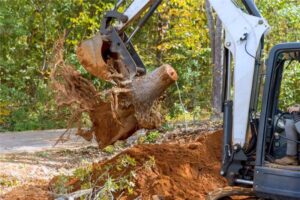
When removal is the right recommendation, the work does not really end when the trunk is on the ground. Site restoration matters. That is where Stump Removal & Grinding often enters the picture.
A leftover stump may seem minor compared with the removal itself, but it affects future use of the space. If the area is meant for replanting, lawn restoration, hardscape work, or simply eliminating a tripping obstacle, grinding may be part of a complete plan. It also helps owners shift mentally from loss to next steps. A removed tree leaves a void. Cleaning up the site properly makes it easier to decide what should replace it, if anything.
This is another reason not to frame the issue too narrowly as cable versus chainsaw. The real decision is about risk, site use, preservation goals, and what the landscape should look like in five or ten years.
Fire risk can shift priorities in certain landscapes
In fire-prone regions, the decision around tree retention may be influenced by broader defensible-space goals. FireSmart Tree Services are not the same as structural support work, but the two conversations can overlap when a tree with defects also contributes to fuel concerns near a home or outbuilding.
That does not mean any tree near a structure should be removed. It means tree decisions should sometimes be made within the larger context of wildfire resilience, pruning needs, spacing, and site maintenance. A tree that might otherwise be considered for support could still be judged differently if it conflicts with a property’s fire-preparedness priorities.
The key is not to force one objective to solve another. Cables and braces address structural concerns. Fire-smart planning addresses ignition and fuel behavior. They may intersect on the same property, but they are not interchangeable strategies.
Questions worth asking before you approve the work
Owners do better when they understand the reasoning, not just the recommendation. Before you authorize support or removal, it helps to ask a few direct questions.
- What specific defect or risk factor is driving the recommendation?
- Can pruning alone reduce the risk, or is structural support part of the plan?
- If support is recommended, what level of ongoing monitoring should I expect?
- If removal is recommended, is that because risk cannot be reduced enough by other means?
- What follow-up site work, including Stump Removal & Grinding, should I plan for?
Those questions tend to sharpen the conversation. They also reveal whether the recommendation is grounded in a real assessment or just a sales routine.
A realistic way to think about preservation
People often ask whether a tree can be “saved.” That word can be misleading. Trees are living structures, not static fixtures. The goal is not rescue in the dramatic sense. The goal is appropriate management.
Sometimes appropriate management means Tree Cable and Bracing plus careful Tree Pruning & Crown Shaping. Sometimes it means monitoring a defect over time. Sometimes it means Emergency Tree Services after storm damage, followed by a more measured reassessment. And sometimes it means Tree Removal Services because the risk is too high or too difficult to reduce.
The best arborists are rarely absolutists. They are careful observers with practical judgment. They know that removing a large tree changes a site dramatically, and they know that preserving the wrong tree can expose people and property to unacceptable danger. Their value is not just in climbing or cutting. It is in making those trade-offs with discipline.
The middle ground is often the right ground
Most owners come into this decision expecting a simple binary. Keep the tree or take it down. Real tree care tends to live in the middle ground.
A support system may help when a tree has meaningful value, a manageable structural issue, and a site context where risk can be reduced to an acceptable level. Removal becomes the stronger choice when the tree’s condition, target area, or storm damage pushes residual risk beyond what pruning or support can reasonably address.
That is why the smartest first move is usually neither hardware nor saw, but a Certified Arborist Consultation. Start with a sound assessment. Understand the risk. Ask what treatments genuinely improve the situation. Then choose the path that respects both the tree and the people living around it.
A well-judged support system can preserve a tree that deserves the effort. A well-judged removal can prevent the kind of failure no one wants to experience firsthand. Both are legitimate outcomes. The skill lies in knowing which one fits the tree in front of you.
Name: Ace Tree Services Ltd.
Address: 4656 Wallace Hill Road, Kelowna, BC
Phone: 250-212-9593
Website: https://acetree.ca/
Hours:
Monday: 7:00 AM–5:00 PM
Tuesday: 7:00 AM–5:00 PM
Wednesday: 7:00 AM–5:00 PM
Thursday: 7:00 AM–5:00 PM
Friday: 7:00 AM–5:00 PM
Saturday: 7:00 AM–5:00 PM
Sunday: Closed
Emergency tree services: 24/7 emergency service is listed.
Open-location code / Plus code: RHF8+8G Kelowna, British Columbia, Canada
Map/listing URL: https://www.google.com/maps/place/Ace+Tree+Services+Ltd./@49.8232606,-119.4337283,563m/data=!3m1!1e3!4m6!3m5!1s0x537d8b1d074815c5:0x450b88afa7a41435!8m2!3d49.8232606!4d-119.4337283!16s%2Fg%2F11ydkpnh22
Embed iframe:
Socials: https://www.facebook.com/people/Ace-Tree-Services/61585901931447/
https://m.yelp.com/biz/ace-tree-services-kelowna
Ace Tree Services Ltd. provides professional tree service for residential, commercial, and municipal customers in Kelowna and across the Okanagan Valley.
The company’s listed services include tree removal, stump removal and grinding, tree pruning and crown shaping, emergency tree services, certified arborist consultation, dangerous tree assessment, tree cable and bracing, and wildfire mitigation.
Ace Tree Services works with homeowners, businesses, property managers, and public-sector clients that need safe, practical tree care in the Kelowna area.
The official site highlights ISA-certified arborists, insurance, and experience handling both routine and complex tree service situations.
Customers can contact Ace Tree Services for tree care planning, hazard concerns, emergency tree cleanup, pruning needs, stump grinding, or advice about trees near homes, fences, driveways, and landscaping.
Ace Tree Services lists regular work hours from 7:00 AM to 5:00 PM Monday through Friday, with 24/7 emergency tree service available for urgent situations.
For tree service in Kelowna, call 250-212-9593 or visit https://acetree.ca/
The public map listing places Ace Tree Services Ltd. in Kelowna and can help customers find directions to the Wallace Hill Road area.
Popular Questions About Ace Tree Services Ltd.
What services does Ace Tree Services Ltd. provide?
Ace Tree Services Ltd. provides tree removal, stump removal and grinding, tree pruning and crown shaping, emergency tree services, certified arborist consultation, dangerous tree assessment and removal, tree cable and bracing, and wildfire mitigation.
Where is Ace Tree Services Ltd. located?
The official website lists Ace Tree Services Ltd. at 4656 Wallace Hill Road, Kelowna, BC.
What areas does Ace Tree Services Ltd. serve?
The official website describes Ace Tree Services as located in Kelowna and servicing the Okanagan.
What phone number should customers call?
Customers can call Ace Tree Services Ltd. at 250-212-9593.
What are Ace Tree Services Ltd.’s regular hours?
The official website lists work hours as 7:00 AM to 5:00 PM, Monday through Friday. Saturday and Sunday regular hours are not listed and should be confirmed directly.
Does Ace Tree Services Ltd. offer emergency tree service?
Yes. The official website lists 24/7 emergency services for urgent tree situations, including emergency tree removal, dangerous tree assessment, stabilization, and limb or branch cleanup.
Does Ace Tree Services Ltd. have certified arborists?
Yes. The official website states that Ace Tree Services has ISA-certified arborists.
Can Ace Tree Services Ltd. help with wildfire mitigation?
Yes. Wildfire mitigation is listed as one of the company’s tree services.
How do I contact Ace Tree Services Ltd.?
Call 250-212-9593 or visit https://acetree.ca/.
Landmarks Near Kelowna, BC
Wallace Hill Road: A local Kelowna road near the address listed for Ace Tree Services Ltd.
Okanagan Lake: A major Kelowna landmark near residential, commercial, and waterfront properties that may need tree pruning, removal, or hazard assessment.
Downtown Kelowna: A central area with homes, offices, rental properties, restaurants, and commercial sites that may need professional tree care.
Mission / Lower Mission: A well-known Kelowna area with mature landscaping, residential properties, and lake-adjacent homes.
South East Kelowna: A rural and residential area with larger properties, orchards, and tree-care needs that can include pruning, removals, and wildfire mitigation.
Crawford: A residential area near the southeast side of Kelowna where homeowners may need tree trimming, hazard assessment, and stump grinding.
Kettle Valley: A hillside residential neighborhood where tree condition, slope, wind exposure, and defensible-space planning can matter for property owners.
Myra-Bellevue Provincial Park: A major outdoor landmark near southeast Kelowna and a useful point of orientation for nearby properties.
Gallagher’s Canyon: A residential and golf community near southeast Kelowna where tree maintenance and wildfire-conscious vegetation management can be practical concerns.
Orchard Park Shopping Centre: A major central Kelowna retail landmark and reference point for customers traveling across the city.
Highway 97: A major Kelowna corridor connecting neighborhoods, commercial properties, and service routes throughout the region.
Kelowna City Park: A recognizable central landmark near downtown neighborhoods and lakefront properties.
Glenmore: A Kelowna neighborhood with residential and commercial properties that may need pruning, storm cleanup, and general tree care.
Rutland: A large residential and commercial area where customers may need tree removal, pruning, stump grinding, or arborist consultation.
Black Mountain: A hillside community where slope, wind, wildfire exposure, and access can influence tree service planning.
For tree service near these Kelowna landmarks, contact Ace Tree Services Ltd. at 250-212-9593 or visit https://acetree.ca/