Stump Removal & Grinding as Part of Complete Tree Service
A tree job is not really finished when the trunk hits the ground. Homeowners often focus on the visible part of the work, the climbing, the rigging, the controlled lowering of limbs, the final cut at ground level. Then the crew packs up, the brush is gone, the logs are stacked or hauled away, and one stubborn piece remains in the landscape: the stump.
That leftover base can seem dangerous tree assessment harmless at first. In practice, it is often the dividing line between partial cleanup and complete tree service. When stump removal and grinding are treated as part of the full scope of care, the property functions better, the site is easier to maintain, and the next steps for the landscape become much clearer.
This is where a broader view of arboriculture matters. Tree service is not only about taking trees down. It commonly includes pruning, removal, maintenance, and storm-damage or emergency response for residential and commercial clients. A complete approach also means understanding when a tree should be preserved, when risk can be reduced with targeted work, and when removal is unavoidable. In that wider context, Stump Removal & Grinding is not an afterthought. It is one of the final decisions that ties the whole project together.
Why the stump matters more than people expect
A stump changes how a space is used. That sounds obvious, but it is easy to underestimate until it is sitting in the middle of a lawn, beside a driveway, or near a planned fence line. On paper, a cut-down tree and a removed stump may look like small variations of the same job. On the ground, they are very different outcomes.
One property owner may be content to leave a stump at the far edge of a wooded lot, especially if the area is informal and rarely used. Another may find that the same stump becomes a daily nuisance beside a walkway or in a turf area that needs regular mowing. The right decision depends on use, location, safety, and future plans for the site.
That is why stump work should be discussed at the same time as Tree Removal Services, not a week later when the crew is gone and the project feels half-finished. A complete tree service provider looks beyond the moment of removal and asks what the client needs the property to do afterward.
Removal, grinding, and the language people use
Homeowners often use the phrase “stump removal” to describe any process that gets rid of the visible stump. In day-to-day conversation, that is understandable. In practice, there is a distinction worth making.
Stump grinding typically addresses the stump by mechanically reducing it below grade so the visible obstacle is gone and the area can be restored for practical use. Full stump removal can imply a more extensive extraction of the stump material itself. Which route fits depends on the site and the goal. On a tight residential property, the answer may be shaped by access. On another site, future construction or hardscape work may influence the choice.
The important point is not terminology for its own sake. It is making sure the client and the tree contractor mean the same thing before work starts. Misunderstandings here are common. I have seen plenty of situations where a client assumed the ground would be ready for planting the next day, while the crew had only been contracted to remove the standing tree and cut flush at grade. Neither side was trying to be difficult. They were simply talking about different endpoints.
Complete tree service starts with judgment, not machinery
A professional tree company should not begin every conversation with a machine solution. Sometimes the first question is whether the tree should come down at all. That is where Certified Arborist Consultation has real value.
ISA Certified Arborists are trained in the art and science of tree care, must pass a comprehensive exam, maintain continuing education, and follow a Code of Ethics. That matters because tree decisions are rarely as simple as “keep it” or “remove it.” In many cases, the better answer is selective Tree Pruning & Crown Shaping, structural support, or monitoring over time.
Risk assessment is part of that process. Tree risk guidance describes assessment as a systematic process to identify, analyze, and evaluate risk, then recommend measures that achieve an acceptable level of risk. Just as important, there is no completely safe tree. Some level of risk is always present. Good arborists help clients reduce unnecessary risk without pushing unnecessary work.
That broader perspective affects stump decisions too. If a tree is being removed because it is dead, structurally compromised, or poorly located, then grinding the stump may be part of restoring the site to safe and useful condition. If the removal follows storm damage, the priorities may be speed, access, and making the area serviceable again. If the tree came down as part of a long-term landscape redesign, the stump question may tie directly to what is being built or planted next.
Dangerous trees, emergency work, and why the cleanup phase counts
Emergency Tree Services tend to compress decision-making. After storm damage, clients want hazards addressed quickly. That urgency is appropriate. Arboriculture guidance recognizes emergency service restoration as a distinct part of tree care work, and for good reason. Once a tree has split, failed, or become unstable, the first objective is making the site safe.
Still, the emergency phase is only the first phase.
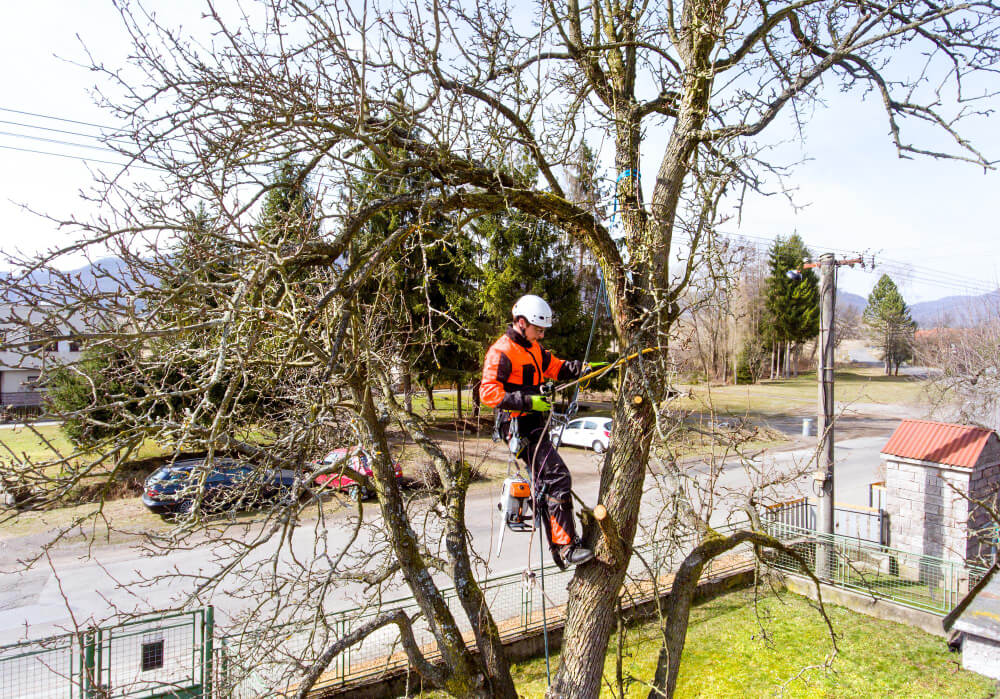
A common pattern goes like this: a storm tears out a major scaffold limb, the remaining trunk is compromised, and the tree has to be removed. The crew handles the dangerous section carefully, lowers material in a controlled way, and clears debris from the driveway or roofline. Everyone is relieved. Then the property owner is left with a low stump in a place that still prevents normal use of the area.
That is why Dangerous Tree Assessment and Removal should connect directly to what happens after the hazard is gone. The stump left by a failed tree can remain in exactly the place where the family needs to walk, park, rebuild a fence, or restore damaged landscaping. Emergency work is not only about the dramatic moment. It is also about returning a site to workable condition.
Stump grinding and the larger sequence of tree care
On a well-run project, stump work is coordinated with the earlier phases, not bolted on at the end. This sounds like a scheduling detail, but it often affects cost, efficiency, and results.
If a tree company is already mobilized for removal, already has the site protected, and already understands the access route, it is usually easier to address stump grinding as part of the same service plan than to revisit the property later without preparation. Even when the actual stump work happens after removal, the decision should be made early enough that the crew can account for access, surrounding surfaces, and the final intended use of the area.
This matters on both residential and commercial properties. In a backyard, the issue might be a gate opening or a narrow side yard. In a commercial setting, the concern could be keeping traffic flow, walkways, or work areas functional while the project proceeds. Either way, stump work is most efficient when it is part of the original discussion.
The connection to pruning and preservation
Some of the best stump grinding jobs are the ones you never need because the tree remained viable and appropriate in the first place. That is not a contradiction. It is what thoughtful tree care looks like.
Tree Pruning & Crown Shaping, when done correctly, can address structure, clearance, and load distribution without crossing into poor practice. Arboriculture guidance covers crown reduction, directional pruning, raising, proper branch removal and reduction cuts, and warns against improper techniques such as topping or leaving stubs. Those details matter because bad pruning can accelerate decline, create defects, or lead owners toward premature removal that might have been avoided.
This is one of the strongest arguments for involving a qualified arborist early. A tree that receives sound pruning and maintenance may continue to provide value for years. A tree that is topped, stripped, or otherwise mishandled may become the next removal project, followed by the next stump problem.
That said, preservation is not always the right answer. Some trees outgrow their space. Some suffer damage that cannot be responsibly mitigated. Some present a level of risk that is no longer acceptable for the targets beneath them. Good practice is not about saving every tree at all costs. It is about choosing the least invasive effective option, then carrying the chosen option through properly.
Structural support can change the decision
There is a middle ground between removal and doing nothing, and property owners are often surprised to learn how often that middle ground matters. Tree Cable and Bracing is part of that conversation.
Structural support systems can be relevant when a tree has weaknesses or needs mitigation rather than immediate removal. The exact suitability depends on the tree, the defect, the site, and the target area. What matters here is the decision framework. If risk can be reduced to an acceptable level through pruning, structural support, and monitoring, then stump grinding never enters the picture because removal is deferred or avoided.
This is another place where a systematic risk assessment is essential. A tree with a defect is not automatically a tree that must come down. At the same time, not every defect can be responsibly managed with support hardware. The arborist’s role is to evaluate, not to guess.
I have seen clients assume that a leaning tree automatically means removal. I have also seen the opposite, where owners become attached to a mature tree and want cabling to solve a problem that has gone too far. Professional judgment lives in that tension. It weighs the actual defect, the occupancy of the site, the species characteristics as observed on site, and the practical limits of mitigation.
FireSmart thinking changes priorities
In some regions and property types, FireSmart Tree Services shape the entire scope of work. The immediate concern may be reducing fuel continuity, improving separation, or managing vegetation near structures and access routes. In those settings, the conversation about stumps can shift from appearance to function.
If a tree is removed as part of broader fuel management, the question becomes whether the remaining stump will interfere with maintenance, access, or future site work. The answer is not always yes. In a naturalized outer area, a stump may be low priority. Closer to structures, pathways, or defensible-space maintenance zones, the practical case for stump grinding becomes stronger.
What matters is consistency. If the stated goal is to make a property easier to maintain in a FireSmart framework, leaving obstacles that complicate mowing, cleanup, or future vegetation management may undercut that goal. The point is not that every stump must disappear. The point is that each stump should be evaluated in light of how the land will actually be managed.
When stump grinding should be discussed right away
There are a few situations where it makes sense to raise stump work at the very start of a consultation rather than waiting for the removal estimate to come back.
- The stump will sit in a lawn, play area, walkway, parking edge, or other actively used part of the property.
- The site is being replanted, regraded, fenced, paved, or otherwise altered soon after the tree comes down.
- The removal is part of Emergency Tree Services and the area needs to be returned to practical use quickly.
- Access for equipment is limited, which makes one coordinated visit more sensible than several separate ones.
- The tree is being removed in a FireSmart or maintenance-driven project where future site access matters.
That list is short, but in real field conditions it covers a large share of stump decisions.
The value of clear scoping
Many disputes in tree work have nothing to do with the quality of the cutting. They come from vague scope. “Tree removal” can mean one thing to a contractor and another to a client. A professional estimate should make clear whether the job includes the standing tree only, the brush and log haul-away, the stump, and the state the surface will be left in afterward.
This is not paperwork for paperwork’s sake. It affects everything from scheduling to client expectations. A property owner planning to seed turf into the area, for example, needs a very different endpoint than someone who simply wants the tree gone. An owner planning to install a shed or patio needs another level of clarity again.
The same principle applies when a stump is left intentionally. There are valid reasons to leave one, but the client should understand that choice before the saw starts. Complete tree service means the final condition of the site has been thought through, explained, and agreed upon.
Safety is part of the stump conversation too
The public often associates tree safety with climbing and chainsaw work aloft, and that is fair. Pruning or removing trees, especially large trees, can be dangerous work and should be done only by trained and properly equipped professionals. But safe practice also includes the less dramatic phases of a job, including the handling of the remaining stump and site conditions after removal.
A low stump in an active area can create Tree Pruning & Crown Shaping avoidable problems. So can a rushed attempt to remove or alter it without the right equipment or planning. This is one reason homeowners are wise to think of stump work as professional tree work, not as an improvised weekend add-on after the removal crew has left.
The broader lesson is simple. Tree care is a chain of decisions. Weakness at any link, poor assessment, poor pruning, poor removal planning, poor cleanup scoping, can turn a manageable job into an expensive one.
How complete service looks in practice
The best tree service companies tend to approach properties in sequences rather than isolated tasks. A typical example might begin with Certified Arborist Consultation on several trees, not just the one the owner is worried about. One tree may need Tree Pruning & Crown Shaping to improve structure and clearance. Another may need Tree Cable and Bracing to reduce the likelihood of failure. A third may require Dangerous Tree Assessment and Removal because the risk can no longer be responsibly managed. If that third tree is removed, Stump Removal & Grinding becomes the final step that restores the space for use and maintenance.
That is complete tree service. Not because every tool was used, but because each tree received the right level of intervention.
Another property might present a different pattern. After a storm, Emergency Tree Services address immediate hazards first. Once the site is stabilized, the remaining trees are reassessed. Some are pruned. One is removed. The stump by the driveway is ground because the family needs access restored. A stump near the woodland edge is left because it does not interfere with use. Same contractor, same property, different answers in different locations. That is what good judgment looks like.
Questions worth asking before approving the work
When clients are comparing proposals, they usually focus on price first. Price matters, but a complete scope matters more. A few practical questions can sharpen the conversation without turning it into a technical exam.
- Does the quoted work include only Tree Removal Services, or also Stump Removal & Grinding?
- Will a Certified Arborist Consultation be part of the decision if preservation or mitigation might be possible?
- Is the tree being removed because of confirmed risk, storm damage, location conflict, or a management goal such as FireSmart Tree Services?
- If the tree is hazardous, were options like pruning or Tree Cable and Bracing considered where appropriate?
- What condition will the site be in when the crew leaves?
A contractor who can answer these cleanly usually has a firmer handle on the job.
The real finish line
A complete tree service project ends when the property owner can use the site as intended, with risk addressed appropriately and future maintenance made clearer, not when the last trunk section is loaded. Sometimes that finish line stops at pruning and preservation. Sometimes it includes support systems. Sometimes it requires full removal because the tree has become unsafe or unsuitable. And very often, if removal is the right answer, the stump is part of the answer too.
That final step is easy to overlook because it is less dramatic than the rest of the work. Yet it is often the part that determines whether the space feels restored or merely interrupted. A good arborist or tree service company understands that the visible tree is only part of the job. The condition of the site afterward is part of the care, part of the planning, and part of the professionalism clients are actually paying for.
Seen that way, Stump Removal & Grinding belongs exactly where it should be, not as a side note, but as an integral part of complete tree service.
Name: Ace Tree Services Ltd.
Address: 4656 Wallace Hill Road, Kelowna, BC
Phone: 250-212-9593
Website: https://acetree.ca/
Hours:
Monday: 7:00 AM–5:00 PM
Tuesday: 7:00 AM–5:00 PM
Wednesday: 7:00 AM–5:00 PM
Thursday: 7:00 AM–5:00 PM
Friday: 7:00 AM–5:00 PM
Saturday: 7:00 AM–5:00 PM
Sunday: Closed
Emergency tree services: 24/7 emergency service is listed.
Open-location code / Plus code: RHF8+8G Kelowna, British Columbia, Canada
Map/listing URL: https://www.google.com/maps/place/Ace+Tree+Services+Ltd./@49.8232606,-119.4337283,563m/data=!3m1!1e3!4m6!3m5!1s0x537d8b1d074815c5:0x450b88afa7a41435!8m2!3d49.8232606!4d-119.4337283!16s%2Fg%2F11ydkpnh22
Embed iframe:
Socials: https://www.facebook.com/people/Ace-Tree-Services/61585901931447/
https://m.yelp.com/biz/ace-tree-services-kelowna
Ace Tree Services Ltd. provides professional tree service for residential, commercial, and municipal customers in Kelowna and across the Okanagan Valley.
The company’s listed services include tree removal, stump removal and grinding, tree pruning and crown shaping, emergency tree services, certified arborist consultation, dangerous tree assessment, tree cable and bracing, and wildfire mitigation.
Ace Tree Services works with homeowners, businesses, property managers, and public-sector clients that need safe, practical tree care in the Kelowna area.
The official site highlights ISA-certified arborists, insurance, and experience handling both routine and complex tree service situations.
Customers can contact Ace Tree Services for tree care planning, hazard concerns, emergency tree cleanup, pruning needs, stump grinding, or advice about trees near homes, fences, driveways, and landscaping.
Ace Tree Services lists regular work hours from 7:00 AM to 5:00 PM Monday through Friday, with 24/7 emergency tree service available for urgent situations.
For tree service in Kelowna, call 250-212-9593 or visit https://acetree.ca/
The public map listing places Ace Tree Services Ltd. in Kelowna and can help customers find directions to the Wallace Hill Road area.
Popular Questions About Ace Tree Services Ltd.
What services does Ace Tree Services Ltd. provide?
Ace Tree Services Ltd. provides tree removal, stump removal and grinding, tree pruning and crown shaping, emergency tree services, certified arborist consultation, dangerous tree assessment and removal, tree cable and bracing, and wildfire mitigation.
Where is Ace Tree Services Ltd. located?
The official website lists Ace Tree Services Ltd. at 4656 Wallace Hill Road, Kelowna, BC.
What areas does Ace Tree Services Ltd. serve?
The official website describes Ace Tree Services as located in Kelowna and servicing the Okanagan.
What phone number should customers call?
Customers can call Ace Tree Services Ltd. at 250-212-9593.
What are Ace Tree Services Ltd.’s regular hours?
The official website lists work hours as 7:00 AM to 5:00 PM, Monday through Friday. Saturday and Sunday regular hours are not listed and should be confirmed directly.
Does Ace Tree Services Ltd. offer emergency tree service?
Yes. The official website lists 24/7 emergency services for urgent tree situations, including emergency tree removal, dangerous tree assessment, stabilization, and limb or branch cleanup.
Does Ace Tree Services Ltd. have certified arborists?
Yes. The official website states that Ace Tree Services has ISA-certified arborists.
Can Ace Tree Services Ltd. help with wildfire mitigation?
Yes. Wildfire mitigation is listed as one of the company’s tree services.
How do I contact Ace Tree Services Ltd.?
Call 250-212-9593 or visit https://acetree.ca/.
Landmarks Near Kelowna, BC
Wallace Hill Road: A local Kelowna road near the address listed for Ace Tree Services Ltd.
Okanagan Lake: A major Kelowna landmark near residential, commercial, and waterfront properties that may need tree pruning, removal, or hazard assessment.
Downtown Kelowna: A central area with homes, offices, rental properties, restaurants, and commercial sites that may need professional tree care.
Mission / Lower Mission: A well-known Kelowna area with mature landscaping, residential properties, and lake-adjacent homes.
South East Kelowna: A rural and residential area with larger properties, orchards, and tree-care needs that can include pruning, removals, and wildfire mitigation.
Crawford: A residential area near the southeast side of Kelowna where homeowners may need tree trimming, hazard assessment, and stump grinding.
Kettle Valley: A hillside residential neighborhood where tree condition, slope, wind exposure, and defensible-space planning can matter for property owners.
Myra-Bellevue Provincial Park: A major outdoor landmark near southeast Kelowna and a useful point of orientation for nearby properties.
Gallagher’s Canyon: A residential and golf community near southeast Kelowna where tree maintenance and wildfire-conscious vegetation management can be practical concerns.
Orchard Park Shopping Centre: A major central Kelowna retail landmark and reference point for customers traveling across the city.
Highway 97: A major Kelowna corridor connecting neighborhoods, commercial properties, and service routes throughout the region.
Kelowna City Park: A recognizable central landmark near downtown neighborhoods and lakefront properties.
Glenmore: A Kelowna neighborhood with residential and commercial properties that may need pruning, storm cleanup, and general tree care.
Rutland: A large residential and commercial area where customers may need tree removal, pruning, stump grinding, or arborist consultation.
Black Mountain: A hillside community where slope, wind, wildfire exposure, and access can influence tree service planning.
For tree service near these Kelowna landmarks, contact Ace Tree Services Ltd. at 250-212-9593 or visit https://acetree.ca/