How Arborists Recommend Measures to Reduce Tree Risk
Trees add shade, privacy, character, and long-term value to a property. They also live under constant mechanical stress. Wind loads the canopy. Snow adds weight. Soil conditions change. Limbs compete for space and light. Decay can progress quietly inside wood that still looks sound from the driveway. That is why risk reduction in arboriculture is rarely about one dramatic decision. More often, it is a measured process that starts with careful observation and ends with the least disruptive action that brings risk down to a level the owner can accept.
That last point matters. No tree is completely risk-free. Arborists do not promise perfect safety because no honest professional can. A healthy tree can still lose a branch in a storm. A mature tree can stand for decades with a defect that never leads to failure, while another tree with fewer visible issues breaks unexpectedly under unusual weather. The work of a qualified arborist is to identify what can be seen, analyze the likelihood and consequences of failure as systematically as possible, and recommend practical measures that reduce risk without defaulting to unnecessary removal.
Risk reduction starts with a real assessment, not a guess
A lot of property owners first call after seeing a symptom they do not like. A crack in the trunk. A limb over the roof. Mushrooms near the base. A sudden lean. Sometimes those details are serious. Sometimes they are simply the first thing a non-specialist notices. Arborists are trained to look beyond the obvious concern and place it in context.
A proper dangerous tree assessment and removal discussion does not begin with a chainsaw. It begins with questions. What is the target if the tree or branch fails, a house, a parked car, a sidewalk, an empty side yard? Has the tree changed recently or has it looked this way for years? Was there storm damage, trenching, grade change, or construction nearby? Is the concern in the upper crown, at a branch union, or in the root zone? The answers shape the recommendation as much as the defect itself.
This is where a Certified Arborist Consultation has real value. Certification matters because tree care is both art and science, and trained arborists are expected to maintain continuing education and work under a professional code of ethics. In practice, that means a stronger chance of getting advice that is measured rather than impulsive. A certified arborist should be able to explain what they see, why it matters, and what options exist besides the most extreme one.
What arborists look for when evaluating risk
The public often assumes tree risk is mostly about dead branches. Dead wood is certainly part of the picture, but not the whole picture. Arborists evaluate the tree as a system. Crown structure, branch attachments, stem condition, and site use all affect the final recommendation.
A branch over a garden bed and the same branch over a front entry do not present the same level of concern. Likewise, a split union in a young ornamental tree may be managed one way, while a similar structural issue in a large mature tree over a driveway may call for a more aggressive response. This is one reason blanket rules rarely work well in tree care. Arborists do not simply label trees safe or unsafe. They evaluate risk in relation to occupancy, targets, tree condition, and the owner’s tolerance for ongoing management.
Visible defects may include poor branch attachment, dead or broken limbs, cracks, cavities, or signs that the crown is carrying weight in ways the structure was not built to support. Arborists also pay attention to whether a prior pruning cut was made properly. Poor cuts can change how a branch grows, how it sheds water, and how decay progresses over time. Improper techniques such as topping or leaving stubs are especially relevant because they can create future risk rather than solve current problems.
An experienced arborist also notices the history written into the tree. Has it been heavily cut before? Has the canopy become unbalanced? Do old wounds suggest storm failure or repeated poor maintenance? Those patterns matter because they help predict whether a defect is isolated or part of a broader structural problem.
Why “do nothing” is sometimes a valid professional recommendation
Property owners are sometimes surprised when an arborist does not recommend immediate work. That can feel counterintuitive, especially if the owner called because something looked alarming. But one of the marks of a competent arborist is restraint.
If a branch defect is minor, the target is low-value or rarely occupied, and the tree is otherwise stable, the best recommendation may be monitoring. The point of risk assessment is not to eliminate all possibility of failure. It is to bring risk to an acceptable level. Over-managing a tree can create new problems, especially if the work removes too much live canopy or alters structure in a way that stimulates weak regrowth.
There is professional judgment involved here. Sometimes the right answer is a short pruning visit and periodic follow-up. Sometimes it is temporary observation after a storm to see whether the tree stabilizes or whether hidden damage becomes more apparent. And sometimes an arborist will say plainly that the tree should stay for now, with no intervention beyond routine care.
Pruning is often the first and best risk-reduction tool
When arborists recommend measures to reduce tree risk, Tree Pruning & Crown Shaping is often at the top of the list. That is not because pruning is simple. It is because pruning can address many structural and clearance concerns while preserving the tree and the benefits it provides.
Good pruning is targeted. It may reduce end weight on a limb with a weak attachment, remove dead wood likely to fall, raise clearance above a path, or improve spacing among competing branches. Utility-pruning guidance and broader arboricultural practice both emphasize proper cuts and sound objectives. The goal is not to make the tree smaller in a crude way. The goal is to change load, structure, or clearance with as little unnecessary injury as possible.
Crown reduction can be effective when a long, heavy branch extends beyond the tree’s structural comfort zone. Directional pruning can help redistribute growth toward stronger laterals. Raising can improve access and reduce low-branch conflict. What trained arborists avoid are shortcuts that look dramatic but leave the tree structurally compromised later. Topping is the classic example. It may seem to reduce height fast, but it often leads to poor regrowth and ongoing maintenance issues. Stub cuts create similar trouble by leaving tissue that the tree cannot properly close over.
Good pruning also depends on timing, access, and execution. Large trees are dangerous to work on. That is not a minor disclaimer, it is central to the profession. The combination of height, rigging, saw work, electrical hazards in some settings, and unpredictable wood behavior makes this specialized work. The recommendation itself is only half the equation. The work must then be carried out by people trained and equipped to do it safely.
Structural support can buy time and preserve valuable trees
Not every defect calls for removal, and not every tree can be made acceptably safe through pruning alone. Some trees benefit from Tree Cable and Bracing, a form of structural support used to reduce the likelihood of failure in specific situations.
This is not a cure for severe decline, and it is not a way to ignore major defects. It is a management tool. When an arborist sees a valuable tree with a structural weakness, such as a branch arrangement that may need supplemental support, cabling or bracing may be recommended alongside pruning. The support system helps redistribute mechanical stress. Pruning can reduce load. Tree Pruning & Crown Shaping Together, those treatments may lower the chance of failure enough to retain the tree, especially where removal would be a major loss to the site.
Support systems work best when they are part of a plan, not a one-time attempt to rescue a tree at any cost. The arborist needs to be clear about what the support can and cannot do. Owners also need to understand that a supported tree may still require follow-up inspections and future pruning. Risk reduction is often ongoing management rather than a single permanent fix.
When removal is the responsible option
Arborists do not recommend Tree Removal Services lightly. Removal is usually reserved for cases where risk cannot be brought down enough through pruning, structural support, or changed site use. A tree may be too compromised, the defects too significant, the target too valuable, or the likelihood of failure too high to justify retention.
This is where dangerous tree assessment and removal becomes less theoretical and more immediate. If a tree has suffered serious storm damage, has obvious structural failure, or presents a hazard that cannot be managed by less invasive means, removal may be the most defensible recommendation. That is not an admission that arboriculture failed. It is part of arboriculture. Tree care includes knowing when preservation remains practical and when it no longer does.
Owners sometimes hesitate because they feel removal is giving up on a mature asset. That reaction is understandable. A large tree may have shaded a home for years and shaped the entire property. But the value of a tree does not erase the consequences of a foreseeable failure over a bedroom, driveway, playground, or public walkway. The arborist’s role is to communicate that trade-off clearly, without fear tactics and without false reassurance.
Once removal is recommended, the conversation usually broadens. What access is needed? Can the tree be dismantled safely in sections? Is rigging required for controlled lowering? These are operational details, but they reflect the same core principle as assessment itself: reduce risk methodically.
After removal, the stump still matters
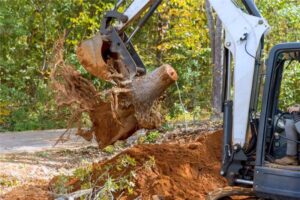
The tree may be gone, but the job is not always complete. Stump Removal & Grinding often becomes part of the risk-reduction conversation for practical reasons. A stump left in place may not be a direct tree-failure hazard, but it can remain an obstacle in a lawn, landscape bed, or future use area. For some properties, removing the stump is about restoring function and eliminating a tripping or maintenance nuisance.
Arborists and tree service companies frequently discuss this at the same time as removal because owners tend to focus on the visible canopy first and the site aftermath second. Grinding is often the more practical approach when the goal is to remove the stump below grade and make the area usable again. Whether a stump should be addressed immediately or later depends on access, budget, and how the area will be used.
This is a good example of how tree risk work overlaps with general site management. The original concern may have been a dangerous stem over a structure, but the final recommendation often includes steps that restore safer use of the property after the tree is gone.
Emergency calls are different, but the thinking is the same
Emergency Tree Services operate under pressure. A storm tears through overnight, and by morning there is a split trunk on a garage, a half-hung limb over a driveway, or a root plate lifting near the street. The urgency changes the tempo, but it should not erase professional judgment.
Emergency response is not just fast cutting. It still depends on assessment, sequencing, and controlled work. The arborist or tree crew must decide what is under tension, what is bearing weight, where material could shift unexpectedly, and how to remove or stabilize the hazard without making the situation worse. Standards and best-management guidance in arboriculture recognize emergency service restoration as its own critical area for a reason. Damaged trees can behave unpredictably, and speed without discipline is dangerous.
Property owners often want one simple answer in these moments: can the tree be saved or not? Sometimes that answer is immediately clear. Sometimes it is not. A storm-damaged tree may need temporary hazard reduction first, followed by a fuller evaluation once access improves and the site is stable. It is not unusual for the first visit to focus on life safety and access, with longer-term pruning or removal decisions made afterward.
How arborists balance risk, cost, and preservation
The best recommendations are rarely the cheapest in the shortest term, and they are not always the most expensive either. Arborists have to balance three things that do not align neatly: biological reality, public safety, and owner priorities.
A homeowner may prefer pruning because they want to preserve shade. A property manager may lean toward removal because liability exposure feels less ambiguous. A commercial site may accept recurring maintenance on a structurally supported tree if that tree contributes to the character of the entrance. Different sites produce different acceptable outcomes.
This is where the conversation becomes more nuanced than many people expect. The same arborist who recommends preserving one tree with pruning and Tree Cable and Bracing may recommend removing another that appears similar at first glance. The difference may be the target beneath it, the tree’s prior history, the owner’s willingness to monitor, or the degree to which the defect can be mitigated. Good recommendations account for those differences rather than flattening them.
One practical way arborists often frame options is to distinguish between immediate hazard reduction and long-range management. An overextended branch may need reduction now. The tree as a whole may then need periodic inspection. A support system may make sense today, but only if the owner understands that the tree will not become maintenance-free. That honesty protects both the client and the profession.
What a property owner should expect from the consultation
A professional consultation should leave the owner with clearer thinking, not just a price. That does not mean a risk assessment turns into a long lecture. It means the arborist explains the observed issue, the likely concern, and the reasonable treatment options in plain language.
At a minimum, the owner should understand these points:
- What part of the tree is causing concern.
- Why that issue matters in relation to likely targets.
- Whether pruning, support, monitoring, or removal is being recommended.
- What level of urgency the arborist sees.
- Whether future follow-up is part of the plan.
That kind of clarity matters because tree decisions are often emotional as well as technical. Owners do not just pay for labor. They are deciding whether to keep a living feature, reshape it, or lose it entirely. The recommendation has to be grounded enough to justify the action.
A note on service labels and real decision-making
Many companies advertise a wide menu: Tree Removal Services, Emergency Tree Services, Certified Arborist Consultation, Dangerous Tree Assessment and Removal, Tree Pruning & Crown Shaping, Stump Removal & Grinding, and sometimes even FireSmart Tree Services. Those labels can be useful for customers trying to find the right provider, but risk reduction does not happen because a service category exists. It happens because the arborist applies a systematic process to the actual tree in front of them.
That distinction is worth remembering. Tree owners sometimes call asking for one specific service because they have already decided on the solution. They ask for removal when pruning may be enough, or for pruning when the tree is too compromised to retain. A good arborist will respect the concern behind the call without simply rubber-stamping the requested Website link treatment. The recommendation should fit the condition, not the marketing term.
Why experience still matters in a standards-based field
Arboriculture depends on standards, best practices, and professional training. It also depends on judgment that develops only through repeated exposure to real trees, real defects, and real consequences. Two branch unions can look similar in a photo and behave very differently on site. A defect that is tolerable in one setting can be unacceptable in another. Weather patterns, access limitations, and occupancy all change the recommendation.
That is why the strongest arborists combine systematic assessment with practical field sense. They know that the safest answer is not always removal, and the most preservation-minded answer is not always defensible. They understand pruning cuts, structural support systems, controlled lowering, and emergency response, but they also know when the only responsible advice is to say, “This one should come down.”
Risk reduction in trees is not about eliminating uncertainty. It is about reducing avoidable failure potential where it can be reduced, matching the treatment to the defect, and being honest about the limits of what any treatment can accomplish. When arborists do that well, they help owners keep more good trees, remove the ones that truly need removal, and manage the gray area in between with fewer surprises.
Name: Ace Tree Services Ltd.
Address: 4656 Wallace Hill Road, Kelowna, BC
Phone: 250-212-9593
Website: https://acetree.ca/
Hours:
Monday: 7:00 AM–5:00 PM
Tuesday: 7:00 AM–5:00 PM
Wednesday: 7:00 AM–5:00 PM
Thursday: 7:00 AM–5:00 PM
Friday: 7:00 AM–5:00 PM
Saturday: 7:00 AM–5:00 PM
Sunday: Closed
Emergency tree services: 24/7 emergency service is listed.
Open-location code / Plus code: RHF8+8G Kelowna, British Columbia, Canada
Map/listing URL: https://www.google.com/maps/place/Ace+Tree+Services+Ltd./@49.8232606,-119.4337283,563m/data=!3m1!1e3!4m6!3m5!1s0x537d8b1d074815c5:0x450b88afa7a41435!8m2!3d49.8232606!4d-119.4337283!16s%2Fg%2F11ydkpnh22
Embed iframe:
Socials: https://www.facebook.com/people/Ace-Tree-Services/61585901931447/
https://m.yelp.com/biz/ace-tree-services-kelowna
Ace Tree Services Ltd. provides professional tree service for residential, commercial, and municipal customers in Kelowna and across the Okanagan Valley.
The company’s listed services include tree removal, stump removal and grinding, tree pruning and crown shaping, emergency tree services, certified arborist consultation, dangerous tree assessment, tree cable and bracing, and wildfire mitigation.
Ace Tree Services works with homeowners, businesses, property managers, and public-sector clients that need safe, practical tree care in the Kelowna area.
The official site highlights ISA-certified arborists, insurance, and experience handling both routine and complex tree service situations.
Customers can contact Ace Tree Services for tree care planning, hazard concerns, emergency tree cleanup, pruning needs, stump grinding, or advice about trees near homes, fences, driveways, and landscaping.
Ace Tree Services lists regular work hours from 7:00 AM to 5:00 PM Monday through Friday, with 24/7 emergency tree service available for urgent situations.
For tree service in Kelowna, call 250-212-9593 or visit https://acetree.ca/
The public map listing places Ace Tree Services Ltd. in Kelowna and can help customers find directions to the Wallace Hill Road area.
Popular Questions About Ace Tree Services Ltd.
What services does Ace Tree Services Ltd. provide?
Ace Tree Services Ltd. provides tree removal, stump removal and grinding, tree pruning and crown shaping, emergency tree services, certified arborist consultation, dangerous tree assessment and removal, tree cable and bracing, and wildfire mitigation.
Where is Ace Tree Services Ltd. located?
The official website lists Ace Tree Services Ltd. at 4656 Wallace Hill Road, Kelowna, BC.
What areas does Ace Tree Services Ltd. serve?
The official website describes Ace Tree Services as located in Kelowna and servicing the Okanagan.
What phone number should customers call?
Customers can call Ace Tree Services Ltd. at 250-212-9593.
What are Ace Tree Services Ltd.’s regular hours?
The official website lists work hours as 7:00 AM to 5:00 PM, Monday through Friday. Saturday and Sunday regular hours are not listed and should be confirmed directly.
Does Ace Tree Services Ltd. offer emergency tree service?
Yes. The official website lists 24/7 emergency services for urgent tree situations, including emergency tree removal, dangerous tree assessment, stabilization, and limb or branch cleanup.
Does Ace Tree Services Ltd. have certified arborists?
Yes. The official website states that Ace Tree Services has ISA-certified arborists.
Can Ace Tree Services Ltd. help with wildfire mitigation?
Yes. Wildfire mitigation is listed as one of the company’s tree services.
How do I contact Ace Tree Services Ltd.?
Call 250-212-9593 or visit https://acetree.ca/.
Landmarks Near Kelowna, BC
Wallace Hill Road: A local Kelowna road near the address listed for Ace Tree Services Ltd.
Okanagan Lake: A major Kelowna landmark near residential, commercial, and waterfront properties that may need tree pruning, removal, or hazard assessment.
Downtown Kelowna: A central area with homes, offices, rental properties, restaurants, and commercial sites that may need professional tree care.
Mission / Lower Mission: A well-known Kelowna area with mature landscaping, residential properties, and lake-adjacent homes.
South East Kelowna: A rural and residential area with larger properties, orchards, and tree-care needs that can include pruning, removals, and wildfire mitigation.
Crawford: A residential area near the southeast side of Kelowna where homeowners may need tree trimming, hazard assessment, and stump grinding.
Kettle Valley: A hillside residential neighborhood where tree condition, slope, wind exposure, and defensible-space planning can matter for property owners.
Myra-Bellevue Provincial Park: A major outdoor landmark near southeast Kelowna and a useful point of orientation for nearby properties.
Gallagher’s Canyon: A residential and golf community near southeast Kelowna where tree maintenance and wildfire-conscious vegetation management can be practical concerns.
Orchard Park Shopping Centre: A major central Kelowna retail landmark and reference point for customers traveling across the city.
Highway 97: A major Kelowna corridor connecting neighborhoods, commercial properties, and service routes throughout the region.
Kelowna City Park: A recognizable central landmark near downtown neighborhoods and lakefront properties.
Glenmore: A Kelowna neighborhood with residential and commercial properties that may need pruning, storm cleanup, and general tree care.
Rutland: A large residential and commercial area where customers may need tree removal, pruning, stump grinding, or arborist consultation.
Black Mountain: A hillside community where slope, wind, wildfire exposure, and access can influence tree service planning.
For tree service near these Kelowna landmarks, contact Ace Tree Services Ltd. at 250-212-9593 or visit https://acetree.ca/