FireSmart Tree Services and Professional Tree Management Considerations
FireSmart Tree Services sit at the intersection of arboriculture, risk management, and practical property stewardship. The work sounds straightforward from a distance. Trim a few limbs, remove a hazardous tree, clean up the stump, move on. On the ground, it is rarely that simple. A tree can be biologically valuable, structurally compromised, and positioned near a roofline all at once. It can reduce summer heat on a building while also carrying deadwood over a driveway. It can be worth preserving, worth reducing, or impossible to keep safely. Good decisions in tree care usually come from resisting easy labels and looking closely at the tree, the site, and the level of risk a property owner can Tree Pruning & Crown Shaping reasonably accept.
That is where professional tree management earns its keep. Tree service work commonly includes pruning, removal, maintenance, and storm-damage or emergency response for residential and commercial clients. Those categories sound familiar because they cover most of what people see from the street. What they do not show is the judgment behind them. The difference between a useful intervention and an expensive mistake often comes down to whether the work was planned around tree biology and site conditions, or around convenience.
FireSmart planning raises the stakes. Once fire exposure becomes part of the conversation, every branch union, every low limb, every nearby structure, and every deferred maintenance decision matters more. A property owner may call for Tree Removal Services expecting a simple yes or no answer, when the more responsible answer is sometimes a combination of Tree Pruning & Crown Shaping, selective removal, structural support, and long-term monitoring. The smartest tree work is rarely the most dramatic. Often it is the work that quietly lowers risk without stripping a site of every mature tree.
Why FireSmart work starts with professional judgment
The public often sees tree care through visible outcomes. A tree is gone. A canopy is thinned. A stump disappears after Stump Removal & Grinding. What matters just as much is the reasoning that led there. Arboriculture is not just labor. It is trained assessment followed by skilled execution.
The need for trained assessment is not a marketing point. It is a safety issue. Pruning or removing trees, especially large trees, can be dangerous work and should be done only by people who are trained and properly equipped to work safely in trees. That is as true for routine maintenance as it is for Emergency Tree Services after a storm. Limbs can be under tension, trunks can hold internal decay that is not obvious from the ground, and a seemingly minor cut can change load distribution in a crown. When work is performed around buildings, utility corridors, parked vehicles, or occupied spaces, the margin for error narrows fast.
This is one reason Certified Arborist Consultation matters early, not just after a problem becomes obvious. ISA Certified Arborists are trained in the art and science of tree care, they pass a comprehensive exam, they continue their education to maintain certification, and they are expected to follow a code of ethics. Those details matter because tree decisions are rarely one-dimensional. A certified professional is not there simply to justify removal. In many cases, the more valuable service is identifying what can be retained safely, what can be mitigated, and what should be watched over time.
In practical terms, that means a FireSmart discussion should not begin with a chainsaw. It should begin with a site walk, visual observations, and a clear conversation about targets and use patterns. A tree over a back fence is different from a tree over a play area. A dead branch over a gravel edge is different from a dead branch over a bedroom roof. Risk in tree care is about the tree, but also about what the tree could hit and how often those targets are exposed.
The reality of risk, and why absolute safety is the wrong benchmark
One of the most useful things a qualified arborist can say to a client is also one of the hardest to hear: there is no completely safe tree. Some level of risk has to be accepted. That does not mean risk is ignored. It means risk is assessed systematically, then reduced to a level that fits the site and the owner’s priorities without unnecessary intervention.
Tree risk assessment is a structured process used to identify, analyze, and evaluate risk, then recommend measures that can reduce it. That sentence sounds clinical, but the field application is highly practical. An arborist looks at defects, deadwood, branch structure, past failures, load distribution, and site conditions. Then comes the harder part, deciding what those observations actually mean in context. A tree with structural defects in an open area may justify one response. The same tree over a house entry may justify another.
Dangerous Tree Assessment and Removal should be understood in that light. A dangerous tree is not always the one that looks dramatic. Sometimes the obvious leaning stem has adapted over many years, while the seemingly vigorous tree next to it carries unseen decay or a compromised union. The phrase itself can push clients toward a binary choice, keep or remove, when the real work is often evaluating whether pruning, load reduction, access restriction, monitoring, or structural support can lower risk enough to preserve the tree.
That nuance is especially important in FireSmart Tree Services. FireSmart does not mean indiscriminate clearing. It means making informed choices that reduce hazard and improve defensible space objectives while respecting tree condition and site function. Over-thinning can create new problems. Over-pruning can weaken a tree or encourage poor regrowth. Removing the wrong specimen can increase exposure elsewhere. Professionals who understand tree structure tend to make better trade-offs because they are looking beyond the immediate visual result.
Pruning is not cosmetic when it is done properly
A lot of property owners first think about pruning when a tree looks untidy. That is a fair instinct, but professional Tree Pruning & Crown Shaping is not simply about appearance. Proper pruning can improve structure, reduce end weight on compromised limbs, raise clearance, and remove dead or broken branches that increase risk.
The technical side matters. Industry pruning guidance emphasizes proper branch removal and reduction cuts, along with approaches such as crown reduction, directional pruning, and crown raising. Just as important, it warns against harmful practices like topping or leaving stub cuts. That warning exists for a reason. Improper cuts do not just look bad. They can create weak regrowth, expose the tree to additional stress, and undermine the purpose of the work.
On FireSmart properties, pruning objectives often overlap. A client may want more separation from a roof, fewer overhanging limbs above a deck, or cleaner vertical clearance along access routes. Those are sensible goals, but they need to be approached with restraint. Removing too much live canopy at once can stress a tree. Removing the wrong scaffold limb can shift load and create a different You can find out more defect than the one you started with. Good crown shaping is deliberate. It follows the tree’s natural architecture as much as the site allows.
A useful way to think about pruning is as risk editing rather than general cutting. Every cut should have a reason. Deadwood removal has a reason. Raising a crown for access has a reason. Reducing a long lateral over a target has a reason. Randomly thinning because the tree feels dense is usually where quality slips.
When removal is the right call
Even the best pruning plan has limits. Some trees cannot be made reasonably safe. Some are too compromised structurally. Some stand in the wrong location for their condition and exposure. In those cases, Tree Removal Services are not a failure of tree care. They are part of responsible tree management.
Removal decisions are usually strongest when they are tied to specific observations rather than broad fear. A property owner is better served by hearing that a tree presents an unacceptable level of risk in its current state than by hearing that it is “old” or “big” and therefore dangerous. Age alone does not settle the question. Size alone does not either. The real issue is condition, structure, site occupancy, and available mitigation options.
There is also a practical side to removal planning that homeowners sometimes underestimate. Taking down a large tree is a controlled operation, not a demolition act. Arboricultural work commonly involves rigging techniques and controlled lowering of limbs or wood sections. That is why the most reassuring crews are often the least theatrical. They move methodically, manage drop zones, and work from a plan rather than improvising under load.
After removal, the stump becomes its own decision point. Stump Removal & Grinding is often chosen because leaving a stump can interfere with replanting, mowing, hardscape changes, or future site use. On some properties, a stump can simply remain if it creates no conflict. On others, grinding is part of finishing the job properly. The important point is that stump work should be treated as part of overall site planning, not just as an afterthought.
Structural support can preserve trees that still have value
Some trees that concern owners do not need to come down. They need support and a realistic maintenance plan. Tree Cable and Bracing fall into that category. Structural support systems are recognized treatment options within arboricultural practice, particularly when the goal is to reduce the likelihood of failure in trees with certain structural weaknesses.
This is one of the clearest examples of why a trained assessment matters. A support system is not a universal fix, and it is not a substitute for pruning or monitoring. It is a targeted intervention. Used appropriately, it can help reduce movement or redistribute load in a way that lowers risk. Used in the wrong situation, it can provide false confidence.
The most successful support cases are often the ones where everyone involved is honest about the limits. A cable or brace does not make a defective tree perfect. It does not erase the need for future inspection. It does not cancel out every other site factor. What it can do is buy safety margin and preserve a tree that still contributes shade, habitat, screening, or landscape character.
For clients trying to balance FireSmart goals with tree retention, this matters. Not every tree near a structure needs to be removed if there are sensible mitigation options. At the same time, support hardware should not be used to avoid a necessary removal. Experience shows that the hard cases are rarely solved by one measure alone. More often, the answer is a combination of pruning, support, and periodic reassessment.
Emergency work reveals the value of prior maintenance
There is a distinct difference between a tree emergency and a tree that becomes urgent because maintenance was postponed too long. Storm response crews see that difference immediately. Emergency Tree Services are essential after sudden failures, storm damage, or rapidly changing conditions, but the worst outcomes often involve defects that had been developing quietly for years.
Emergency response has its own pressures. Sites may be unstable. Access may be restricted. Targets may include blocked driveways, damaged structures, or hanging branches that cannot wait. In those moments, speed matters, but discipline matters more. Emergency service restoration is recognized within the broader standards framework for arborists and tree workers because this work needs structure, not panic.
A well-managed property usually gives emergency crews better options. A tree that has had proper pruning may fail smaller rather than larger. A property where hazardous deadwood was removed may avoid secondary failures during a storm. A site that has already had a Certified Arborist Consultation may have documented concerns, which helps guide faster decisions when weather turns or conditions worsen.
From a FireSmart standpoint, emergency readiness is part of planning, not a separate category. When crews can access the site, when crowns have been managed with intention, and when obviously compromised trees have already been addressed, the property is easier to defend and safer to work around under pressure.
What a professional site review should accomplish
Homeowners often ask what they are really paying for when they request an arborist’s opinion. The simplest answer is clarity. A professional site review should separate visual noise from real concerns and turn a vague sense of unease into an actionable plan.
The strongest consultations tend to address a few core questions:
- Which trees present the most meaningful risk based on visible condition and nearby targets?
- Which issues are best managed with pruning, and which point toward removal?
- Are structural support options such as Tree Cable and Bracing appropriate here?
- What work is urgent, what can be scheduled, and what should simply be monitored?
- How do FireSmart priorities change the order or scope of recommended work?
Those questions help clients avoid two expensive mistakes. The first is overreacting and removing trees that could have been retained with less invasive treatment. The second is underreacting and assuming that visible greenery equals sound structure.
In practice, a site review is also where expectations get reset. Some owners hope for a guarantee that a tree will never fail. That is not a standard any ethical arborist can offer, because no tree is entirely free of risk. What a good consultation can provide is a reasoned assessment and a path forward that reflects the tree’s condition and the site’s realities.
Common trade-offs property owners face
FireSmart decisions are rarely neat because trees serve more than one purpose. They shade homes, frame views, shelter outdoor areas, and shape the feel of a property. At the same time, they can overhang roofs, compete for space, and create concerns during wind events or dry conditions. The work is not just deciding what is hazardous. It is deciding what is worth preserving and how.
A few trade-offs show up again and again. Removing a mature tree may reduce one concern while increasing sun exposure on a building or changing wind movement across a site. Heavy pruning may create clearance but leave a tree structurally or aesthetically poorer if done without regard to proper cuts and natural form. Preserving a tree with support systems may be worthwhile, but only if the owner accepts ongoing monitoring and future maintenance.
This is why one-size-fits-all recommendations tend to age badly. A property with several mature trees may benefit from staged work over multiple seasons rather than one aggressive intervention. A commercial site may prioritize access, occupancy, and liability differently than a private yard. A homeowner with children using the yard daily may have a lower tolerance for residual risk under certain canopies than a landowner managing a less occupied area.
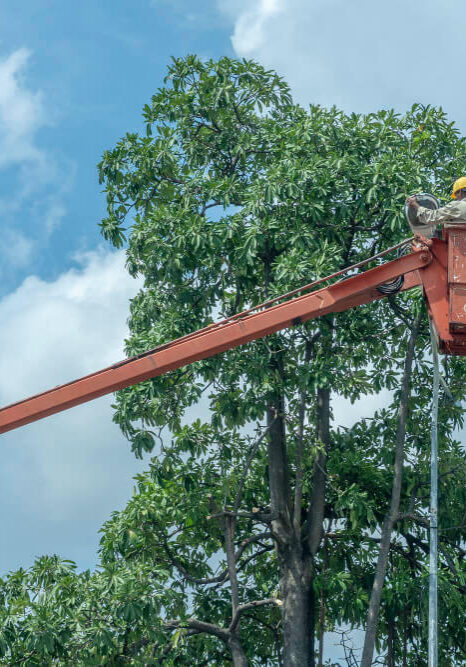
Professional tree management works best when those trade-offs are discussed plainly. It is easier to make durable decisions when everyone understands that the objective is not a perfect landscape, but a managed one.
The marks of responsible tree work
There are visible signs of quality in arboriculture, and they are worth knowing before any work begins. Responsible crews do not treat every tree alike. They do not reach for topping when reduction pruning is needed. They do not promise that a cable will solve every structural issue. They do not frame removal as the answer to all uncertainty. They assess, explain, and then work in a way that matches the recommendation.
For property owners evaluating FireSmart Tree Services, a few standards are especially useful to keep in mind:
- The recommendation should connect clearly to observed tree condition and site use.
- Pruning language should reflect proper methods, not vague promises to “thin it out.”
- Removal should be justified by condition, structure, or unacceptable risk, not by size alone.
- Structural support should be presented as a specific treatment with limits, not a blanket guarantee.
- Emergency readiness should be part of the conversation if the site includes vulnerable targets or known defects.
Those are not complicated points, but they separate thoughtful management from reactive cutting. They also tend to produce better outcomes over time. Trees are living structures, and they change. A plan that recognizes that fact is almost always more valuable than a one-time fix.
FireSmart tree care is ongoing, not one decision
The most experienced property owners usually come to the same realization after a few seasons of tree work: management is cumulative. One pruning visit can improve conditions. One dangerous-tree removal can eliminate an urgent problem. One round of Stump Removal & Grinding can clear the site for new use. Still, none of those actions replaces ongoing observation and periodic reassessment.
That is particularly true where FireSmart priorities are present. Trees continue to grow, weather continues to test weak points, and site use changes over time. A branch that was well clear of a roofline a few years ago may not be now. A support system that made sense at installation still needs to be considered within the tree’s current condition. A tree that was a candidate for retention after pruning may later become a stronger removal candidate if new defects appear or targets change.
Professional tree management is valuable because it gives owners a framework for those changes. It turns tree care from a cycle of reaction into a sequence of informed decisions. That is the real strength of FireSmart Tree Services when they are handled well. They do not just reduce immediate hazards. They build a more predictable, defensible, and manageable landscape.
For homeowners, strata properties, and commercial sites alike, the goal should be clear-eyed stewardship. Keep trees where they can be kept responsibly. Prune with purpose. Support where support is justified. Remove when removal is warranted. Bring in Certified Arborist Consultation before urgency narrows the options. That approach is not flashy, but it is the one that tends to protect both properties and the long-term value of the trees worth keeping.
Name: Ace Tree Services Ltd.
Address: 4656 Wallace Hill Road, Kelowna, BC
Phone: 250-212-9593
Website: https://acetree.ca/
Hours:
Monday: 7:00 AM–5:00 PM
Tuesday: 7:00 AM–5:00 PM
Wednesday: 7:00 AM–5:00 PM
Thursday: 7:00 AM–5:00 PM
Friday: 7:00 AM–5:00 PM
Saturday: 7:00 AM–5:00 PM
Sunday: Closed
Emergency tree services: 24/7 emergency service is listed.
Open-location code / Plus code: RHF8+8G Kelowna, British Columbia, Canada
Map/listing URL: https://www.google.com/maps/place/Ace+Tree+Services+Ltd./@49.8232606,-119.4337283,563m/data=!3m1!1e3!4m6!3m5!1s0x537d8b1d074815c5:0x450b88afa7a41435!8m2!3d49.8232606!4d-119.4337283!16s%2Fg%2F11ydkpnh22
Embed iframe:
Socials: https://www.facebook.com/people/Ace-Tree-Services/61585901931447/
https://m.yelp.com/biz/ace-tree-services-kelowna
Ace Tree Services Ltd. provides professional tree service for residential, commercial, and municipal customers in Kelowna and across the Okanagan Valley.
The company’s listed services include tree removal, stump removal and grinding, tree pruning and crown shaping, emergency tree services, certified arborist consultation, dangerous tree assessment, tree cable and bracing, and wildfire mitigation.
Ace Tree Services works with homeowners, businesses, property managers, and public-sector clients that need safe, practical tree care in the Kelowna area.
The official site highlights ISA-certified arborists, insurance, and experience handling both routine and complex tree service situations.
Customers can contact Ace Tree Services for tree care planning, hazard concerns, emergency tree cleanup, pruning needs, stump grinding, or advice about trees near homes, fences, driveways, and landscaping.
Ace Tree Services lists regular work hours from 7:00 AM to 5:00 PM Monday through Friday, with 24/7 emergency tree service available for urgent situations.
For tree service in Kelowna, call 250-212-9593 or visit https://acetree.ca/
The public map listing places Ace Tree Services Ltd. in Kelowna and can help customers find directions to the Wallace Hill Road area.
Popular Questions About Ace Tree Services Ltd.
What services does Ace Tree Services Ltd. provide?
Ace Tree Services Ltd. provides tree removal, stump removal and grinding, tree pruning and crown shaping, emergency tree services, certified arborist consultation, dangerous tree assessment and removal, tree cable and bracing, and wildfire mitigation.
Where is Ace Tree Services Ltd. located?
The official website lists Ace Tree Services Ltd. at 4656 Wallace Hill Road, Kelowna, BC.
What areas does Ace Tree Services Ltd. serve?
The official website describes Ace Tree Services as located in Kelowna and servicing the Okanagan.
What phone number should customers call?
Customers can call Ace Tree Services Ltd. at 250-212-9593.
What are Ace Tree Services Ltd.’s regular hours?
The official website lists work hours as 7:00 AM to 5:00 PM, Monday through Friday. Saturday and Sunday regular hours are not listed and should be confirmed directly.
Does Ace Tree Services Ltd. offer emergency tree service?
Yes. The official website lists 24/7 emergency services for urgent tree situations, including emergency tree removal, dangerous tree assessment, stabilization, and limb or branch cleanup.
Does Ace Tree Services Ltd. have certified arborists?
Yes. The official website states that Ace Tree Services has ISA-certified arborists.
Can Ace Tree Services Ltd. help with wildfire mitigation?
Yes. Wildfire mitigation is listed as one of the company’s tree services.
How do I contact Ace Tree Services Ltd.?
Call 250-212-9593 or visit https://acetree.ca/.
Landmarks Near Kelowna, BC
Wallace Hill Road: A local Kelowna road near the address listed for Ace Tree Services Ltd.
Okanagan Lake: A major Kelowna landmark near residential, commercial, and waterfront properties that may need tree pruning, removal, or hazard assessment.
Downtown Kelowna: A central area with homes, offices, rental properties, restaurants, and commercial sites that may need professional tree care.
Mission / Lower Mission: A well-known Kelowna area with mature landscaping, residential properties, and lake-adjacent homes.
South East Kelowna: A rural and residential area with larger properties, orchards, and tree-care needs that can include pruning, removals, and wildfire mitigation.
Crawford: A residential area near the southeast side of Kelowna where homeowners may need tree trimming, hazard assessment, and stump grinding.
Kettle Valley: A hillside residential neighborhood where tree condition, slope, wind exposure, and defensible-space planning can matter for property owners.
Myra-Bellevue Provincial Park: A major outdoor landmark near southeast Kelowna and a useful point of orientation for nearby properties.
Gallagher’s Canyon: A residential and golf community near southeast Kelowna where tree maintenance and wildfire-conscious vegetation management can be practical concerns.
Orchard Park Shopping Centre: A major central Kelowna retail landmark and reference point for customers traveling across the city.
Highway 97: A major Kelowna corridor connecting neighborhoods, commercial properties, and service routes throughout the region.
Kelowna City Park: A recognizable central landmark near downtown neighborhoods and lakefront properties.
Glenmore: A Kelowna neighborhood with residential and commercial properties that may need pruning, storm cleanup, and general tree care.
Rutland: A large residential and commercial area where customers may need tree removal, pruning, stump grinding, or arborist consultation.
Black Mountain: A hillside community where slope, wind, wildfire exposure, and access can influence tree service planning.
For tree service near these Kelowna landmarks, contact Ace Tree Services Ltd. at 250-212-9593 or visit https://acetree.ca/