Dangerous Tree Assessment Before Choosing Pruning, Support, or Removal
A dangerous tree is rarely dangerous in the abstract. Risk becomes real when a defect, a likely point of failure, and a target all line up at the same time. A decayed stem leaning over a quiet back lot may deserve monitoring. The same condition over a driveway, daycare yard, or service lane calls for faster action and a tighter margin for error. That distinction matters because the right response is not always removal. Sometimes careful pruning reduces exposure. Sometimes structural support buys time. Sometimes removal is the only responsible recommendation.
Good assessment starts by resisting the urge to jump straight to a saw. Homeowners often call after noticing a crack, a sudden lean, or a branch hanging where it should not be. Property managers call after wind events, when every damaged canopy looks urgent. In both cases, the first task is not to sell a service. It is to identify what is actually failing, what could be struck if it does fail, and whether the tree can be managed to an acceptable level of risk.
That is where a Certified Arborist Consultation becomes valuable. Tree risk assessment is a systematic process. It is meant to identify, analyze, and evaluate risk, then recommend measures that reduce that risk without unnecessary intervention. It is also worth saying plainly that no tree is completely safe. Trees are living structures, exposed to weather, soil change, construction damage, and age. The practical question is whether the current level of risk is tolerable for that site, that tree, and those nearby targets.
What an assessment is really trying to answer
When people hear the phrase Dangerous Tree Assessment and Removal, they often assume the outcome has already been decided. In practice, assessment comes first and removal is only one of several possible outcomes. The process asks a few central questions.
Is there a visible defect or condition that could lead to failure? If so, what part of the tree is involved, a limb, a codominant stem, the trunk, the root plate? How likely is failure under expected weather conditions? What sits within striking distance? And finally, which treatment gives the best balance of safety, tree preservation, cost, and long term performance?
A mature tree near a house presents a different decision than the same species in an open field. A weak union above a play area creates a different level of concern than one above ornamental shrubs. This is why experienced arborists spend so much time looking at context. Trees do not fail on paper. They fail in places, and those places shape the recommendation.
The first pass is often visual, but it should never be casual
Many important clues are visible from the ground. Cracks, deadwood, included bark at stem unions, sudden canopy thinning, previous storm damage, and soil movement around the base all deserve attention. The visual portion of the assessment also considers lean, crown distribution, and whether weight is concentrated over a target.
That said, visual does not mean superficial. There is a difference between noticing a dead branch and understanding whether that branch is isolated, part of broader decline, or evidence of a compromised scaffold system. There is also a difference between an old wound that has remained stable for years and a fresh split that is actively opening.
In real tree work, one of the most common mistakes is treating every visible flaw as an automatic death sentence. The second most common mistake is the opposite, dismissing serious warning signs because the tree still has green leaves. Foliage alone is a poor predictor of structural reliability. Trees can leaf out and still have severe internal defects or failing attachment points.
Defects that change the conversation
Some defects tend to move a tree from ordinary maintenance into higher concern. The details matter, but these are the conditions that usually justify closer scrutiny:
- fresh cracks in stems or major limbs
- hanging or broken branches after wind or snow events
- multiple stems with tight unions and included bark
- pronounced lean paired with soil heaving or root disturbance
- obvious dead sections in the crown over a target
Each of these can show up in routine Tree Pruning & Crown Shaping work, but they are not routine findings. A tree can tolerate certain defects for years, yet a combination of factors often matters more than any one symptom. A codominant union, for example, may stand for decades. Add included bark, a heavy end weight, and exposure to recurring wind, and the risk profile shifts.
Why targets matter as much as defects
A tree part can be weak without being urgent. A tree part can also be only moderately weak and still demand immediate action if the target below it is constant. This is one of the least appreciated parts of assessment. Clients often focus on what the tree looks like, while arborists spend equal time on what the tree could hit.
A branch over a roof, a walkway, parked vehicles, utility access lane, or outdoor seating area changes the urgency. So does occupancy. A defect over a side yard that sees little foot traffic is not the same as one over a school pickup zone. This is why broad statements like “that tree is dangerous” are not very useful without site context.
There is a practical side to this as well. Risk can sometimes be reduced not only by treating the tree, but by changing target use. Restricting access during a short interval, moving parked vehicles, or removing a play structure from beneath a compromised canopy may create breathing room while a longer term recommendation is evaluated. That is not a permanent fix, but in some cases it is part of responsible short term management.
When pruning is the right answer
Pruning is often the least disruptive and most cost effective way to reduce risk, but only when it matches the defect. Good pruning can remove deadwood, reduce end weight on overextended limbs, improve clearance, and in some cases lessen the chance of branch failure. It can also improve canopy structure over time when done with proper cuts and realistic goals.
The key phrase is proper cuts. Industry guidance is clear that improper practices such as topping or leaving stubs are harmful. Topping often creates larger problems later by forcing weakly attached regrowth and exposing large wounds. Stub cuts fail to support normal closure and leave dead material that does not contribute to structure. If the goal is risk reduction, poor pruning moves in the wrong direction.
Crown reduction can be appropriate in selected situations, especially where length and leverage at the branch tips are part of the problem. Crown raising may help with access and clearance, but it should not be confused with risk reduction if the true defect is higher in the canopy or at a stem union. Directional pruning can be useful around infrastructure and utilities when done with an understanding of future growth. What pruning cannot do is repair severe trunk failure, replace missing roots, or make a structurally unsound tree sound again.
I have seen homeowners request “just trim it back” when what they really wanted was certainty. Trees do not offer certainty. Pruning can lower the probability of failure in some situations, but it does not erase all risk. A careful arborist explains what pruning can improve, what it cannot, and what residual risk remains afterward.
When Tree Cable and Bracing enters the picture
Structural support systems can be appropriate when the tree has value worth preserving and the defect Tree Pruning & Crown Shaping is one that support can meaningfully address. Tree Cable and Bracing is not a cosmetic service. It is a risk mitigation measure used in selected cases, often for weak unions or stems that would benefit from load sharing or reinforcement.
The most important judgment call is whether the support is addressing a manageable problem or merely delaying an inevitable failure in a tree that should come down. Support can help retain a tree with a known weakness, but it does not reverse decay, restore lost roots, or make a failing base dependable. It is one tool among several, not a universal rescue plan.
This is where experience matters. A support system makes sense when the tree has enough sound structure left to justify retention and when the target situation allows for ongoing inspection and maintenance. It makes less sense when the defect is advanced, the consequences of failure are severe, and the site requires a very low tolerance for uncertainty.
Support systems also create an obligation. Once installed, they should not be forgotten. Trees continue to grow, weather continues to act on them, and conditions continue to change. Choosing support is choosing an ongoing management path, not a one time cure.
When removal is the responsible recommendation
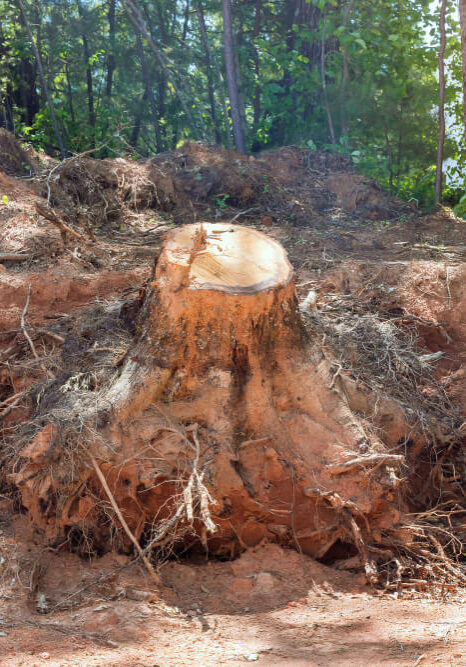
Some trees cannot be pruned into safety and cannot be supported into reliability. In those cases, Tree Removal Services are not an aggressive choice, they are the honest one. Removal becomes more likely when severe defects affect the trunk or root area, when major failure seems plausible, and when the target below or beside the tree makes the consequences unacceptable.
There is often an emotional layer here. Mature trees shape privacy, shade, and identity on a property. Owners may have planted them years ago or bought the home because of them. A professional assessment should respect that attachment without allowing sentiment to override a clear structural problem.
Removal decisions are also rarely just about the canopy. The stump matters, access matters, and what remains afterward matters. Stump Removal & Grinding may be part of the job if the site needs to be restored for planting, construction, drainage correction, or simple usability. In tighter residential settings, that follow through can matter almost as much as the removal itself, especially where trip hazards, suckering, or future landscape work are concerns.
A sound recommendation explains why removal is advised, what risk it is intended to eliminate, and whether there are any reasonable alternatives. If there are none, that should be stated plainly. Avoiding false hope is part of professional care.
Storm damage changes both urgency and method
After a windstorm or heavy snow event, assessment becomes more time sensitive. Broken tops, hanging limbs, partially failed stems, and disturbed root plates can create immediate hazards. This is where Emergency Tree Services become essential, not because every damaged tree must be removed on the spot, but because unstable conditions can shift quickly and unpredictably.
Storm work also exposes a basic truth about tree care: pruning or removal, especially on large trees, is dangerous work and should be handled by people trained and equipped to do it safely. That is not marketing language. It is the reality of suspended loads, compromised wood, rigging challenges, and uncertain force distribution in damaged canopies. A branch that appears lightly hung can release violently. A split stem can peel further under minimal movement. Controlled lowering and rigging are not optional refinements in those situations, they are core safety practices.
Emergency response also benefits from triage. The first priority is usually making the site safe, removing immediate hazards, and preventing further damage to people or property. Full restoration of the tree, if possible, often comes after the site is stabilized and the damage can be assessed more carefully.
Fire exposure and defensible space complicate the decision
In some regions, FireSmart Tree Services add another layer to dangerous tree assessment. The goal in those settings is not only tree health or structural stability, but also how vegetation contributes to fire behavior around structures. A tree may be retained, pruned, spaced, or removed based on a combination of defect concerns and fire exposure concerns.
This is another reason fixed rules do not serve clients well. A tree with moderate structural issues in a low occupancy area might remain with monitoring under ordinary conditions. Put that same tree near structures in a zone where vegetation management is important, and the recommendation may change. Fire conscious management tends to reward clarity of spacing, reduction of hazardous material, and practical defensible space decisions. Structural defects then become part of a broader property safety conversation.
How a Certified Arborist Consultation improves decision quality
There is a reason certification matters in this field. ISA Certified Arborists are trained in the art and science of tree care, must pass a comprehensive exam, continue their education, and follow a code of ethics. Those are meaningful safeguards for clients because dangerous tree decisions sit at the intersection of biology, mechanics, site use, and safety.
A certified professional is not valuable because they automatically save every tree or automatically remove it. They are valuable because they can separate conditions that look alarming from those that are actually urgent, and because they can explain treatment options in a defensible way. That is especially important when multiple services are on the table, such as Tree Pruning & Crown Shaping, Tree Cable and Bracing, or full Dangerous Tree Assessment and Removal.
A strong consultation usually feels measured rather than dramatic. It identifies the observed issues, discusses likely failure points, considers targets, and recommends a management path that fits the site. Sometimes that path is immediate action. Sometimes it is corrective pruning with follow up inspection. Sometimes it is support plus monitoring. Sometimes it is removal, paired with stump work paid arborist consultation and a plan for what comes next.
The trade offs clients should understand before approving work
Clients make better decisions when they understand that every option carries gains and limitations. The clearest way to frame it is this:
- pruning can reduce certain risks, but it does not erase all risk
- support systems can preserve value, but they require ongoing oversight
- removal eliminates the tree related hazard, but it also removes shade, screening, and landscape character
- emergency action can stabilize a site quickly, but storm damaged trees may still need later reassessment
- no recommendation is meaningful without considering what the tree could strike if it fails
Those trade offs are not sales talking points. They are the real substance of tree risk management. If a recommendation is presented as simple or absolute, it is often missing the very judgment the situation requires.
Common misunderstandings that lead to poor outcomes
One recurring misunderstanding is the belief that all deadwood means the whole tree is failing. Dead branches matter, especially over targets, but localized deadwood can sometimes be addressed through pruning. Another is the belief that green leaves mean the structure is sound. Trees often maintain foliage while carrying significant mechanical defects.
A third misunderstanding is that support systems are a permanent fix. They are not. They can reduce risk in appropriate cases, but they do not stop trees from changing. A fourth is that removal is always a sign someone gave up too quickly. In reality, some defects leave very little room for conservative treatment, particularly where occupancy is high.
There is also a tendency to focus only on the visible canopy and ignore the base of the tree. Yet root problems, soil disturbance, and movement at the root plate can be decisive. If a tree has begun to lose anchorage, canopy work alone may do very little to address the underlying issue.
The value of timing
Timing influences both assessment and treatment. Fresh defects are easier to interpret than old stories patched over by time and secondary growth. Storm damage is easier to triage before another storm follows. Corrective pruning is often most effective when done before branch weight and leverage become extreme. Support systems are usually more rational before a weak union becomes a failure site, not after.
Delayed action can narrow options. A tree that might once have responded well to pruning or support can cross into removal territory if defects enlarge, weather intervenes, or target use intensifies. On the other hand, rushed decisions made from panic can remove trees that might have been retained safely with a more careful look. The best timing is neither reflexive nor complacent. It is responsive.
What a practical recommendation sounds like
A sound recommendation usually has a plain logic to it. It might state that the tree has a weak union over a driveway, that selective reduction of end weight and removal of deadwood would lower risk, and that the tree should be rechecked after severe weather. It might state that a valued mature tree has a structural defect suitable for Tree Cable and Bracing, provided the owner accepts ongoing maintenance. Or it might state that the trunk defect and target occupancy make Tree Removal Services the only prudent option, followed by Stump Removal & Grinding if site restoration is needed.
What it should not sound like is guesswork dressed as confidence. Dangerous trees deserve calm analysis, not theater. The best outcomes come from matching the treatment to the defect, the site, and the client’s tolerance for residual risk.
Choosing the next step wisely
Before choosing pruning, support, or removal, the assessment has to earn the decision. That means looking beyond appearance and asking harder questions about structure, exposure, and consequence. It means recognizing that some level of risk always exists, but that good arboriculture can often reduce it meaningfully. It also means knowing when preservation stops being responsible.
For property owners, the practical path is straightforward. If a tree shows obvious defects, changed suddenly after weather, or hangs over important targets, treat it as a professional assessment matter. Ask for a Certified Arborist Consultation. Discuss whether Tree Pruning & Crown Shaping, Tree Cable and Bracing, Emergency Tree Services, or Dangerous Tree Assessment and Removal best fits the conditions on site. If removal is needed, consider the full scope, including Stump Removal & Grinding and any FireSmart Tree Services that may improve overall property safety.
The tree does not care whether the owner prefers pruning to removal. Gravity does not care either. Good assessment is the discipline that sits between those realities and turns a stressful problem into a reasoned decision.
Name: Ace Tree Services Ltd.
Address: 4656 Wallace Hill Road, Kelowna, BC
Phone: 250-212-9593
Website: https://acetree.ca/
Hours:
Monday: 7:00 AM–5:00 PM
Tuesday: 7:00 AM–5:00 PM
Wednesday: 7:00 AM–5:00 PM
Thursday: 7:00 AM–5:00 PM
Friday: 7:00 AM–5:00 PM
Saturday: 7:00 AM–5:00 PM
Sunday: Closed
Emergency tree services: 24/7 emergency service is listed.
Open-location code / Plus code: RHF8+8G Kelowna, British Columbia, Canada
Map/listing URL: https://www.google.com/maps/place/Ace+Tree+Services+Ltd./@49.8232606,-119.4337283,563m/data=!3m1!1e3!4m6!3m5!1s0x537d8b1d074815c5:0x450b88afa7a41435!8m2!3d49.8232606!4d-119.4337283!16s%2Fg%2F11ydkpnh22
Embed iframe:
Socials: https://www.facebook.com/people/Ace-Tree-Services/61585901931447/
https://m.yelp.com/biz/ace-tree-services-kelowna
Ace Tree Services Ltd. provides professional tree service for residential, commercial, and municipal customers in Kelowna and across the Okanagan Valley.
The company’s listed services include tree removal, stump removal and grinding, tree pruning and crown shaping, emergency tree services, certified arborist consultation, dangerous tree assessment, tree cable and bracing, and wildfire mitigation.
Ace Tree Services works with homeowners, businesses, property managers, and public-sector clients that need safe, practical tree care in the Kelowna area.
The official site highlights ISA-certified arborists, insurance, and experience handling both routine and complex tree service situations.
Customers can contact Ace Tree Services for tree care planning, hazard concerns, emergency tree cleanup, pruning needs, stump grinding, or advice about trees near homes, fences, driveways, and landscaping.
Ace Tree Services lists regular work hours from 7:00 AM to 5:00 PM Monday through Friday, with 24/7 emergency tree service available for urgent situations.
For tree service in Kelowna, call 250-212-9593 or visit https://acetree.ca/
The public map listing places Ace Tree Services Ltd. in Kelowna and can help customers find directions to the Wallace Hill Road area.
Popular Questions About Ace Tree Services Ltd.
What services does Ace Tree Services Ltd. provide?
Ace Tree Services Ltd. provides tree removal, stump removal and grinding, tree pruning and crown shaping, emergency tree services, certified arborist consultation, dangerous tree assessment and removal, tree cable and bracing, and wildfire mitigation.
Where is Ace Tree Services Ltd. located?
The official website lists Ace Tree Services Ltd. at 4656 Wallace Hill Road, Kelowna, BC.
What areas does Ace Tree Services Ltd. serve?
The official website describes Ace Tree Services as located in Kelowna and servicing the Okanagan.
What phone number should customers call?
Customers can call Ace Tree Services Ltd. at 250-212-9593.
What are Ace Tree Services Ltd.’s regular hours?
The official website lists work hours as 7:00 AM to 5:00 PM, Monday through Friday. Saturday and Sunday regular hours are not listed and should be confirmed directly.
Does Ace Tree Services Ltd. offer emergency tree service?
Yes. The official website lists 24/7 emergency services for urgent tree situations, including emergency tree removal, dangerous tree assessment, stabilization, and limb or branch cleanup.
Does Ace Tree Services Ltd. have certified arborists?
Yes. The official website states that Ace Tree Services has ISA-certified arborists.
Can Ace Tree Services Ltd. help with wildfire mitigation?
Yes. Wildfire mitigation is listed as one of the company’s tree services.
How do I contact Ace Tree Services Ltd.?
Call 250-212-9593 or visit https://acetree.ca/.
Landmarks Near Kelowna, BC
Wallace Hill Road: A local Kelowna road near the address listed for Ace Tree Services Ltd.
Okanagan Lake: A major Kelowna landmark near residential, commercial, and waterfront properties that may need tree pruning, removal, or hazard assessment.
Downtown Kelowna: A central area with homes, offices, rental properties, restaurants, and commercial sites that may need professional tree care.
Mission / Lower Mission: A well-known Kelowna area with mature landscaping, residential properties, and lake-adjacent homes.
South East Kelowna: A rural and residential area with larger properties, orchards, and tree-care needs that can include pruning, removals, and wildfire mitigation.
Crawford: A residential area near the southeast side of Kelowna where homeowners may need tree trimming, hazard assessment, and stump grinding.
Kettle Valley: A hillside residential neighborhood where tree condition, slope, wind exposure, and defensible-space planning can matter for property owners.
Myra-Bellevue Provincial Park: A major outdoor landmark near southeast Kelowna and a useful point of orientation for nearby properties.
Gallagher’s Canyon: A residential and golf community near southeast Kelowna where tree maintenance and wildfire-conscious vegetation management can be practical concerns.
Orchard Park Shopping Centre: A major central Kelowna retail landmark and reference point for customers traveling across the city.
Highway 97: A major Kelowna corridor connecting neighborhoods, commercial properties, and service routes throughout the region.
Kelowna City Park: A recognizable central landmark near downtown neighborhoods and lakefront properties.
Glenmore: A Kelowna neighborhood with residential and commercial properties that may need pruning, storm cleanup, and general tree care.
Rutland: A large residential and commercial area where customers may need tree removal, pruning, stump grinding, or arborist consultation.
Black Mountain: A hillside community where slope, wind, wildfire exposure, and access can influence tree service planning.
For tree service near these Kelowna landmarks, contact Ace Tree Services Ltd. at 250-212-9593 or visit https://acetree.ca/