Certified Arborist Consultation for Pruning and Removal Options
A mature tree can be the best feature on a property right up until it becomes the biggest question mark. One side of the crown starts thinning. A limb hangs over the roof. The trunk leans more than you remember. After a storm, there is fresh damage, and suddenly the conversation shifts from admiration to liability, safety, and hard choices.
That is where a Certified Arborist Consultation earns its value. The point is not to push every tree toward removal or to preserve every tree at all costs. Good arboriculture lives in the middle ground, where the condition of the tree, the site around it, and the level of acceptable risk all have to be weighed together. Sometimes the answer is a careful pruning plan. Sometimes it is structural support. Sometimes a tree has reached the point where removal is the responsible option. A trained arborist helps sort those paths with discipline instead of guesswork.
People often call for tree work after a problem becomes obvious, but the better consultations happen before that moment. A pruning cut made at the right time can prevent a larger failure later. A realistic conversation about a declining tree can reduce panic during the next wind event. On properties with multiple trees, an arborist can also help prioritize what matters now, what can wait, and what deserves monitoring rather than immediate action.
What a certified arborist brings to the decision
The title matters because it signals formal training in the art and science of tree care. An ISA Certified Arborist has passed a comprehensive exam, maintains continuing education, and is expected to follow a code of ethics. That does not make every decision simple, but it does mean the assessment should be rooted in recognized tree care principles rather than habit, sales pressure, or folklore.
That distinction becomes important the moment the conversation turns to pruning and removal. Tree work can be dangerous, especially on large trees. It is not simply a matter of climbing up with a saw. Proper tree care involves understanding how cuts affect structure, how to work safely aloft, how to lower limbs in a controlled way when needed, and when a tree presents a level of risk that requires action. The people making those calls should be trained and equipped for them.
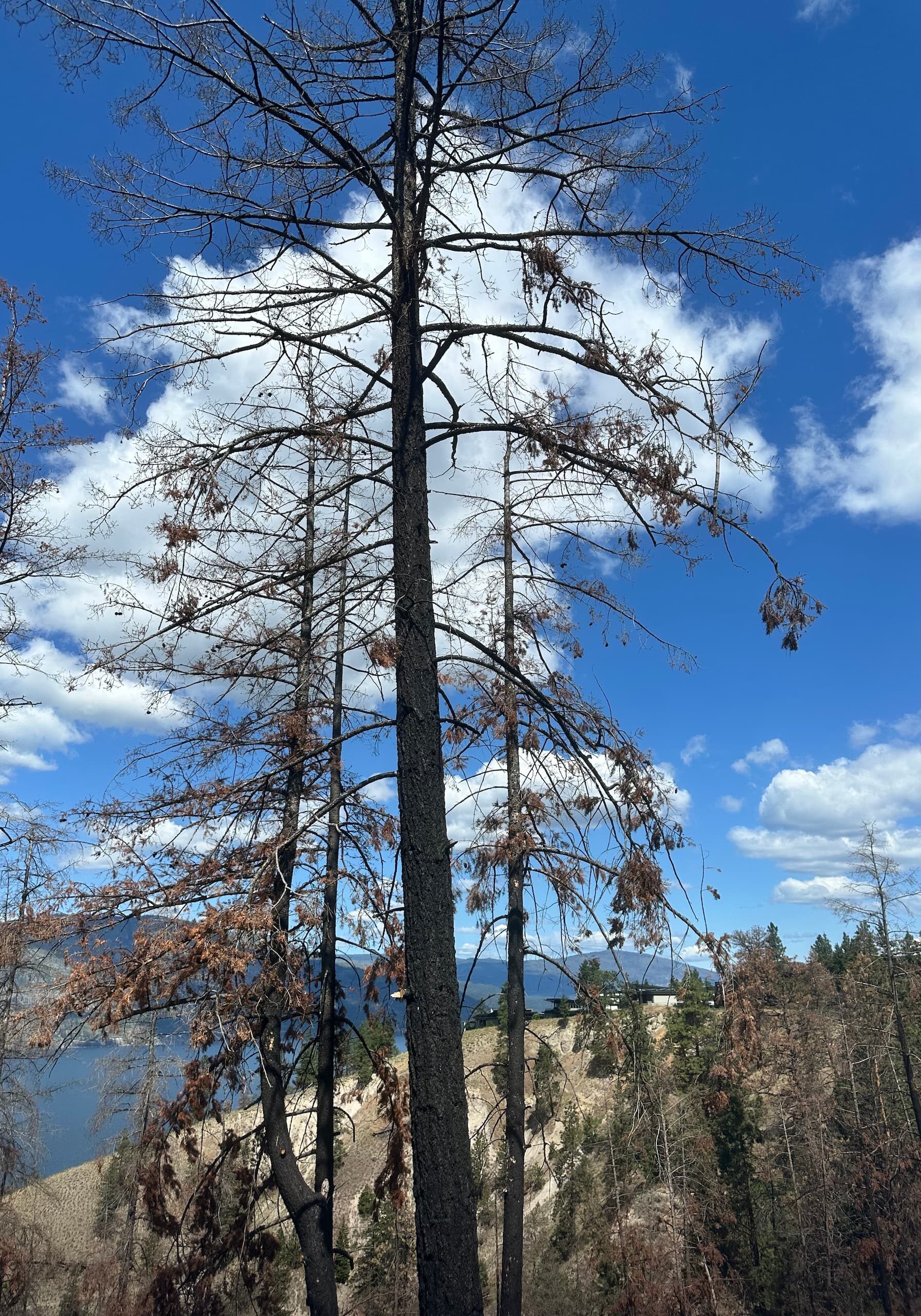
A good consultation also creates clarity in language. Owners often use phrases like “trim it back,” “clean it up,” or “take a little off the top.” Those requests sound straightforward, but in practice they can lead to poor outcomes if nobody stops to define the objective. The real goal may be clearance from a house, reduced end weight on a long limb, improved spacing, or risk reduction over a target area. Once the goal is clear, the arborist can explain which pruning approach fits and which shortcuts should be avoided.
Pruning is not one thing
When homeowners hear Tree Pruning & Crown Shaping, they often picture a general thinning or a haircut for the canopy. Professional pruning is more specific than that. Different pruning objectives call for different cuts, and the wrong technique can create long-term problems.
Crown raising, for example, addresses lower clearance. Crown reduction focuses on reducing the length of certain leaders or branches while maintaining a more natural structure. Directional pruning can help manage growth away from structures or utility conflicts. Proper branch removal and reduction cuts matter because they influence how the tree responds after the work is done. Improper practices such as topping or leaving stub cuts are widely recognized as poor technique because they do not respect the biology and structure of the tree.
That may sound technical, but the practical impact is easy to see. On one property, a large limb over a driveway may only need selective reduction to reduce loading and improve clearance. On another, a dense canopy near a structure may need a different approach entirely. “Less” is not always safer, and “more” is not always better. Over-pruning can create its own problems, while under-pruning may fail to address the actual concern.
In consultation, the arborist should be able to explain why a certain pruning method is being recommended, what limitation it addresses, and what it will not fix. That last part matters. Pruning can reduce some risks, improve structure, and manage clearance, but it cannot make every compromised tree acceptable to keep. There is no completely safe tree. Some level of risk always exists, and the job is to evaluate whether that risk remains acceptable after treatment.
When removal becomes the better option
No reputable arborist treats removal as the default. At the same time, no reputable arborist pretends every tree can or should be saved. Some trees deteriorate structurally, some become poor fits for a site, and some carry a level of risk that cannot be reduced enough through pruning or support.
This is where Tree Removal Services and Dangerous Tree Assessment and Removal intersect. A risk assessment is a systematic process. The arborist identifies the concern, analyzes what might fail and what might be struck, and then evaluates the level of risk in context. A tree in poor condition beside a lightly used area presents a different management question than a similar tree hanging over a home, play area, or entry drive.
Owners sometimes hope for a guarantee, a clean yes-or-no answer that makes the choice feel easy. Arborists work in probabilities, observed conditions, and defensible recommendations. There is no honest way to promise zero risk if a compromised tree remains standing. There is also no reason to remove a tree simply because it is large, old, or visually dramatic. Judgment lives between those extremes.
A useful consultation usually settles a few core questions. Is the concern mainly about branch failure, whole-tree failure, or nuisance issues? Can pruning meaningfully reduce the risk? Would a structural support system help? Is the tree likely to require repeated intervention to remain acceptable? And if removal is warranted, what secondary work will follow, including stump treatment and site restoration?
The value of a structured risk discussion
Most difficult tree decisions are really risk decisions. The owner may be emotionally attached to the tree, understandably worried about damage, or unsure whether they are overreacting. The arborist’s role is to put those concerns into a clear framework.
A solid consultation usually addresses these points:
- The condition of the tree as observed from the ground and, when appropriate, in the crown
- The targets nearby, such as buildings, walkways, vehicles, or areas of regular use
- The likely failure scenario being considered, whether that is a branch, a codominant stem, or the whole tree
- The available mitigation options, such as pruning, support systems, monitoring, or removal
- The residual risk after treatment, because mitigation lowers risk but does not erase it
This kind of conversation tends to calm people down. Not because the news is always good, but because uncertainty is usually the hardest part. Once a property owner understands the trade-offs, the decision becomes more manageable.
In practice, the hardest cases are often not the obviously dead or obviously healthy trees. The hardest cases are the ones in between, trees that still offer real value but now have a defect, a damaged crown, or a location that raises the stakes. Those are precisely the cases where a certified arborist adds the most value.
Cable and bracing as a middle path
There are situations where preserving a tree makes sense, but preservation requires support. Tree Cable and Bracing is one of the tools an arborist may consider when a tree has a structural weakness that can be mitigated rather than ignored.
This is not a cosmetic add-on. Structural support systems are a management decision, used in conjunction with assessment and often paired with pruning. The objective is to reduce the likelihood of certain failures by helping manage load and movement in parts of the tree that need assistance. Not every tree is a candidate, and support does not make a tree maintenance-free. It is part of a broader strategy.
For owners, the important point is that support systems sit between doing nothing and removing the tree outright. That middle path can be the right one for a significant landscape tree when the defect is understood, the site justifies the effort, and the remaining risk after treatment is acceptable. A careful local tree removal company arborist will also explain when support is not enough, because there are cases where bracing or cabling would only delay a necessary removal.
Emergency calls change the timeline, not the standards
Storms and sudden failures create urgency, but they do not change the need for sound judgment. Emergency Tree Services often begin with immediate hazard management, clearing access, stabilizing a situation, or dealing with broken or hanging limbs. Even then, the safest response still depends on trained personnel, proper equipment, and a disciplined assessment of what can be cut, lowered, or left temporarily in place.
Emergency conditions are where bad advice spreads quickly. Neighbors want to help. Owners want the danger gone fast. Someone suggests climbing up “just to finish it off.” That is exactly when trained tree workers matter most. Large-tree pruning and removal are dangerous under normal conditions, and the hazards increase after storm damage.
An experienced arborist will separate emergency actions from follow-up decisions. The first priority may be making the area safe and accessible. The second is evaluating whether the tree can remain with corrective pruning, needs support, or should be removed. Those are different steps, and combining them too quickly can lead to avoidable mistakes.
Stump work is part of the planning, not an afterthought
When removal is chosen, owners often focus on the canopy and forget what remains at ground level. Yet Stump Removal & Grinding affects how usable the site will be afterward. It also affects what “finished” really means for the project.
Not every property owner has the same objective. Some want the tree gone and the area left unobtrusive. Others are preparing the space for planting, access, or another landscape use. The consultation should clarify whether stump grinding or removal is desired as part of the job scope, because that decision changes both logistics and expectations.
What matters most is not to let stump treatment become a surprise after the main work is complete. The better approach is to decide upfront whether the stump will stay for the time being, be ground, or be otherwise addressed as part of the overall site plan.
How pruning and removal decisions play out on real properties
On residential properties, the pattern is familiar. A homeowner notices one symptom and assumes one solution. A low branch scraping a roof gets interpreted as “this tree needs to come down.” A leaning trunk gets interpreted as “just trim it.” In both cases, the initial assumption may be wrong.
A consultation often reveals that the issue is narrower or broader than expected. The roof contact might be resolved with targeted crown work. The visible lean might be long-standing and not the actual concern, while a separate structural issue in the crown deserves closer attention. A broad recommendation made from the driveway is rarely the right one.
Commercial and institutional sites bring a different pressure. There may be heavier pedestrian use, parked vehicles, access routes, or stricter tolerance for foreseeable hazards. Here, Dangerous Tree Assessment and Removal becomes less about appearance and more about documented judgment around targets and use patterns. The arborist still weighs treatment options, but the consequences of a failure often push the analysis toward more conservative management.
Large properties with multiple trees benefit from prioritization. Instead of reacting to each tree individually, the arborist can identify immediate concerns, medium-term pruning needs, and trees that simply warrant observation. That helps owners budget sensibly and avoid the stop-and-start cycle of crisis maintenance.
FireSmart considerations change pruning priorities
In fire-prone areas, FireSmart Tree Services can influence how trees are managed around structures and access routes. The consultation in that setting is not only about whether a tree is healthy or attractive. It is also about how vegetation management supports broader site safety objectives.
That often changes the pruning conversation. Clearance, arrangement of branches, and the relationship between trees and built structures may matter more than purely aesthetic shaping. The arborist’s role is still to recommend defensible treatments, but the lens widens from single-tree condition to the way the property functions as a whole.
This is one reason cookie-cutter pruning rarely serves the client well. A tree near a home in a FireSmart context may be managed differently than the same tree would be in an open rural setting or a park-like lot. Site context always matters.
Questions worth asking during the consultation
A useful consultation is a working conversation, not a sales pitch. Property owners do not need to know technical jargon, but they should come away understanding the recommendation and the alternatives.
These are smart questions to ask:
- Is the recommendation aimed at clearance, structure, health-related concerns, or risk reduction?
- If pruning is proposed, what type of pruning is being used and why?
- If the tree is being retained, what level of risk remains after the work?
- If support is recommended, how does that change future maintenance?
- If removal is necessary, should stump work be included now or handled later?
Clear answers matter more than dramatic language. Beware of anyone who treats every tree as an emergency or every mature tree as dangerous by default. The best consultations tend to sound measured. They acknowledge uncertainty where it exists, explain what can be improved, and draw a firm line when the risk is no longer acceptable.
Why the “save it or remove it” debate is often too simplistic
Most owners start with a binary mindset because the visible options seem obvious. Keep the tree. Remove the tree. Yet many of the strongest recommendations fall in between. Selective pruning can reduce overextension or manage clearance. A support system can help preserve a tree with a known structural issue. Monitoring may be reasonable when no immediate intervention is warranted. Then, in other cases, removal is clearly the prudent path because mitigation cannot reduce risk enough.
That middle ground is where professional judgment lives. It is also where a consultation can save money, preserve canopy where appropriate, and prevent unnecessary removals without understating legitimate hazards.
The emotional side should not be dismissed either. Mature trees carry shade, privacy, memory, and landscape character. People hesitate for good reasons. But hesitation should not become denial. If an arborist explains that a tree has moved from manageable concern to unacceptable risk, the responsible choice may be removal, even when it is disappointing. A professional opinion is most valuable when it tells you what you need to hear rather than what you hoped to hear.
Choosing the next step with confidence
The practical value of a Certified Arborist Consultation is not just expertise, it is a better decision pathway. Instead of treating pruning as a cosmetic service and removal as a last-minute panic move, the consultation frames both as tools within a larger management plan.
That plan may include Tree Pruning & Crown Shaping to improve structure or clearance. It may call for Tree Cable and Bracing where structural support offers a reasonable middle path. It may identify conditions that justify Tree Removal Services because risk remains too high. It may fold in Emergency Tree Services after storm damage, or Stump Removal & Grinding once the removal is complete. On some properties, it may also align with FireSmart Tree Services to improve the overall safety of the site.
What matters is that the recommendation fits the tree, the site, and the owner’s real objective. Trees do not read price sheets or marketing copy. They respond to biology, structure, weather, and the cuts made on them. The people advising on those cuts should know the difference between expedient work and proper tree care.
A certified arborist helps make that difference visible. When the question is whether to prune, support, remove, or monitor, that clarity is worth far more than a quick opinion shouted from the truck window.
Name: Ace Tree Services Ltd.
Address: 4656 Wallace Hill Road, Kelowna, BC
Phone: 250-212-9593
Website: https://acetree.ca/
Hours:
Monday: 7:00 AM–5:00 PM
Tuesday: 7:00 AM–5:00 PM
Wednesday: 7:00 AM–5:00 PM
Thursday: 7:00 AM–5:00 PM
Friday: 7:00 AM–5:00 PM
Saturday: 7:00 AM–5:00 PM
Sunday: Closed
Emergency tree services: 24/7 emergency service is listed.
Open-location code / Plus code: RHF8+8G Kelowna, British Columbia, Canada
Map/listing URL: https://www.google.com/maps/place/Ace+Tree+Services+Ltd./@49.8232606,-119.4337283,563m/data=!3m1!1e3!4m6!3m5!1s0x537d8b1d074815c5:0x450b88afa7a41435!8m2!3d49.8232606!4d-119.4337283!16s%2Fg%2F11ydkpnh22
Embed iframe:
Socials: https://www.facebook.com/people/Ace-Tree-Services/61585901931447/
https://m.yelp.com/biz/ace-tree-services-kelowna
Ace Tree Services Ltd. provides professional tree service for residential, commercial, and municipal customers in Kelowna and across the Okanagan Valley.
The company’s listed services include tree removal, stump removal and grinding, tree pruning and crown shaping, emergency tree services, certified arborist consultation, dangerous tree assessment, tree cable and bracing, and wildfire mitigation.
Ace Tree Services works with homeowners, businesses, property managers, and public-sector clients that need safe, practical tree care in the Kelowna area.
The official site highlights ISA-certified arborists, insurance, and experience handling both routine and complex tree service situations.
Customers can contact Ace Tree Services for tree care planning, hazard concerns, emergency tree cleanup, pruning needs, stump grinding, or advice about trees near homes, fences, driveways, and landscaping.
Ace Tree Services lists regular work hours from 7:00 AM to 5:00 PM Monday through Friday, with 24/7 emergency tree service available for urgent situations.
For tree service in Kelowna, call 250-212-9593 or visit https://acetree.ca/
The public map listing places Ace Tree Services Ltd. in Kelowna and can help customers find directions to the Wallace Hill Road area.
Popular Questions About Ace Tree Services Ltd.
What services does Ace Tree Services Ltd. provide?
Ace Tree Services Ltd. provides tree removal, stump removal and grinding, tree pruning and crown shaping, emergency tree services, certified arborist consultation, dangerous tree assessment and removal, tree cable and bracing, and wildfire mitigation.
Where is Ace Tree Services Ltd. located?
The official website lists Ace Tree Services Ltd. at 4656 Wallace Hill Road, Kelowna, BC.
What areas does Ace Tree Services Ltd. serve?
The official website describes Ace Tree Services as located in Kelowna and servicing the Okanagan.
What phone number should customers call?
Customers can call Ace Tree Services Ltd. at 250-212-9593.
What are Ace Tree Services Ltd.’s regular hours?
The official website lists work hours as 7:00 AM to 5:00 PM, Monday through Friday. Saturday and Sunday regular hours are not listed and should be confirmed directly.
Does Ace Tree Services Ltd. offer emergency tree service?
Yes. The official website lists 24/7 emergency services for urgent tree situations, including emergency tree removal, dangerous tree assessment, stabilization, and limb or branch cleanup.
Does Ace Tree Services Ltd. have certified arborists?
Yes. The official website states that Ace Tree Services has ISA-certified arborists.
Can Ace Tree Services Ltd. help with wildfire mitigation?
Yes. Wildfire mitigation is listed as one of the company’s tree services.
How do I contact Ace Tree Services Ltd.?
Call 250-212-9593 or visit https://acetree.ca/.
Landmarks Near Kelowna, BC
Wallace Hill Road: A local Kelowna road near the address listed for Ace Tree Services Ltd.
Okanagan Lake: A major Kelowna landmark near residential, commercial, and waterfront properties that may need tree pruning, removal, or hazard assessment.
Downtown Kelowna: A central area with homes, offices, rental properties, restaurants, and commercial sites that may need professional tree care.
Mission / Lower Mission: A well-known Kelowna area with mature landscaping, residential properties, and lake-adjacent homes.
South East Kelowna: A rural and residential area with larger properties, orchards, and tree-care needs that can include pruning, removals, and wildfire mitigation.
Crawford: A residential area near the southeast side of Kelowna where homeowners may need tree trimming, hazard assessment, and stump grinding.
Kettle Valley: A hillside residential neighborhood where tree condition, slope, wind exposure, and defensible-space planning can matter for property owners.
Myra-Bellevue Provincial Park: A major outdoor landmark near southeast Kelowna and a useful point of orientation for nearby properties.
Gallagher’s Canyon: A residential and golf community near southeast Kelowna where tree maintenance and wildfire-conscious vegetation management can be practical concerns.
Orchard Park Shopping Centre: A major central Kelowna retail landmark and reference point for customers traveling across the city.
Highway 97: A major Kelowna corridor connecting neighborhoods, commercial properties, and service routes throughout the region.
Kelowna City Park: A recognizable central landmark near downtown neighborhoods and lakefront properties.
Glenmore: A Kelowna neighborhood with residential and commercial properties that may need pruning, storm cleanup, and general tree care.
Rutland: A large residential and commercial area where customers may need tree removal, pruning, stump grinding, or arborist consultation.
Black Mountain: A hillside community where slope, wind, wildfire exposure, and access can influence tree service planning.
For tree service near these Kelowna landmarks, contact Ace Tree Services Ltd. at 250-212-9593 or visit https://acetree.ca/